

Why Attaching Wire Fence to Vinyl Fence Is a Common Upgrade
Attaching wire fence to vinyl fence is a practical solution for homeowners who want to keep pets and children safe, protect gardens, or add security without replacing an existing vinyl fence.
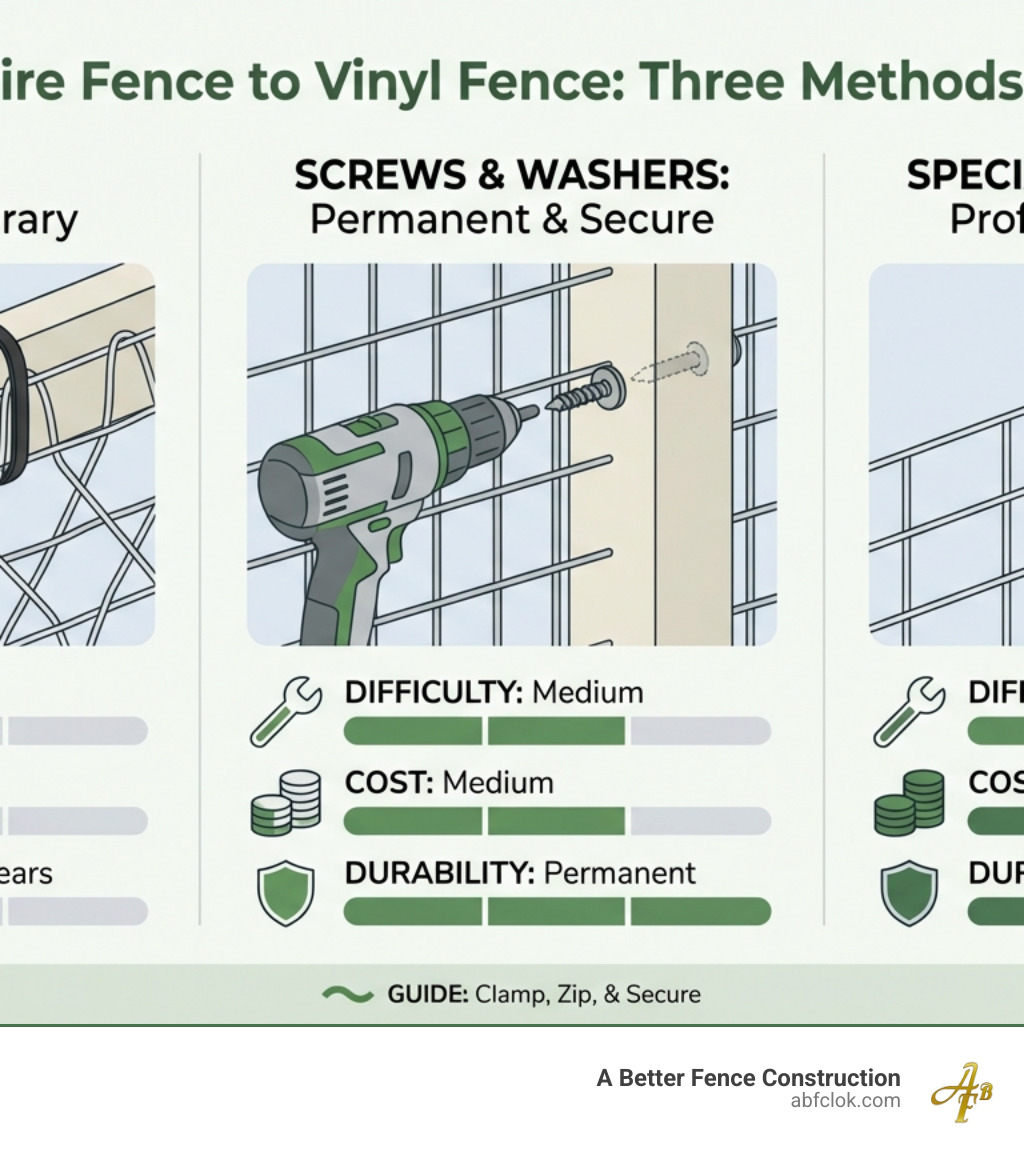
Quick Answer: Three Main Methods
- Zip Ties – Fast and inexpensive, but less durable (typically lasts 1-3 years)
- Screws & Washers – More permanent, but requires drilling into vinyl posts
- Specialized Clamps – Professional-grade aluminum clips that distribute pressure evenly without damaging vinyl
Key Success Factors:
- Proper tensioning prevents a wavy, unprofessional appearance
- Attach fasteners to vertical posts, not horizontal rails
- Space fasteners every 2 feet vertically and horizontally
- Consider burying 6-12 inches of wire to prevent animals from digging under
Many Oklahoma City homeowners need to add wire to their vinyl fence to contain a puppy, protect a garden, or create a safe play area. The good news is that you can add wire fencing to your existing vinyl fence without starting from scratch.
The challenge is choosing the right attachment method and executing it properly. A common mistake is letting the wire’s natural curve push into the vinyl, creating a wavy, unprofessional look that won’t hold up. While installers once relied on zip ties or screws, today’s specialized aluminum fence clamps offer a more durable and professional solution that won’t compromise your vinyl fence.
Preparing for Your Project: Tools and Materials
Before attaching wire fence to vinyl fence, careful preparation is key to a smooth process and a professional result. At A Better Fence Construction, we emphasize meticulous work, and that starts before the first fastener is secured.
Choosing the Right Wire Fence
The type of wire you choose depends on your animal containment needs.
- For small animals like rabbits or chickens, lightweight mesh wire or chicken wire is often sufficient. Woven wire is also a flexible option for uneven ground.
- For larger dogs or greater security, a welded wire fence is a more robust choice, as it’s stronger and less likely to sag.
- Pay attention to gauge thickness; a lower gauge number means a thicker, stronger wire.
- We recommend vinyl-coated wire when attaching wire fence to vinyl fence. It offers superior weather resistance and blends seamlessly with your vinyl for a polished look.
Gathering Your Tools and Supplies
With your wire chosen, gather your tools. Safety gear is not optional. Before starting, clean your vinyl fence where the wire will be attached for a neater finish.
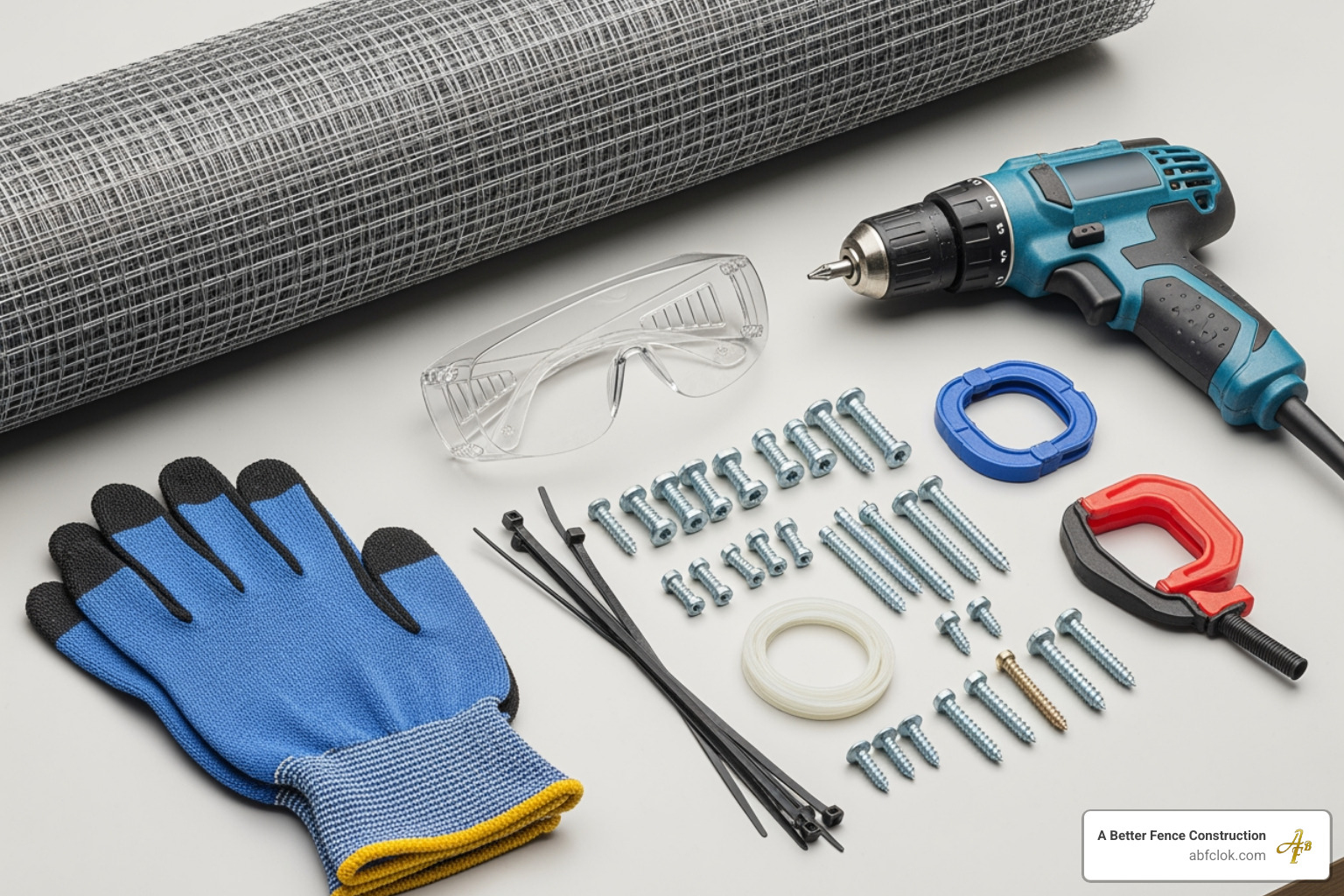
Your essential toolkit should include:
- Safety Gear: Heavy-duty gloves and safety glasses are a must.
- Measuring Tools: Tape measure and a level.
- Installation Tools: A power drill and wire cutters.
- Fasteners: Your chosen method will determine if you need zip ties, stainless steel screws and washers, or specialized clamps.
If your project involves digging to bury the wire, call 811 before you start to have underground utilities marked. To learn more about the premium materials we choose for all our installations, check out our materials.
Comparing Attachment Methods: From Quick Fixes to Permanent Solutions
When attaching wire fence to vinyl fence, your choice of method impacts durability, appearance, and the health of your existing fence. Let’s compare the most common options for your Oklahoma City property.
Temporary & Low-Impact: Zip Ties
Zip ties are a fast, cheap, and easy solution that requires no drilling, which is great for protecting your vinyl fence and its warranty. However, they have significant downsides:
- UV Degradation: Standard zip ties become weak and brittle when exposed to sunlight.
- Short Lifespan: Due to weather exposure in Oklahoma, they often snap and fail within 1-3 years.
- Less Secure: They don’t provide a tight hold, leading to potential sagging. They are a temporary fix at best.
A More Secure Option: Screws and Washers
For a more permanent solution, screws and washers offer a much stronger hold than zip ties, reducing sag. However, this method has drawbacks:
- Permanent Holes: You must drill into your vinyl posts, which is irreversible and may void your warranty.
- Risk of Cracking: Overtightening screws can crack the vinyl, especially in cold weather.
- Use the Right Hardware: Always use stainless steel screws to prevent rust stains and flat washers to distribute pressure, reducing the risk of damage to the vinyl or wire.
The Professional Choice: Specialized Fence Clamps
For the best combination of security, aesthetics, and vinyl protection, we recommend specialized fence clamps.
- Professional and Secure: These clamps, often made of aluminum, provide a neat, uniform appearance and a very strong hold.
- Distributes Pressure: Unlike a single screw, a clamp spreads pressure evenly across the vinyl surface, significantly reducing the risk of damage and creating a tight, long-lasting finish.
- Long-Term Value: While the initial cost is higher, their durability and superior performance make them a worthwhile investment. They are often reusable, rust-proof, and easy to install with a power drill.
The best method depends on your budget and long-term needs. For a robust, professional-grade solution, specialized clamps are the clear winner. We’re proud to offer full residential services that include these kinds of custom solutions for our Oklahoma City clients.
| Criteria | Zip Ties | Screws & Washers | Specialized Clamps |
|---|---|---|---|
| Durability | Low (1-3 years) | Medium to High | High |
| Cost | Very Low | Low to Medium | Medium to High |
| Ease of Installation | Very Easy | Medium | Medium |
| Visual Appeal | Low | Medium | High |
Step-by-Step Guide to Attaching Wire Fence to Vinyl Fence
With a clear plan, attaching wire fence to vinyl fence can be a straightforward DIY project that yields a professional result. Our goal is lasting quality, and these steps will help you get that pro finish.
Step 1: Unroll and Position the Wire
A good start is crucial for a straight, tight fence.
- Start at a corner post. This provides a strong anchor point for pulling the wire taut.
- Unroll the wire carefully. Heavy wire can be difficult to manage; a helper makes this much easier. A simple trick is to slide a pipe through the roll for a friend to hold as you unroll.
- Watch the curve. Position the wire so its natural curve bows slightly away from the vinyl. If it pushes into the fence, you’ll get a wavy fence.
- Align and leave extra. Align the mesh vertically with the first post, leaving extra length at the start and end of your run for adjustments.
Step 2: Achieving a Tight, Professional Look When Attaching Wire Fence to Vinyl Fence
Proper tensioning is the secret to avoiding a saggy, unprofessional fence.
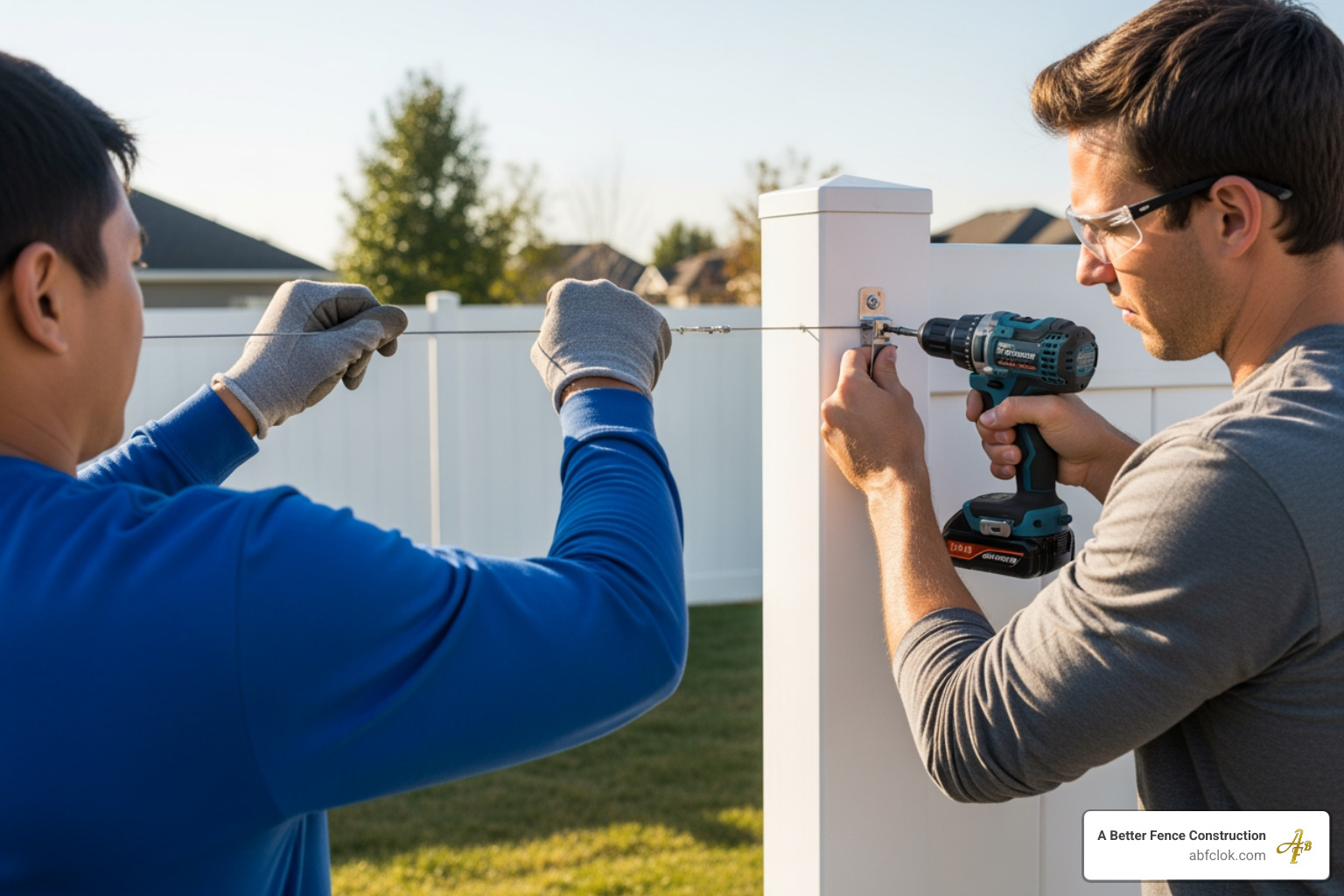
- Make it a two-person job. For the best results, one person should pull the wire taut while the other secures it.
- Use tensioning tools. For long sections, a fence stretcher or come-along provides the even tension needed to remove all slack. A DIY solution involves weaving a metal rod through the wire’s end to pull on, which distributes the force evenly.
- Make final adjustments. Use the claw of a hammer to give individual wires a slight twist to remove any minor remaining sag. Once the wire is taut and straight, you’re ready to fasten it. See what a professional finish looks like on a finished vinyl fence project.
Step 3: Fasten the Wire to the Posts and Rails
With the wire tensioned, it’s time to secure it.
- Use proper fastener spacing. Place a fastener every 2 feet vertically and horizontally to prevent sagging and ensure stability.
- Always attach to the posts. The vertical posts are the strongest part of your fence. Attaching to the weaker horizontal rails can cause them to sag or break under tension.
- Secure the bottom edge. To prevent animals from digging underneath, place a fastener at the bottom of each post. For extra security, drive landscaping staples into the ground over the wire between posts.
Advanced Solutions and Long-Term Considerations
For determined pets or maximum longevity in Oklahoma’s weather, some advanced techniques for attaching wire fence to vinyl fence are worth considering.
For Maximum Stability: Using T-Posts
For heavy wire or high-strain applications, using T-posts as a backup support system is a professional method that dramatically reduces stress on vinyl. Instead of attaching the tensioned wire to your vinyl posts, you create an independent framework.
- How it Works: Drive metal T-posts into the ground behind each vinyl post. Attach the wire fence directly to the T-posts. This way, the T-posts bear the load, while your vinyl fence remains purely aesthetic and free from strain that could cause warping or cracking.
- Installation and Aesthetics: Use a T-post driver to install the posts at least two feet deep. From the street, the T-posts are hidden. From inside the yard, they will be visible, but this trade-off provides a significantly more robust and maintenance-free system.
Long-Term Implications of Attaching Wire Fence to Vinyl Fence
A properly installed wire addition can last for years with minimal upkeep.
- Weather Resistance: In Oklahoma, materials must withstand extreme weather. Vinyl-coated wire and rust-resistant fasteners (like stainless steel or aluminum) are essential for preventing rust and degradation.
- Fastener Lifespan: The longevity of your project depends heavily on your fasteners. Zip ties fail quickly, while stainless steel screws and aluminum clamps offer a much longer-lasting solution.
- Maintenance and Inspection: Regularly inspect your fence, especially after storms. Look for sagging wire, loose fasteners, or signs of stress on the vinyl, such as cracks or warping. Catching damage early prevents bigger problems. A well-executed installation with quality materials, like those seen in our beautiful vinyl fence projects, should serve you reliably for years.
Frequently Asked Questions about Attaching Wire to Vinyl
Here are answers to common questions our Oklahoma City clients ask about attaching wire fence to vinyl fence.
Can I attach wire fencing to the horizontal rails of my vinyl fence?
No, we strongly advise against it. The horizontal rails are much weaker than the posts and are not designed to handle the constant tension from a wire fence. Attaching wire to them will likely cause the rails to sag, warp, or break over time. For strength and stability, always fasten the wire to the vertical posts.
What is the best way to stop pets from digging under the wire?
Burying the wire is the most effective method. Dig a 6- to 12-inch trench along the fence line, lay the bottom of the wire mesh in it, and secure it with landscaping staples before backfilling. This creates an underground barrier that stops most diggers. Also, be sure to place fasteners at the very bottom of each post to eliminate gaps.
Will drilling into my vinyl fence void the warranty?
It very likely will. Always check your manufacturer’s warranty before drilling. Most warranties are voided by modifications like drilling holes. If preserving your warranty is a priority, use non-damaging methods like specialized clamps that attach without drilling. When in doubt, professional installation is the safest way to protect your investment. For comprehensive help with your vinyl fence projects, explore our residential services.
Conclusion
Attaching wire fence to vinyl fence is a practical upgrade for any Oklahoma City homeowner needing to secure their yard for pets, children, or a garden. By following the right steps, you can achieve a professional and durable result.
The keys to success are simple:
- Proper tensioning is essential to avoid a wavy, unprofessional look.
- Choosing the right fasteners, like specialized clamps, ensures longevity in Oklahoma’s weather.
- Attaching to vertical posts, not the weaker horizontal rails, protects your vinyl fence from damage.
At A Better Fence Construction, we are committed to meticulous work and lasting quality. While this can be a rewarding DIY project, professional installation guarantees a perfect, secure finish. For peace of mind and an expert touch on your Oklahoma City property, contact us for your vinyl fence installation needs. Let us bring our commitment to excellence to your project.
