

Introduction: Why Build a Block Retaining Wall?
Constructing a retaining wall with blocks is a powerful way to transform sloped or uneven terrain into functional, attractive outdoor space. Whether you’re battling erosion on a hillside or dreaming of a terraced garden, a well-built block wall delivers both practical solutions and visual appeal.
Quick Guide to Constructing a Retaining Wall with Blocks:
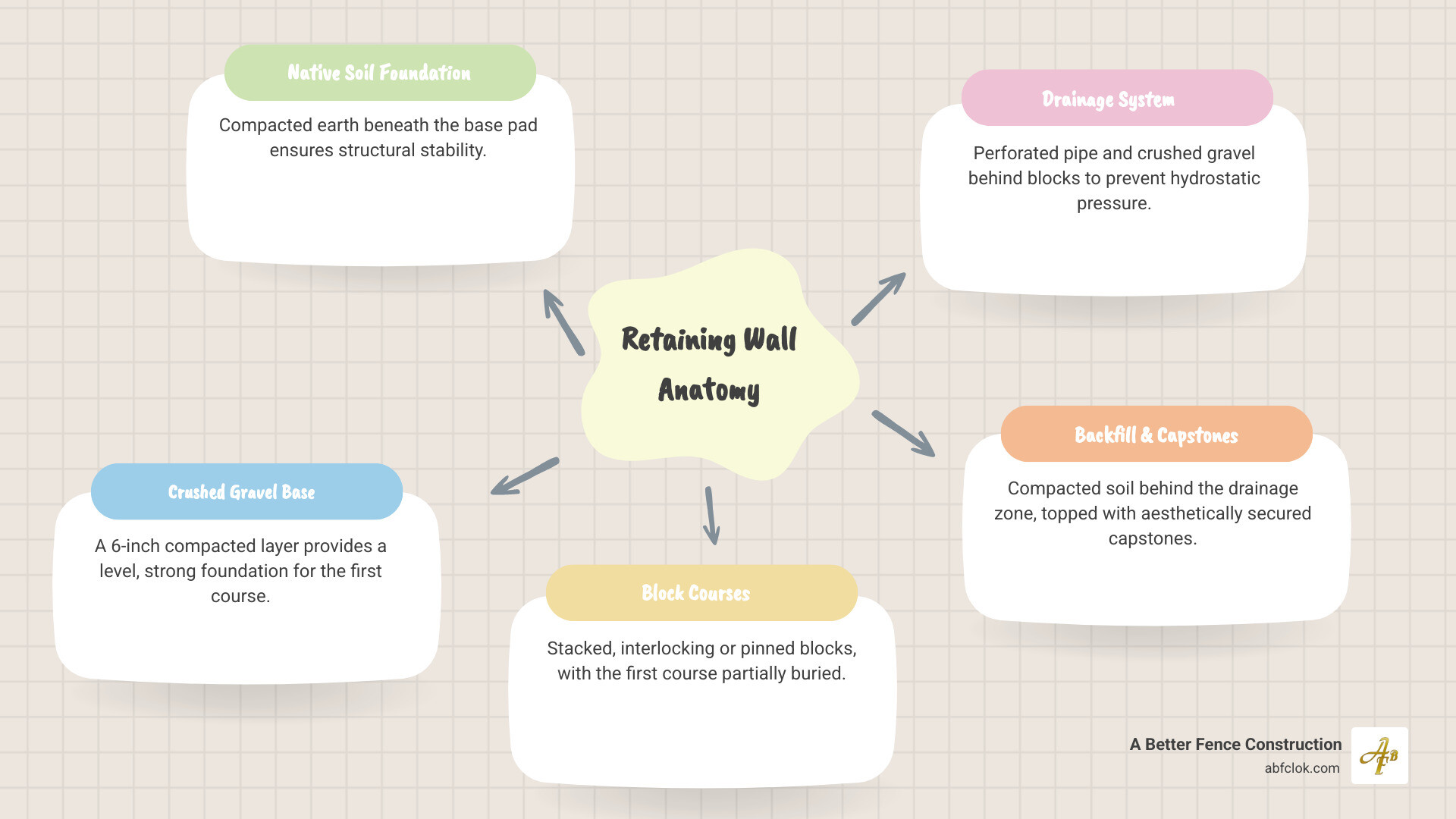
- Plan and Mark – Determine location, height, and check local permits (required for walls over 4 ft)
- Excavate – Dig trench 4-6 inches deep plus depth to bury half the first block
- Build Base – Add 3-6 inches of crushed gravel and compact thoroughly
- Lay First Course – Bury blocks halfway, ensure perfectly level and aligned
- Install Drainage – Place perforated pipe and gravel behind wall
- Stack Courses – Offset blocks by 1/4 length, backfill and compact in layers
- Finish – Add capstones with adhesive for a polished look
Why Property Owners Choose Block Retaining Walls:
Block retaining walls solve real problems while enhancing your property. They prevent soil erosion on sloped yards, turning unusable hillsides into stable, level areas. They create usable outdoor space for terraced gardens, raised patios, or defined planting beds. And they significantly boost curb appeal with clean lines and professional-looking structure.
The beauty of block systems is their balance of strength and accessibility. Modern interlocking blocks feature built-in setback and drainage, eliminating the need for mortar or complex engineering for shorter walls. A typical DIY project might cost around $1,200 for materials and take 80-90 hours to complete for a 39-foot wall.
That said, proper construction is non-negotiable. Poor drainage causes most retaining wall failures, and an unstable foundation leads to leaning, bulging, or collapse. The difference between a wall that lasts decades and one that fails within years comes down to careful planning, proper base preparation, and meticulous execution of each step.
For walls over 4 feet tall, steep slopes, or poor soil conditions, professional engineering and installation aren’t optional—they’re essential for safety and structural integrity.
Planning Your Project: The Foundation of Success
Before we even think about digging into the earth, remember this golden rule: thorough planning is the bedrock of a successful and lasting block retaining wall. Think of it as mapping out your adventure before you set sail! A well-thought-out plan helps us consider our goals, understand the site’s unique conditions, and steer those crucial local regulations right here in Oklahoma City.
First things first, let’s nail down why we’re building this wall. Is it to bravely battle soil erosion, create a charming level planting bed, or perhaps define a cozy patio space? These decisions are super important because they’ll guide the wall’s height, length, and overall look. Knowing your “why” makes all the other choices much clearer!
For any retaining wall project, especially if you’re new to this, know when to call in a professional engineer or secure those all-important permits. In Oklahoma City, just like many places, if your wall plans to stand taller than 4 feet, you’ll almost certainly need a building permit and a design stamped by a licensed engineer. Even for shorter walls, if you’re dealing with tricky situations like steep slopes, heavy loads (think a driveway just above your wall!), or questionable soil, getting an engineer’s opinion is a very smart move. Ignoring local zoning laws and permits can lead to frustrating fines or, worse, having to tear down your hard work. Always, always check with your local authorities for the specific rules.
Here’s another big one: know your property lines! Building even a little bit onto your neighbor’s land can cause unnecessary headaches and disputes. A professional survey can confirm your boundaries and help you avoid future awkward conversations over the fence.
And now for perhaps the most important safety step before you break ground: you must call 811 to have underground utility lines marked. This fantastic, free service helps pinpoint gas, water, and electrical lines lurking beneath the surface. It prevents dangerous accidents and costly damage. If you’re in the U.S., just dial 811, and for our friends in Oklahoma, you can also visit OKIE811 directly. Don’t skip this call!
Safety warnings aren’t just for show during construction. Always wear your personal protective equipment (PPE)! This includes sturdy gloves, clear safety glasses, and hearing protection (especially if you’re cutting blocks). A respirator is also a good idea if things get dusty. Lifting heavy blocks can be tough on your back, so practice proper lifting techniques or, better yet, enlist a friend to help. Your back will thank you!
Essential Tools and Materials for Constructing a Retaining Wall with Blocks
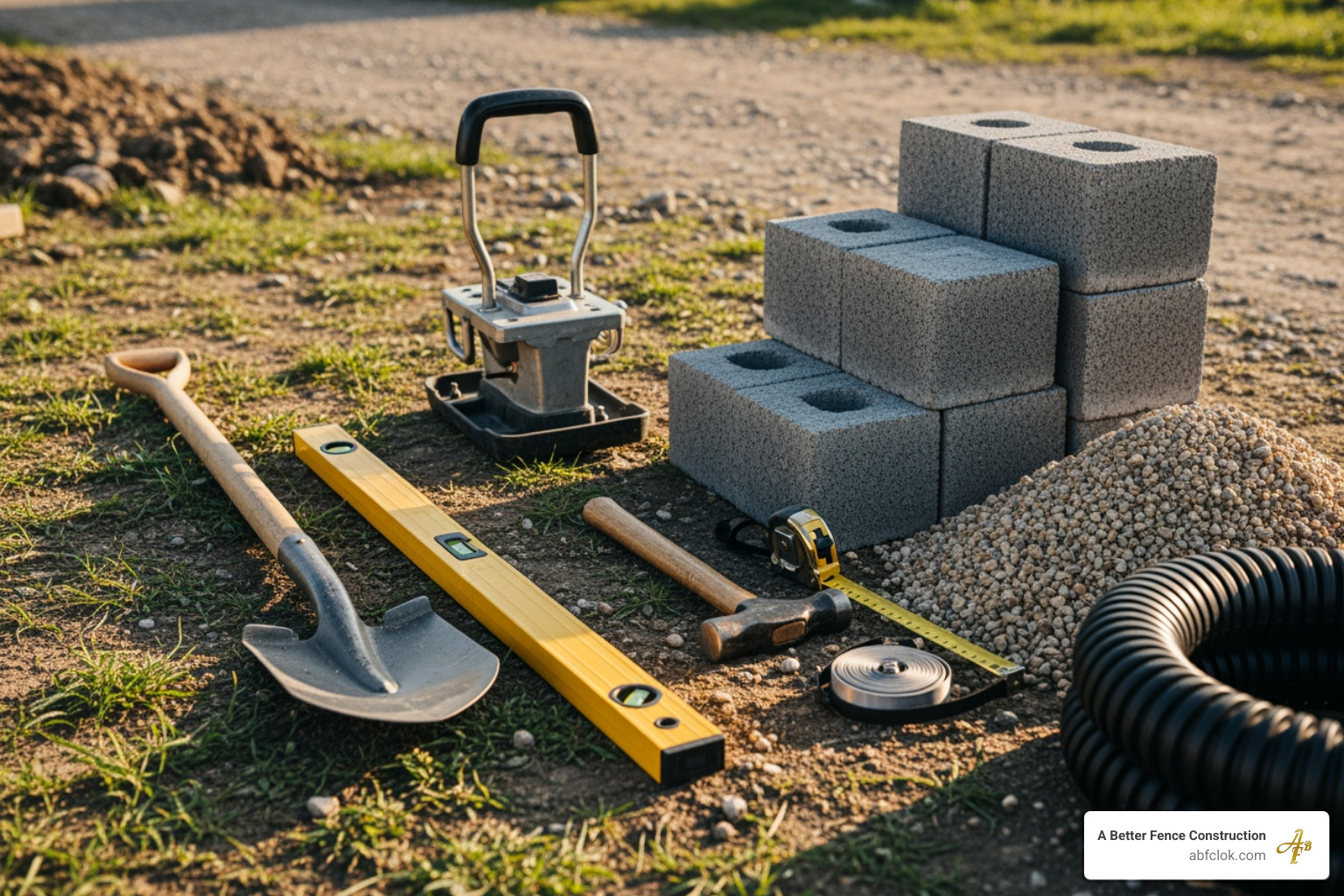
Having the right tools and materials ready to go makes building a block retaining wall a much smoother and safer process. Imagine trying to bake a cake without flour – it just won’t work! Here’s a rundown of what you’ll typically need:
- Shovel: Your trusty companion for digging the trench and moving soil.
- Wheelbarrow: Perfect for hauling blocks, gravel, and dirt around your workspace.
- Tape Measure: For making sure every measurement is spot-on.
- Stakes and String Line: These are critical for marking your wall’s layout and keeping your courses perfectly straight and level.
- Line Level or String Level: To ensure your string line itself is level.
- Torpedo Level and 2-foot or 4-foot Level: Essential for checking the level of individual blocks and ensuring an entire course is perfectly flat.
- Rubber Mallet: Your gentle persuader for tapping blocks into their final position.
- Hand Tamper or Plate Compactor: Absolutely non-negotiable for compacting your trench and base material. For bigger walls, a plate compactor will save you tons of effort (and sweat!).
- Masonry Chisel and Hammer: Handy for removing those pesky lips from blocks or making minor adjustments.
- Gas-Powered Cutoff Saw (with masonry blade): For making clean, precise cuts on blocks, especially when tackling curves or wall ends.
- Safety Glasses, Gloves, Hearing Protection, Respirator: Your personal safety squad!
- Retaining Wall Blocks: The main stars of your project!
- Crushed Gravel (often called “wall rock” or “3/4-inch clean aggregate”): You’ll need a lot of this for both your sturdy base and the crucial drainage zone behind the wall.
- Perforated Drainage Pipe: To collect excess water behind the wall and guide it safely away.
- Landscape Fabric: This acts as a barrier, separating your gravel drainage zone from the soil backfill, which prevents clogging.
- Construction Adhesive (a flexible masonry adhesive): For securely attaching capstones and, sometimes, the top courses of blocks.
Choosing the Right Blocks and Calculating Quantities
When you’re constructing a retaining wall with blocks, you’ll find a few different types to choose from. The most common options are interlocking blocks, pinned systems, and regular stacked blocks. Each has its own benefits, depending on your project’s needs and your preferred style.
| Block Type | Description | Best For | Pros | Cons |
|---|---|---|---|---|
| Interlocking Blocks | Feature a lip or tongue-and-groove system that locks into the course below. They naturally create a slight setback. | DIY projects, walls up to 4 ft, gentle curves. | No mortar needed, easy to install, built-in setback, good for drainage. | Not suitable for very tall walls or heavy loads without engineering. |
| Pinned Systems | Blocks have holes for fiberglass or concrete pins that connect them to the course below. Can be straight or have a setback depending on pin placement. | Walls up to 6 ft (or taller with engineering), projects requiring more flexibility in setback. | Stronger connection between blocks, more design flexibility, can handle more pressure than lip systems. | Requires precise pin placement, pins can add to material cost. |
| Regular Stacked Blocks | Simple, solid concrete blocks (like cinder blocks) that are stacked directly. Often require mortar for stability or are used for very low, non-load-bearing walls. | Very low garden borders, decorative features, walls where aesthetics are less critical or mortar is preferred. | Inexpensive, widely available. | Requires mortar for stability (more complex), no built-in setback, poor drainage if not managed carefully, not for structural retaining. |
Once you’ve picked your blocks, it’s time for some math! Calculating your material needs is key to staying on budget and avoiding extra trips to the store.
- Block Quantity: Measure the total linear feet of your wall and its planned height. Your block supplier can help you determine how many blocks you’ll need per square foot of wall face. Don’t forget to account for any capstones you plan to add!
- Gravel Quantity: This depends on the length of your wall, the width of your base pad (usually 6-12 inches), and the depth of your drainage zone (at least 12 inches wide and nearly the full height of the wall).
- Paver Base: If you’re using a specific paver base material instead of just crushed gravel for the foundation, factor that in too.
A golden rule: always order about 10% extra of everything. You’ll thank yourself later when a block breaks, or you realize you need a little more gravel.
For example, a typical 39-foot wall, 2 feet high, might require around 130-150 blocks, 3-4 cubic yards of gravel, and a few rolls of landscape fabric. While the introduction mentioned a DIY project costing around $1,200 for materials for a 39-foot wall, remember costs can vary wildly depending on your block choice and local prices. Always get current quotes for your specific project!
Introduction: Why Build a Block Retaining Wall?
Constructing a retaining wall with blocks is a powerful way to transform sloped or uneven terrain into functional, attractive outdoor space. Whether you’re battling erosion on a hillside or dreaming of a terraced garden, a well-built block wall delivers both practical solutions and visual appeal.
Quick Guide to Constructing a Retaining Wall with Blocks:
- Plan and Mark – Determine location, height, and check local permits (required for walls over 4 ft)
- Excavate – Dig trench 4-6 inches deep plus depth to bury half the first block
- Build Base – Add 3-6 inches of crushed gravel and compact thoroughly
- Lay First Course – Bury blocks halfway, ensure perfectly level and aligned
- Install Drainage – Place perforated pipe and gravel behind wall
- Stack Courses – Offset blocks by 1/4 length, backfill and compact in layers
- Finish – Add capstones with adhesive for a polished look
Why Property Owners Choose Block Retaining Walls:
Block retaining walls solve real problems while enhancing your property. They prevent soil erosion on sloped yards, turning unusable hillsides into stable, level areas. They create usable outdoor space for terraced gardens, raised patios, or defined planting beds. And they significantly boost curb appeal with clean lines and professional-looking structure.
The beauty of block systems is their balance of strength and accessibility. Modern interlocking blocks feature built-in setback and drainage, eliminating the need for mortar or complex engineering for shorter walls. A typical DIY project might cost around $1,200 for materials and take 80-90 hours to complete for a 39-foot wall.
That said, proper construction is non-negotiable. Poor drainage causes most retaining wall failures, and an unstable foundation leads to leaning, bulging, or collapse. The difference between a wall that lasts decades and one that fails within years comes down to careful planning, proper base preparation, and meticulous execution of each step.
For walls over 4 feet tall, steep slopes, or poor soil conditions, professional engineering and installation aren’t optional—they’re essential for safety and structural integrity.
Planning Your Project: The Foundation of Success
Before we even think about digging, thorough planning is paramount. A well-thought-out plan is the bedrock of a successful and lasting block retaining wall. We need to consider our goals, the site’s conditions, and crucial local regulations here in Oklahoma City.
First, determine the primary functional and aesthetic reasons for building our wall. Is it to prevent erosion, create a level planting bed, or define a patio space? These decisions will influence the wall’s height, length, and overall design.
For any retaining wall project, especially if it’s our first, we must be aware of when to involve a professional engineer or obtain permits. In Oklahoma City, as in many places, walls more than 4 feet tall will likely require a building permit and a plan made by a licensed engineer. Even for shorter walls, if we’re dealing with steep slopes, heavy loads (like a driveway above the wall), or questionable soil conditions, consulting an engineer is a wise decision. Ignoring local zoning laws and permits can lead to costly fines or even the forced removal of our beautifully built wall. Always check with local authorities for specific regulations.
Another critical step: identifying our property lines. Failing to check property lines is a significant mistake that can lead to disputes with neighbors. A professional survey can confirm boundaries and prevent future headaches.
Finally, and perhaps most importantly for our safety, before digging any holes, we must call 811 to have underground utility lines marked. This free service helps locate gas, water, and electrical lines, preventing dangerous accidents or costly damage. In the U.S., we can call 811, and for Oklahoma, we can visit OKIE811.
Safety warnings are not to be ignored during construction. We should always wear appropriate personal protective equipment (PPE), including gloves, safety glasses, hearing protection (especially when cutting blocks), and even a respirator if there’s a lot of dust. Lifting heavy blocks can strain our backs, so proper lifting techniques or a helper can save us from injury.
Essential Tools and Materials for Constructing a Retaining Wall with Blocks
Having the right tools and materials on hand makes the job much smoother and safer. Here’s what we’ll typically need for constructing a retaining wall with blocks:
- Shovel: For digging the trench and moving soil.
- Wheelbarrow: To transport blocks, gravel, and soil.
- Tape Measure: For accurate planning and layout.
- Stakes and String Line: To mark the wall’s layout and ensure straight, level courses.
- Line Level or String Level: For checking the level of the string line.
- Torpedo Level and 2-foot or 4-foot Level: For checking the level of individual blocks and multiple blocks.
- Rubber Mallet: For gently tapping blocks into place and making minor adjustments.
- Hand Tamper or Plate Compactor: Absolutely essential for compacting the trench and base material. For larger walls, a plate compactor will save us a lot of effort.
- Masonry Chisel and Hammer: For removing lips from blocks or making small cuts.
- Gas-Powered Cutoff Saw (with masonry blade): For making precise cuts on blocks, especially for curves or ends.
- Safety Glasses, Gloves, Hearing Protection, Respirator: Our PPE.
- Retaining Wall Blocks: The star of our show!
- Crushed Gravel (also called “wall rock” or “3/4-inch clean aggregate”): For the base and drainage zone behind the wall. We’ll need a lot of this!
- Perforated Drainage Pipe: To collect water behind the wall and direct it away.
- Landscape Fabric: To separate the gravel drainage zone from the soil backfill, preventing clogging.
- Construction Adhesive (flexible masonry adhesive): For securing capstones and, sometimes, the top courses of blocks.
Choosing the Right Blocks and Calculating Quantities
When it comes to constructing a retaining wall with blocks, we have a few options for the blocks themselves. The most common types are interlocking blocks, pinned systems, and regular stacked blocks.
| Block Type | Description “`
