

Why Wood Fencing Remains a Top Choice for Property Owners
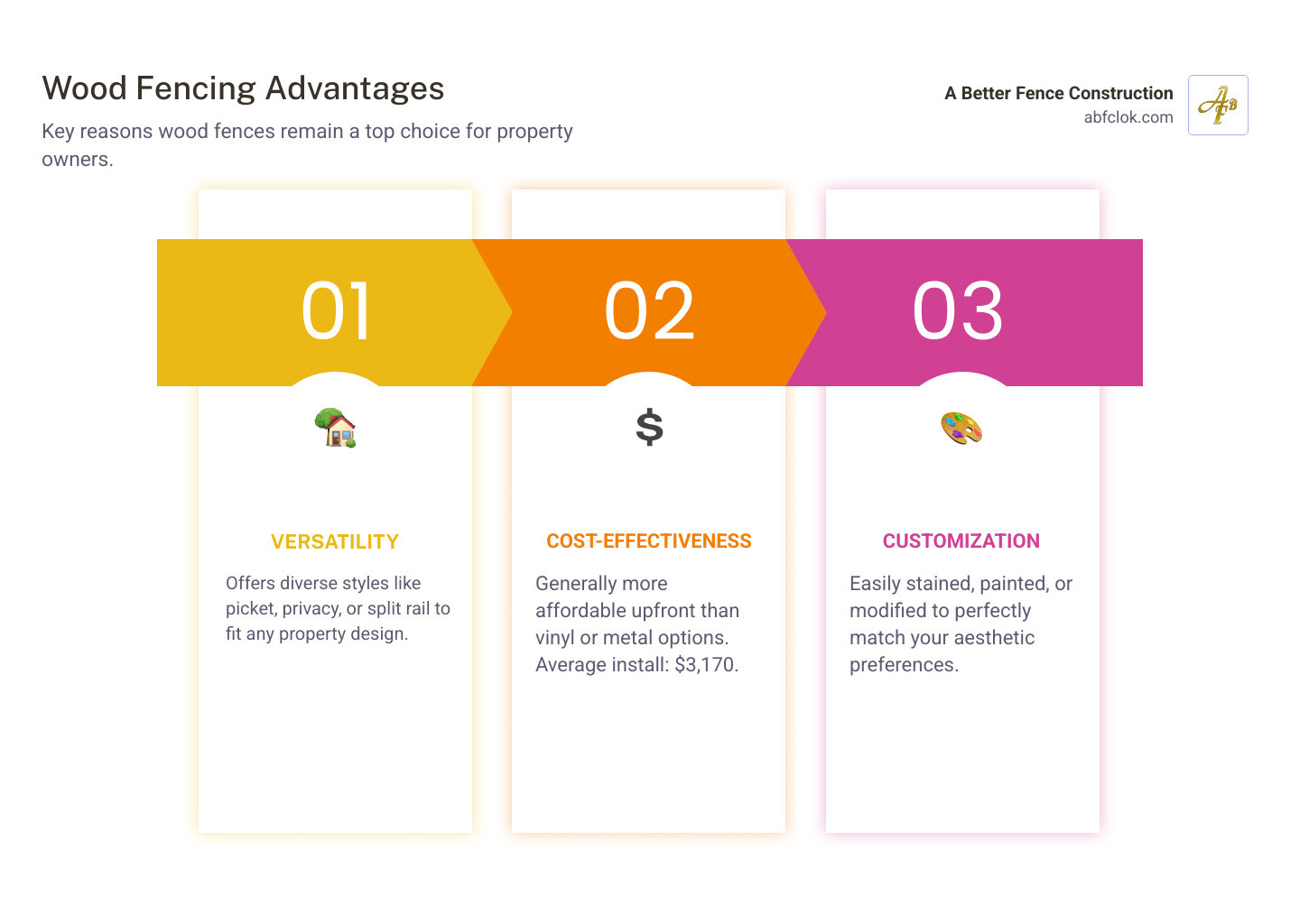
Wood fencing is a timeless choice for defining property lines, adding privacy, and bringing natural beauty to any outdoor space. From classic picket fences that boost curb appeal to tall privacy fences for security, wood offers best customization and value compared to many alternatives.
Key Benefits of Wood Fencing:
- Aesthetic Versatility – Complements any architectural style from traditional to modern
- Customizable – Easy to stain, paint, or modify to your exact specifications
- Cost-Effective – Generally more affordable upfront than vinyl or metal alternatives
- Natural & Eco-Friendly – Sustainable material that biodegrades naturally
- Privacy & Security – Provides solid barriers for homes, businesses, and pets
- Property Value – Well-maintained wood fences increase home resale value
Popular Wood Types:
- Cedar – Naturally rot and insect-resistant, beautiful grain, minimal maintenance
- Redwood – Premium hardwood option, superior durability, rich natural color
- Pressure-Treated Pine – Most affordable, chemically treated for decay resistance
Depending on the wood, installation, and maintenance, a quality wood fence can last 10-30+ years. Professional installation averages $3,170 (ranging from $1,790 to $4,555), or about $10-$30 per square foot.
I’m Jose Grados, owner of A Better Fence Construction. I bring nearly a decade of aerospace engineering experience to every wood fencing project. This background in structural design and quality control ensures your fence is built with meticulous attention to detail for maximum strength and longevity.
Why Choose a Wood Fence?
When fencing your property in Oklahoma City, Edmond, or Norman, you have many options. But there’s a reason wood fencing remains a favorite: it offers a unique combination of beauty, value, and function.
Wood’s natural warmth and character complement any home style, from classic to modern. Its unique grain offers an aesthetic that synthetic materials can’t replicate. This visual appeal translates directly into value, as a quality wood fence boosts curb appeal and increases your home’s resale price. It’s an investment that signals a well-cared-for property.
Where wood truly shines is in its customization. You can easily paint or stain it to match your home and adjust the height, style, and picket spacing to create a look that is uniquely yours. From a practical standpoint, wood is often more affordable upfront than vinyl or metal, making quality fencing accessible for a wider range of budgets.
As a renewable and biodegradable resource, wood is also an eco-friendly choice compared to plastics that remain in landfills. But perhaps the top reason people choose wood fencing is for privacy and security. A solid fence transforms your backyard into a private retreat, keeping children and pets safe while creating clear property boundaries that make a house feel like a home.
We’ve helped countless families across the Oklahoma City area create beautiful, functional outdoor spaces with quality wood fences. If you’re curious about what we can do for your property, check out our residential services to see the full range of possibilities.
Anatomy and Styles of Wood Fencing
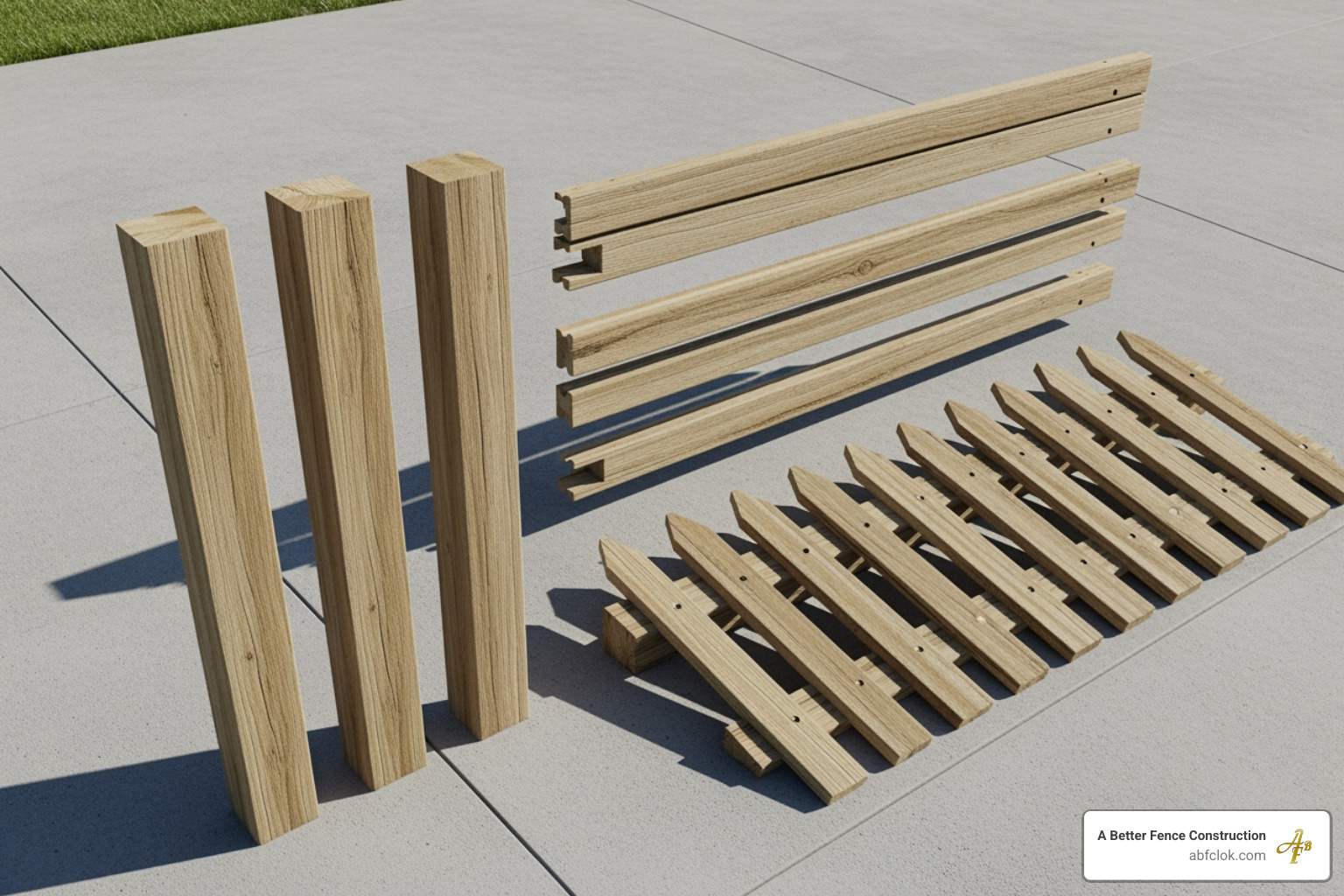
Understanding the components of a wood fence helps you appreciate what makes one strong and beautiful. Like a house, a fence is a system of parts working together to stand up to Oklahoma’s weather for years to come.
The Main Components of a Wood Fence
- Posts: These are the foundation, set deep in concrete to support the fence’s weight and withstand wind and weather.
- Rails: These horizontal boards connect the posts, creating the framework and providing structural strength.
- Pickets: The vertical boards that attach to the rails, forming the face of the fence and defining its style and level of privacy.
- Kickboard: A board running along the bottom that adds strength, protects pickets from ground moisture, and helps deter digging.
- Caps and Finials: Post caps protect the tops of posts from rain and rot, while decorative finials add personality.
- Hardware: We use hot-dipped galvanized or stainless steel nails, screws, and hinges to prevent rust and corrosion. For more details, A Complete Guide to the Parts of a Wood Fence offers additional insights.
Popular Wood Fencing Styles
Now for the fun part—choosing a style that matches your home and needs.
- Picket Fence: The classic picket fence defines boundaries with a friendly, open feel, making it perfect for adding curb appeal to front yards.
- Privacy Fence: This style features tightly spaced pickets to create a solid barrier, offering complete visual blockage. It’s the most popular choice for backyard security and seclusion in the OKC Metro area.
- Shadowbox Fence: A shadowbox fence alternates pickets on either side of the rails. This “neighbor-friendly” design offers privacy while allowing airflow and light.
- Board on Board Fence: This style overlaps pickets to ensure total privacy, even as the wood naturally expands and contracts. It creates a strong, gap-free barrier perfect for our climate. We offer several board on board fence options.
- Split Rail Fence: A split rail fence uses horizontal rails fitted into posts for a rustic, open look. It’s a budget-friendly way to define large properties.
- Lattice Fence: Lattice fencing uses a crisscross pattern to provide partial screening while allowing light and air to pass through. It works well as a decorative accent or as a stylish topper for privacy fences.

Each style serves a different purpose. The right choice for your Oklahoma home depends on your priorities for privacy, aesthetics, and budget. Our experience installing every style across Edmond, Norman, and Moore helps us guide you to the perfect fit.
Choosing Your Wood: A Comparison of Popular Materials
Beyond style, the type of wood you choose for your wood fencing project determines its durability, appearance, and maintenance needs. In Oklahoma City, where we face everything from scorching heat to ice storms, selecting the right material is critical for a long-lasting investment. We’ve worked with all types of wood in our local climate and know what performs best. For more details on our recommendations, visit our page on More about our materials.
Cedar and Redwood
Cedar and redwood are premium choices for wood fencing, known for their natural resistance to rot, decay, and insects. This is thanks to natural oils and tannins that act as built-in preservatives, a major advantage in Oklahoma’s humid climate.
Western Red Cedar has a beautiful reddish-brown hue, while Redwood offers a richer, deeper color. Both are highly stable, resisting warping and cracking, and can be left to weather to a silvery gray or stained to preserve their color. A well-built cedar fence can last 20-30+ years, with redwood lasting even longer. While the initial cost is higher, their longevity and low maintenance offer excellent long-term value.
Pressure-Treated Pine
For a solid, reliable fence on a tighter budget, pressure-treated pine is an excellent choice. The wood is chemically treated to resist rot and insects, making it durable enough for Oklahoma’s conditions. It’s the most affordable option for quality wood fencing.
The trade-off is that pine requires more maintenance. We recommend applying a quality sealant or stain every one to two years to protect it from moisture and UV damage. With proper care, a pressure-treated pine fence will provide 10 to 15 years of service.
Japanese cedar is another popular option in Oklahoma, offering natural durability and water resistance. It’s a stable choice with less shrinkage after installation, making it a great alternative that balances cost and performance.
Comparing Wood Fence Materials
Here’s a quick comparison to help you decide:
| Wood Type | Durability | Cost | Maintenance Level | Best For |
|---|---|---|---|---|
| Western Red Cedar | Excellent (20-30+ years), naturally resistant. | High | Low (periodic sealing/staining for aesthetics) | Premium privacy, aesthetic appeal, natural resistance to rot/insects, long-term investment, ideal for OKC’s varied climate. |
| Redwood | Superior (30+ years), natural resistance, strong. | Very High | Low (periodic sealing/staining for aesthetics) | Top-tier durability, luxurious appearance, extreme longevity, best for those prioritizing premium quality and willing to invest more. |
| Japanese Cedar | Very Good (15-25 years), natural resistance. | Medium-High | Medium (sealing/staining recommended) | Excellent alternative to Western Red Cedar, good natural resistance, durable and waterproof, less shrinkage post-installation, popular in OKC due to availability. |
| Pressure-Treated Pine | Good (10-15 years), chemically improved. | Low | High (regular sealing/staining every 1-2 years) | Budget-friendly projects, good resistance to rot/insects due to treatment, suitable for most general fencing needs where initial cost is a primary concern, especially for Oklahoma’s pests. |
The best wood for your fence depends on your budget, aesthetic goals, and desired maintenance level. We can help you weigh these factors to find the perfect fit for your home.
The Wood Fence Project: Installation, Costs, and Maintenance
Building a wood fence is a significant project. Understanding the installation process, costs, and long-term care will ensure you get a fence you love for years to come. We’ve guided homeowners across Oklahoma City, Piedmont, and Shawnee through this process and are here to explain what to expect. Learn more about our process on our Professional wood fence installation page.
Installation and Safety Considerations
Quality installation is the key to a long-lasting fence that can withstand Oklahoma thunderstorms. While DIY may seem tempting, professional installation is crucial for privacy fences and larger jobs, especially in our region’s challenging soil. Our process includes:
- Calling 811: We always locate underground utility lines before digging to ensure safety. This is a critical first step.
- Site Preparation: We clear the fence line of vegetation and debris to create a clean work area.
- Post Setting: We set every post in concrete to create a solid foundation that resists wind and shifting. For maximum durability, we can use galvanized steel posts.
- Safety: Our crews use proper safety gear, including gloves and eye protection, throughout the installation.
For more technical details, you can explore this guide on Technical details on fence construction, but we adapt all principles for our local Oklahoma conditions.
Understanding the Costs of Wood Fencing
The average cost for a professional wood fence installation is around $3,170, with a typical range of $10 to $30 per square foot. Pricing is based on the number of fence sections, not just linear feet. Key factors influencing the final cost include:
- Wood Type: Premium woods like cedar cost more upfront than pressure-treated pine.
- Style & Height: Taller, more complex designs require more material and labor.
- Site Conditions: Difficult terrain or rocky soil can increase labor costs.
- Gates & Hardware: Custom gates and premium hardware will add to the price.
Our estimates clearly break down material and labor costs with no hidden fees. We also offer Financing options for your project to help make your new fence more affordable.
Maintenance and Decorative Elements
Proper maintenance is essential to maximize your fence’s lifespan in Oklahoma’s climate.
- Sealing and Staining: This is the most critical step. Apply a quality sealant or stain every 1-2 years for pine (less often for cedar) to protect against UV rays and moisture.
- Regular Inspections: Periodically check for loose boards, leaning posts, or signs of rot or insect damage. Catching issues early prevents costly repairs.
- Prevent Rot: Ensure good drainage at the base of your fence and keep vegetation trimmed back. Post caps are also crucial for protecting post tops from water damage.
- Hardware Care: Lubricate gate hinges and latches annually to keep them working smoothly and prevent rust.
Adding decorative trim or upgrading gate hardware can also refresh your fence’s look and improve its function.
Frequently Asked Questions about Wood Fences
We’ve answered countless questions about wood fencing from clients across Oklahoma City, Edmond, and Norman. Here are some of the most common ones.
How long does a typical wood fence last?
A wood fence’s lifespan depends on the wood type, installation quality, and maintenance. Here’s a general guide:
- Pressure-Treated Pine: Typically lasts 10-15 years with regular sealing or staining every 1-2 years.
- Cedar and Redwood: Can last 20-30+ years due to their natural resistance to rot and insects. Maintenance is still recommended to preserve their appearance and maximize lifespan.
Consistent maintenance is the most critical factor in extending any wood fence’s life, especially in Oklahoma’s varied climate. A quality installation with posts set in concrete provides the foundation for this longevity.
Do I need a permit to build a wood fence in Oklahoma City?
It depends on where you live. Permit requirements vary by city (Oklahoma City, Edmond, Moore, etc.) and are not one-size-fits-all. Common regulations involve fence height (often different for front and back yards), placement relative to property lines, and specific rules for pool enclosures.
Additionally, if you live in a neighborhood with a Homeowners Association (HOA), they will have their own strict guidelines on materials, styles, and colors. You must get their approval before building.
While we are familiar with many local codes, we always recommend you call your local building code office and check with your HOA to get the most accurate information for your property. This quick check can prevent major headaches later.
What is the best wood for Oklahoma’s weather?
For Oklahoma’s harsh weather, we recommend materials that can handle intense sun, humidity, and temperature swings.
- Cedar (Western and Japanese): This is our top recommendation. Cedar’s natural oils provide excellent resistance to rot and insects. It’s also very stable, resisting warping in our climate. We improve this by using kiln-dried panels to minimize shrinkage.
- Pressure-Treated Pine: This is a great budget-friendly choice. The chemical treatment protects it from rot and insects, but it requires consistent sealing (every 1-2 years) to shield it from sun and moisture.
Regardless of the wood, proper installation and sealing are just as important as the material itself. Setting posts in concrete provides strength against our winds, and a quality sealant is non-negotiable for protecting any wood fence in Oklahoma.
Conclusion
Choosing the right wood fencing improves your property’s beauty, privacy, and value. We’ve covered the key considerations: the timeless appeal of wood, the different styles and components, and the best materials like cedar and pressure-treated pine for Oklahoma’s climate.
A quality fence is a combination of great materials and expert installation. A well-maintained cedar fence can last 20-30+ years, while a cared-for pine fence offers 10-15 years of service. The average professional installation costs around $3,170, making it a valuable home investment.
At A Better Fence Construction, we bring aerospace precision to every project. As a family-owned business serving the Oklahoma City metro, including Edmond, Norman, and Moore, we pride ourselves on meticulous work. From setting every post in concrete to using the best fasteners, we build fences that last.
We stand behind our work and are committed to providing a beautiful, functional fence that makes you proud of your property.
Ready to transform your outdoor space? Explore our wood fence options and contact us to get started. Let’s build something great together.
