

Why Homeowners Choose to Attach Vinyl Fence to Chain Link
Attach vinyl fence to chain link posts to transform your existing fence into a privacy barrier without the expense and labor of a complete replacement. Here’s how:
Quick Answer: Three Ways to Attach Vinyl to Chain Link
-
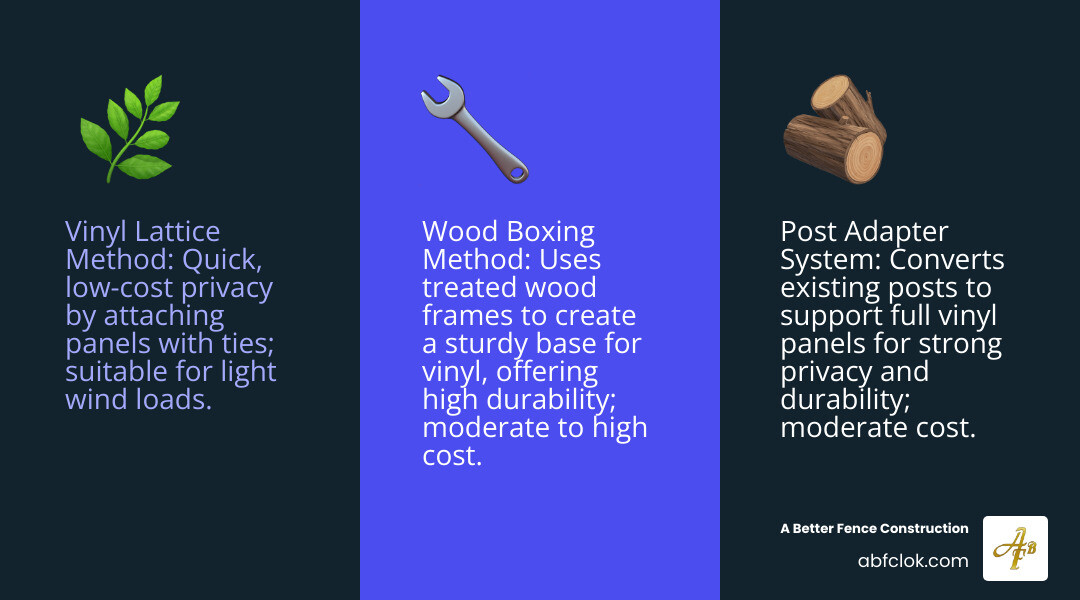
Vinyl Lattice Method – Use UV-resistant zip ties or stainless steel wire to secure vinyl lattice panels directly to the chain link fabric for quick privacy screening.
-
Post Adapter System – Install specialized brackets, donuts, or rook kits over existing metal posts, then slide vinyl post sleeves over them to support full vinyl fence panels.
-
Wood Boxing Method – Build pressure-treated wood frames around chain link posts using galvanized pipe straps, then attach vinyl post sleeves over the wood structure.
Many homeowners look at their chain link fence and wish for more privacy. As one person noted in an online forum, a standard chain link fence “lacks privacy.” The good news is you can use your existing chain link posts as a foundation for a vinyl upgrade, saving the cost and labor of a full replacement.
However, not all chain link fences are suitable for this conversion. Your posts need adequate strength to handle the wind load from solid vinyl panels, proper spacing to accommodate vinyl sections, and the structural integrity to last another 10-20 years.
This guide walks you through the assessment process, hardware options, and installation methods to successfully attach vinyl fence to chain link structures.
Pre-Installation Checklist: Is Your Chain Link Fence Ready?
Before buying materials, you must perform a health checkup on your fence. Adding solid vinyl panels changes everything, and your existing chain link posts must be up to the new job.
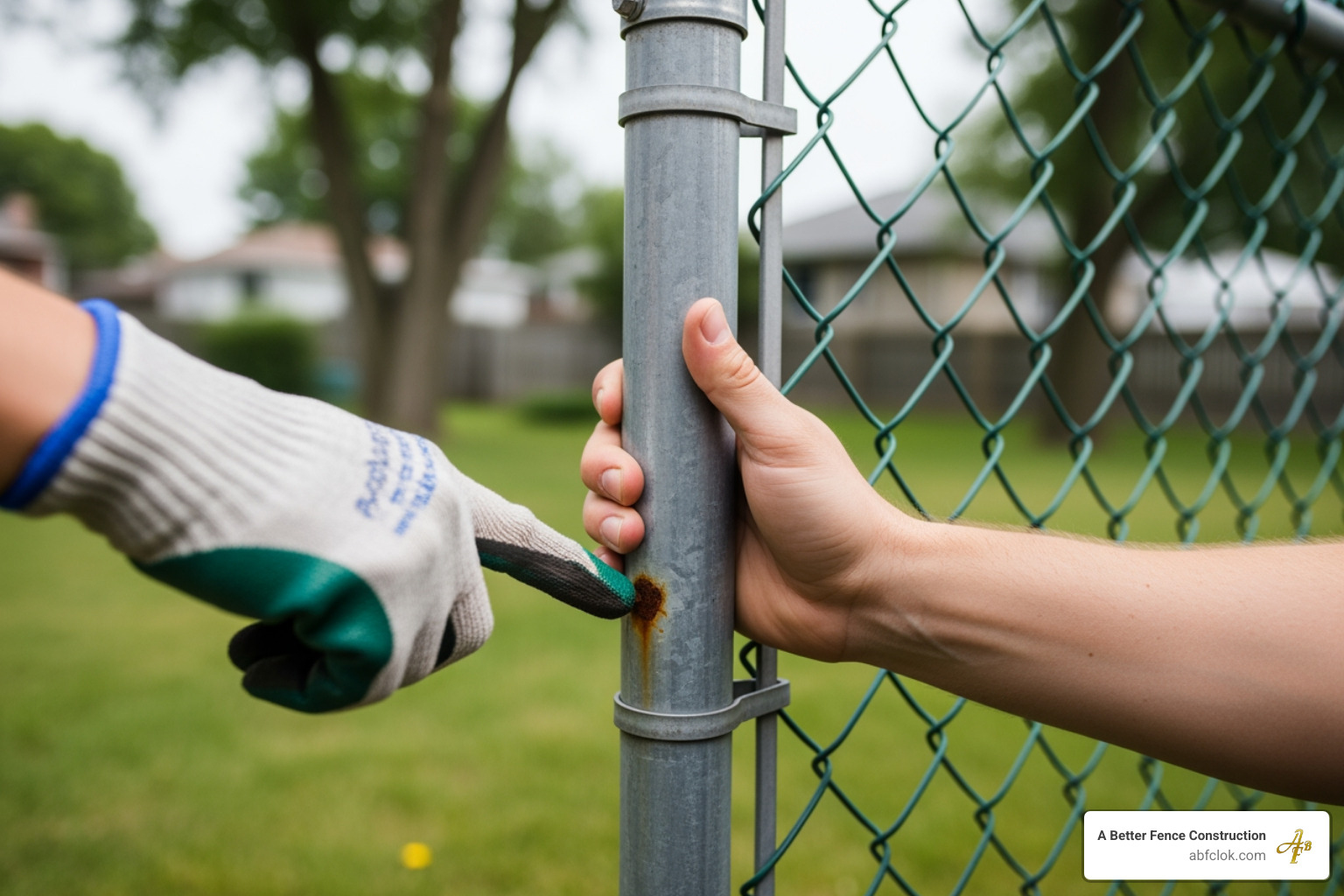
You’ll need to check post condition and stability, look for rust, measure post diameter, and note post spacing, especially considering Oklahoma’s wind. For more details on chain link construction, see our chain link fence page.
Assessing Post Strength and Spacing
Can your posts handle the wind load? Chain link posts, typically spaced 10 feet apart, allow wind to pass through. Solid vinyl panels create a wall that acts like a sail in Oklahoma’s 30+ mph winds, putting immense pressure on the posts.
Most line posts are thin-wall tubing, not designed for the wind load of solid panels. Give your posts a good shake. If they wobble significantly, that’s a major warning sign.
Standard vinyl fence panels come in 6-foot or 8-foot widths, which don’t align with 10-foot post spacing. While you can cut panels or find custom 10-foot panels with rail inserts, the most reliable solution is to install intermediate posts to create proper 6 or 8-foot spacing. This does require digging new holes but ensures a long-lasting fence.
Pay attention to the difference between your terminal posts (at corners, ends, and gates) and line posts (in between). Terminal posts are usually stronger and better candidates for conversion, while line posts may need reinforcement or replacement.
Checking for Alignment and Level
Run a tight string line from one end of your fence to the other, near the top and bottom of the posts. Step back and look for posts leaning in or out, or sections that dip or rise. Posts often shift over time due to soil settling, especially in the clay soil around the Oklahoma City area.
Vinyl fence panels need reasonably straight, level posts to look good. Major misalignments will result in gaps or twisted panels. Small variations can be handled with shimming techniques or adjustable adapters. However, if your posts are more than an inch or two out of alignment, you may need to reset them before starting the conversion.
Use a level on each post. A plumb (perfectly vertical) post provides better structural support. A wobbly, misaligned fence won’t hold up to Oklahoma weather.
For more information on quality vinyl fence installations, visit our vinyl fence page. This will help you evaluate if your chain link posts are up to the task.
Simple Upgrade: Attaching Vinyl Lattice for Quick Privacy
If you don’t need a full privacy fence, attaching vinyl lattice is a budget-friendly way to add seclusion and charm to your existing chain link fence. It’s a fantastic way to give your fence a fresh look.
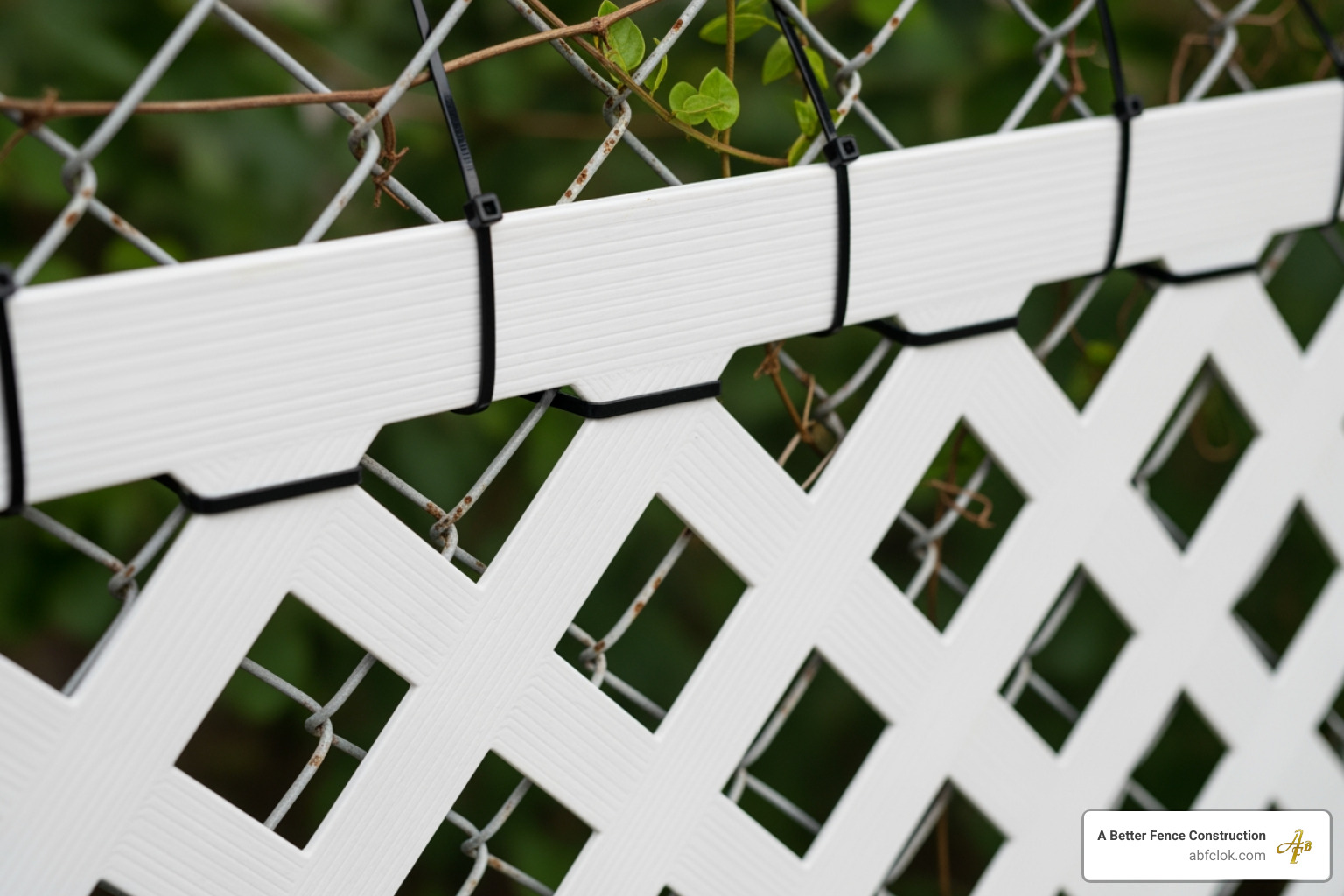
Vinyl lattice panels are a homeowner favorite because they:
- Boost privacy: These privacy lattice panels gently screen views without completely closing off your yard.
- Improve curb appeal: A plain chain link fence can be transformed into an appealing decorative lattice feature.
- Create a living wall: The lattice provides a perfect trellis for climbing plants.
The installation steps are straightforward: position the lattice panel against the chain link fabric and secure it. The secret to making this upgrade last, especially with Oklahoma’s weather, is choosing the right fasteners to ensure good weather resistance.
Comparing Fasteners: Zip Ties vs. Wire
When securing your lattice, durability and weather resistance are key. You have a few options for fasteners.
Zip ties (or cable ties) are inexpensive and easy to use. However, standard zip ties can become brittle and break under UV exposure. If you choose this method, always opt for UV-resistant black tie wraps, which are designed to withstand sunlight much better.
Wire is a strong and durable option if you choose the right kind. Plain galvanized wire can rust over time. For superior durability and corrosion resistance, we strongly recommend using stainless steel wire (at least 14 gauge). It’s a more reliable choice that will keep your lattice secure for years.
For a truly professional attachment, consider heavy-duty galvanized fabric ties. These are engineered for fence applications, offering exceptional strength and weather resistance. They are an excellent choice for a long-lasting, secure installation, though they are often only available through specialized fence suppliers.
No matter your choice, the goal is a secure attachment that can withstand wind. Black fasteners often blend well with both chain link and vinyl lattice for a clean look.
For more community tips on this topic, you can check out forums like this one: Discussion on attaching lattice
Full Conversion: How to Attach Vinyl Fence to Chain Link Posts
For a full privacy change, converting your chain link posts to support vinyl panels is the best option. Specialized hardware adapts your existing metal posts, saving you from digging new holes and mixing concrete.
These “no-dig” systems slide over or attach to your existing posts, creating a stable foundation for the vinyl post sleeves that hold the panels. Systems like the Slip Mount are designed specifically to convert galvanized chain link pipe into a vinyl fence foundation, giving you the look of a new fence in a fraction of the time.
For more information about our residential fence projects in the Oklahoma City area, check out our residential services page.
Choosing the Right Post Conversion Hardware
The hardware for converting posts has evolved, with each type solving specific challenges.
-
Post mount adapters (or adjustable 2-piece post sockets) are ideal for posts that aren’t perfectly level. These brackets secure to the metal pipe and allow for small adjustments before the vinyl post sleeve is installed.
-
Red vinyl fence post donuts fit snugly around the chain link pipe inside the vinyl sleeve. They fill the gap, preventing wobbling and creating a solid installation.
-
Vinyl fence post rook kits are similar, using two adapters per post for extra stability. Quality kits include the self-tapping stainless steel screws needed to create a rigid connection.
-
EZ Set vinyl fence post mounting brackets provide the most robust foundation. Install two brackets per steel post for proper stability. Sets usually include all necessary hardware.
The key is matching the hardware to your chain link post diameter (common sizes are 1-5/8″, 2″, and 2-1/2″). A snug fit is critical.
For detailed specifications on post mount systems, the resource at chainlinkfence.com offers helpful technical information.
Step-by-Step Guide to attach vinyl fence to chain link posts
Here’s how to attach vinyl fence to chain link posts using adapter systems.
1. Measure and Prepare Your Posts
Accurately measure the outer diameter of your posts. Use a wire brush to clean off any rust or debris where your adapters will attach to ensure a clean surface and maximum hold.
2. Install Adapters or Brackets
For post mount adapters, slide the inner cylinder over the steel pipe. Place the pipe with both brackets on a level surface before securing to ensure they are square. For donuts or rook kits, slide them over the pipe, positioning one near the top and one near the bottom of where your vinyl post sleeve will sit for dual-point stabilization.
3. Secure Hardware to Metal Posts
This is a critical step. Using stainless steel self-drilling screws (typically #10 or #12 hex head), firmly attach your brackets or adapters to the steel pipe. Use the largest size screw that fits the holes and don’t skimp on the number of screws for a stronger attachment.
4. Add Vinyl Sleeves and Panels
Slide your vinyl post sleeves over the secured adapters. They should fit snugly. Place the vinyl posts tightly on each side of your panel (within 1/4 inch is ideal) to prevent gaps. If your post spacing doesn’t match standard 6 or 8-foot panel widths, you will need to cut your panels and rails to size. The maximum span between posts should be 8 feet.
Fasten the horizontal rails of your vinyl sections to the post sleeves using vinyl fence brackets. For final stability, a screw in the top rail extending slightly above the post can keep the panel tight and prevent rattling.
Overcoming Common Challenges
When you decide to attach vinyl fence to chain link, you might encounter common issues with post spacing and alignment. Fortunately, these challenges are manageable with the right approach.
Mismatched Post Spacing
A frequent challenge is that chain link fences often have posts spaced 10 feet apart, while most vinyl panels are designed for 6 or 8-foot centers. This must be planned for.
-
Solution 1: Trim Your Panels. You can purchase standard vinyl panels and cut them down to fit your existing post spacing. This requires careful measurement to get a clean, professional finish.
-
Solution 2: Add Intermediate Posts. For a more robust result, install new intermediate posts between your existing ones. This creates shorter, more rigid spans (e.g., 5 feet) and is highly recommended for withstanding Oklahoma City’s winds.
-
Solution 3: Custom Panels with Stiffeners. To keep wider spans, you must use custom-width vinyl panels that include internal aluminum inserts for the horizontal rails. These stiffeners are crucial for preventing sagging and providing wind resistance.
Uneven or Misaligned Posts
It’s common for metal posts to shift over time due to soil settling or frost heave, resulting in a crooked fence line. A straight fence is key to a beautiful vinyl upgrade.
-
Shimming Techniques for Minor Issues: For minor misalignments, you can use pressure-treated wood shims between your adapter and the vinyl post to correct small leans. However, this may be a temporary fix if the post itself is unstable.
-
Adjustable Adapters for Precision: Specialized hardware like adjustable post sockets are designed to help you level and true existing posts. They allow for play and adjustment, helping you compensate for small imperfections and achieve a straight fence line.
-
Reinforcing or Replacing Compromised Posts: If a post is significantly leaning, unstable, or badly rusted, shimming is not enough. The most durable solution is often to remove the compromised post and install a new, properly set vinyl post to ensure the long-term stability of your fence.
For expert advice on converting metal poles and dealing with misalignments, you can check out discussions on platforms like GreenBuildingAdvisor: Expert advice on converting metal poles.
Frequently Asked Questions about Attaching Vinyl to Chain Link
Here are answers to common questions we hear from homeowners in the OKC Metro area about how to attach vinyl fence to chain link.
Can existing chain link posts support a full vinyl privacy fence?
It depends. Most chain link line posts are thin-walled and may not be strong enough to support a solid vinyl fence, which acts like a sail in Oklahoma’s high winds. Here’s what to consider:
- Post Strength & Gauge: Older, thin-gauge, or small-diameter posts may lack the necessary support. Heavier terminal posts (at corners, ends, and gates) are better candidates for conversion than the line posts in between.
- Wind Load: A solid vinyl fence catches significant wind. If your posts already wobble, they will likely fail under the added load from solid panels.
- Reinforcement: Reinforcing posts is labor-intensive. For full privacy fences, installing new posts designed for vinyl is often the most reliable option. If using existing posts, robust adapter systems like rook kits are essential to maximize strength.
What is the most durable way to attach vinyl fence to chain link?
The most durable method depends on your project.
For attaching vinyl lattice, use 14-gauge stainless steel wire or heavy-duty galvanized fabric ties. They resist rust and weather far better than standard plastic zip ties or plain galvanized wire.
For attaching full vinyl privacy panels, the most durable approach involves:
- Steel Post Adapters: Systems like rook kits or EZ set brackets, secured with stainless steel self-tapping screws, create a strong connection between the metal post and the vinyl sleeve.
- Professional Installation: For maximum durability, professional installation is recommended. Experienced contractors use the right hardware and techniques to account for local conditions like Oklahoma’s wind, ensuring a long-lasting fence you won’t have to worry about.
How do I handle the 10-foot spacing of my chain link posts?
Chain link posts are often 10 feet apart, while vinyl panels are made for 6 or 8-foot spans. This gap must be addressed to prevent sagging and wind damage. You have three good options:
- Cut Standard Panels: A common solution is to cut standard panels to fit a shorter span. For example, you can cut panels to 5-foot lengths and add an intermediate post in the middle of a 10-foot section.
- Install Intermediate Posts: This is the top recommendation for stability. Adding new posts between existing ones to create 5-foot sections provides excellent support and prevents wind damage.
- Custom Panels with Stiffeners: You can order custom 10-foot panels, but they must include internal aluminum rail stiffeners to prevent sagging and withstand wind. This is typically a more expensive option.
Choosing the right method depends on your budget and desired durability. For most homeowners in areas like Norman or Edmond, installing intermediate posts offers the best balance of strength and cost-effectiveness.
Conclusion
Upgrading your chain link fence with vinyl is a smart project that boosts privacy and curb appeal, often at a lower cost than a full replacement. Whether you choose the quick charm of vinyl lattice or the complete change of solid vinyl panels, the result is remarkable.
Success depends on careful planning and execution. This includes assessing your existing posts, choosing the right hardware for lasting durability, and creatively solving challenges like mismatched spacing or uneven posts. With the right approach, you can give your property a fresh new look.
If you’re in Oklahoma City, Norman, Edmond, Moore, Piedmont, Shawnee, or Midwest City and prefer a professional touch, A Better Fence Construction is here to help. As a family-owned business, we pride ourselves on meticulous work, exceptional customer service, and attention to detail. We deliver lasting quality to ensure you’re thrilled with your new outdoor space. Let us help you transform your yard with expert vinyl fence installation.
