

Understanding What “3/16 Chain Link” Really Means
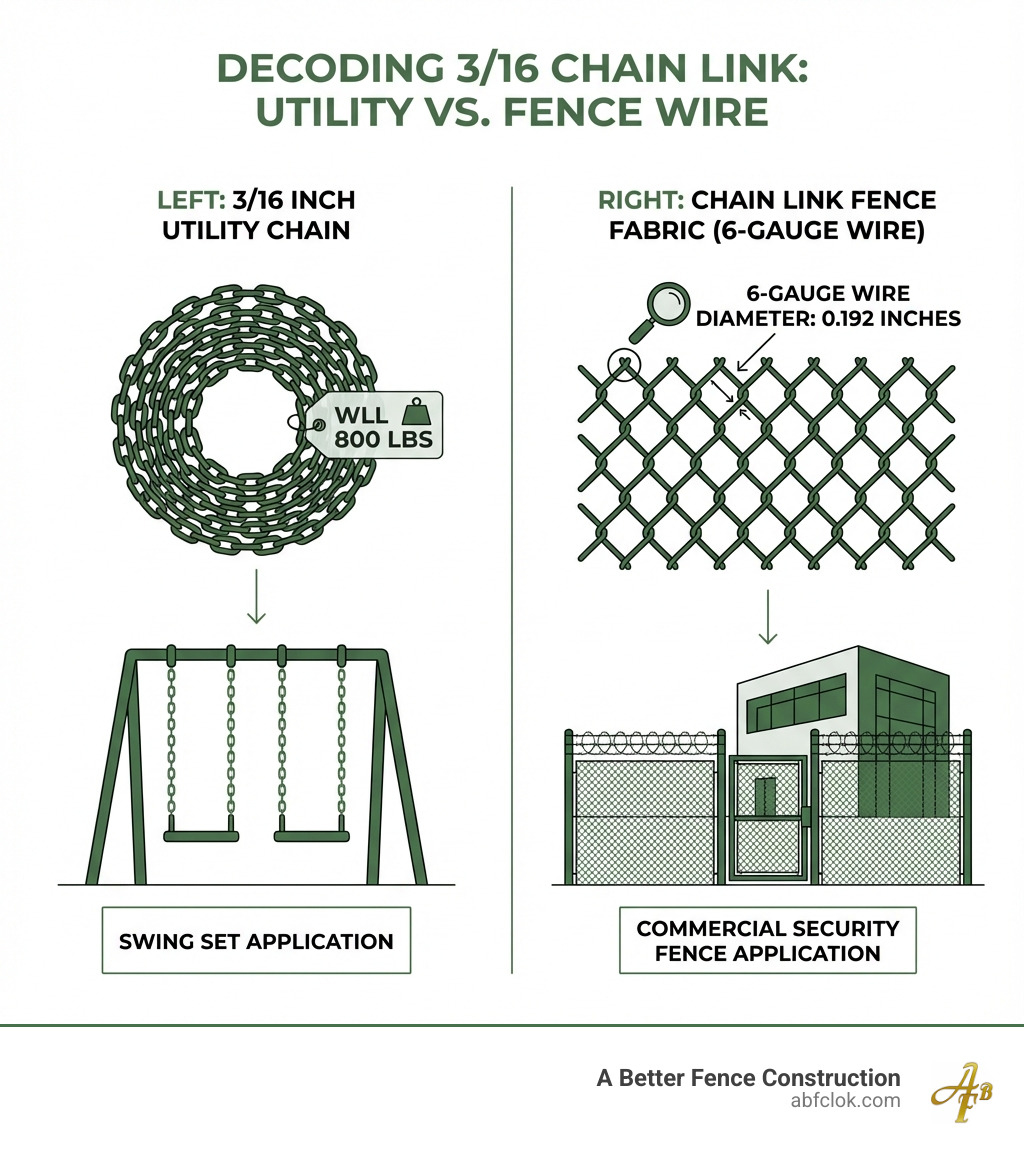
3 16 chain link is a term for two different products: a 3/16-inch utility chain (for swing sets or light securing) or a heavy-gauge chain link fence wire similar to 6-gauge material. Understanding which product you need is critical for your project’s success.
Quick Answer: What is 3/16 Chain Link?
- 3/16″ Utility Chain: A general-purpose steel chain with an 800 lb working load limit, used for swing sets, cargo securing, and light lifting.
- 3/16″ Fence Wire: Not a standard fence gauge, but its diameter (0.1875″) is nearly identical to 6-gauge fence wire (0.192″), one of the strongest chain link options available.
- Key Difference: Utility chain is measured by link diameter; fence fabric is measured by wire gauge (lower number = thicker wire).
This guide clarifies the confusion around “3/16 chain link,” helping you understand the specifications that matter for your fencing or utility chain needs—from wire gauges and mesh sizes to coatings and applications.
As Jose Grados, I apply my decade of precision engineering experience to every fencing project. My background in structural design ensures that when you’re selecting specifications for 3 16 chain link, you’re getting expert guidance backed by real-world technical knowledge.
Understanding the “3/16 Chain Link” Terminology
The term “3 16 chain link” can refer to two distinct products, and knowing the difference is key to getting the right material. At A Better Fence Construction, we help clients differentiate between a general-purpose utility chain and the fabric used for fencing, as their design, purpose, and measurements are very different.
What is a 3/16 Chain Link Utility Chain?
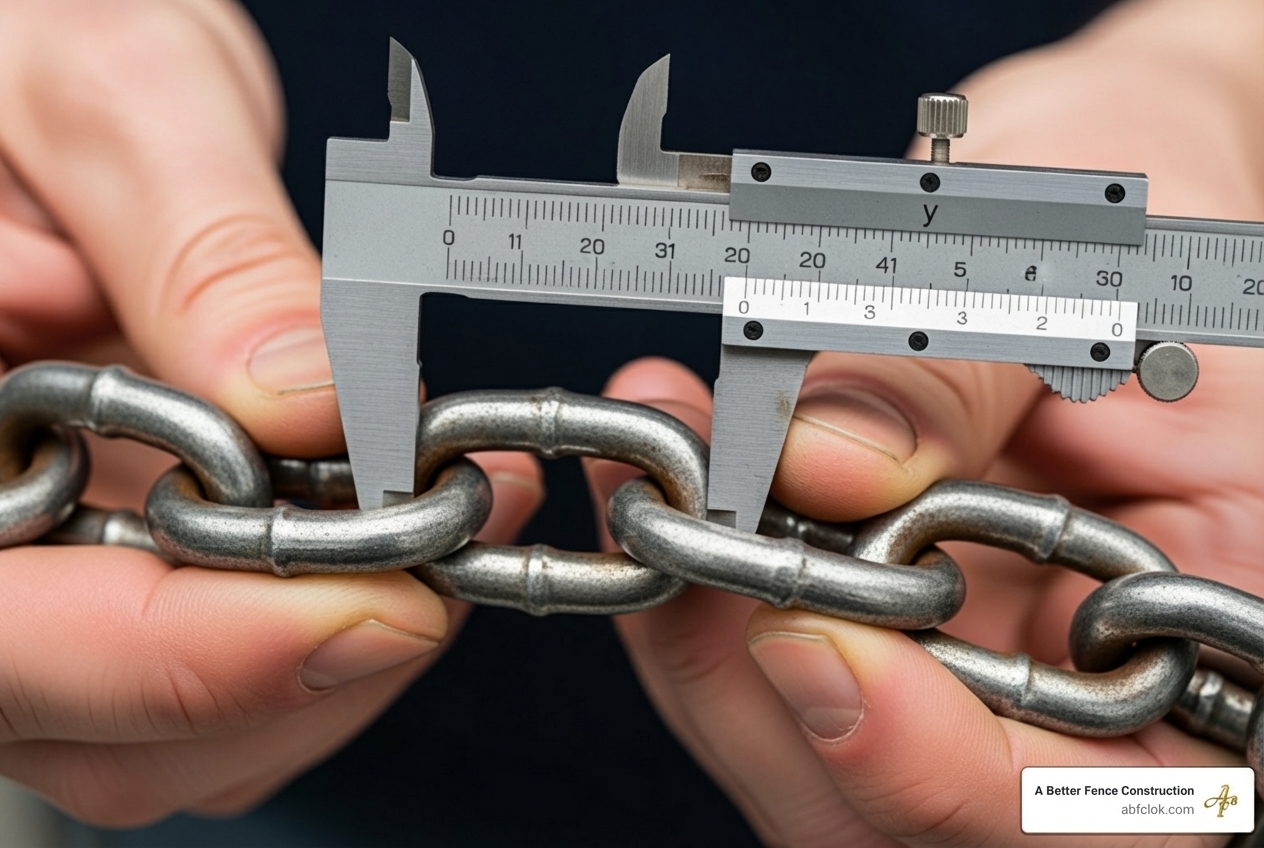
A 3/16 chain link utility chain is a general-purpose steel chain made of interconnected links for securing, towing, or light lifting—it is not fence material.
A common example is the 3/16″ G30 Proof Coil Chain, known for its reliability. The “G30” grade indicates its strength, and this size has a Working Load Limit (WLL) of 800 lbs. You might see it used for:
- Swing sets: The 3/16-inch link steel swing chain is a durable and safe choice for playgrounds.
- Securing cargo: Used to tie down items on trailers or truck beds.
- Light lifting and towing: A handy tool for pulling or hoisting tasks within its WLL.
These chains often have an Electro-galvanized (EG) finish for corrosion resistance. However, it’s crucial to remember that proof coil chains are generally not rated for overhead lifting where failure could cause severe injury. Always check manufacturer guidelines.
You can find more details about specific products like the 3/16-inch Link Steel Swing Chain at NoahsPlay.com.
Is 3/16 Chain Link a Standard Fence Gauge?
When it comes to chain link fences, wire thickness is described using a “gauge” system, where a higher number means a thinner wire. So, is 3/16 inch a standard fence gauge? Not directly, but the measurement is very telling.
- 3/16 inch converts to 0.1875 inches in diameter.
- Common fence wire gauges include:
- 6 gauge = 0.192 inch
- 9 gauge = 0.148 inch
- 11 gauge = 0.120 inch
As you can see, a 3/16 inch wire (0.1875″) is incredibly close in diameter to a 6 gauge wire (0.192″). While not a named gauge, “3/16 chain link” effectively refers to a heavy-duty wire thickness almost identical to 6-gauge.
If a client asks for a 3 16 chain link fence, they are looking for an exceptionally strong and durable fence. This thickness is considered heavy-duty, ideal for commercial or industrial applications in Oklahoma City where maximum security is paramount.
To dig deeper into chain link fence specifics, you can explore our resources on chain link fences.
Key Specifications of Heavy-Duty Chain Link Fencing
When installing heavy-duty chain link fences, especially those with a 3 16 chain link thickness (like 6-gauge), we focus on key specifications to ensure strength and security. All our materials adhere to ASTM standards for quality and reliability.

For a comprehensive look at how these specifications are measured, you can refer to resources like Chain Link Fence Fabric: Wire Diameter, Materials.
Wire Gauge, Mesh Size, and Coatings
A fence’s strength and appearance depend on its wire gauge, mesh size, and coating.
Wire Gauge refers to the wire’s diameter, with lower numbers indicating thicker, stronger wire.
| Gauge Number | Diameter (inches) | Typical Applications | Relative Strength |
|---|---|---|---|
| 6 Gauge | 0.192″ | Industrial, High Security, Heavy-Duty | Very High |
| 9 Gauge | 0.148″ | Commercial, Heavy Residential | High |
| 11 Gauge | 0.120″ | Residential, Light Commercial | Medium |
| 11 1/2 Gauge | 0.113″ | Residential, Temporary Fencing | Medium-Low |
Mesh Size is the diamond opening in the fabric. While 2″ is standard, smaller sizes offer more security:
- 2″: Standard for most residential and commercial fences.
- 1 3/4″ or 1 1/2″: Used for tennis courts or backstops.
- 1 1/4″: Climb-resistant and often meets pool codes in Oklahoma.
- 1″ or smaller: For high-security enclosures or kennels.
Coatings protect the wire from rust and corrosion, which is vital in the OKC Metro area’s climate.
- Galvanization: A protective zinc coating.
- Galvanized After Weaving (GAW): The woven fabric is dipped in zinc, creating a thicker, more durable coating (1.2 oz/sq ft or more). This is our recommendation for maximum longevity.
- Galvanized Before Weaving (GBW): The wire is galvanized before weaving, resulting in a thinner coating.
You can learn more on our galvanized chain link fence page.
- Vinyl Coating (PVC): A PVC layer is applied over the galvanized wire for added protection and aesthetics. It improves resistance to rust and UV rays and is available in colors like black, green, and brown.
Fence Height and Selvage Options
Fence height and the finish of the top and bottom edges (selvage) are key for function and security.
Common heights range from 36 inches up to 144 inches (12 ft). Residential fences are typically 4-6 feet, while commercial sites often use 6-8 feet or taller. We always ensure compliance with local regulations in Norman, Edmond, and Moore.
Selvage is how the wire ends are finished to prevent solveing and improve security.
- Knuckled (K): The wire ends are bent into a smooth, closed loop. This is the safest finish, ideal for residential fences.
- Twisted (T) or Barbed (B): The wire ends are twisted into sharp points to deter climbing, used for security fences.
Selvage options are often combined (e.g., KK for Knuckle-Knuckle, BB for Barb-Barb). For fences under 72″, KK is standard. For high-security applications, BB is used. Careful consideration of selvage is crucial for heavy-duty fences.
Applications and Durability
The robust nature of heavy-duty chain link, especially wire similar to 3 16 chain link (6-gauge), makes it incredibly versatile and durable. At A Better Fence Construction, we match the right specifications to your use case, ensuring performance that stands up to the Oklahoma elements.
A well-maintained galvanized chain link fence can last 20+ years, while a vinyl-coated version lasts even longer. This durability, combined with a lower initial cost compared to wood or iron, makes chain link a highly cost-effective investment for properties in Oklahoma City, Norman, and Edmond.
Common Uses for Heavy-Gauge Fencing
Heavy-gauge chain link is ideal for applications demanding superior strength and security. A 3 16 chain link equivalent (6-gauge) wire is perfect for:
- Commercial and Industrial Properties: Securing business premises, warehouses, factories, and utility facilities.
- High-Security Areas: Protecting data centers and government properties.
- Athletic Fields and Backstops: Withstanding repeated impacts from sports equipment.
- Kennels and Animal Enclosures: Safely containing large or active animals.
- Perimeter Security: Establishing strong boundaries, often with barbed wire for added deterrence.
For a sleek, high-security option, black vinyl-coated chain link is a popular choice. Learn more on our page about black chain link fences.
Advantages and Disadvantages
Heavy-duty chain link has a distinct set of pros and cons.
Advantages (Pros):
- Durability: Exceptionally long-lasting and resistant to rust and wear.
- Security: An effective barrier against intruders, especially at taller heights.
- Cost-Effective: One of the most economical fencing solutions over its lifespan.
- Low Maintenance: Requires only occasional cleaning and inspection.
- Transparency: Allows for clear visibility, which is a security advantage.
Disadvantages (Cons):
- Low Privacy: The open mesh offers little visual privacy on its own.
- Industrial Appearance: Some find the look of galvanized chain link less appealing.
These drawbacks are easily addressed. Privacy slats can be inserted into the mesh for visual screening. Vinyl coating in black, green, or brown helps the fence blend with landscaping.
For more information on improving your fence’s look and privacy, visit our page on black fence pricing.
Installation and Maintenance Essentials
Proper installation of a heavy-duty chain link fence, especially one with wire as thick as 3 16 chain link, is a job for professionals. It is paramount for the fence’s strength, longevity, and security.
The fence’s foundation is its framework: terminal posts, line posts, top rail, and tension wire. Posts must be set to the correct depth in concrete to withstand wind, impact, and the tension from the stretched fabric.
Installation Best Practices
We follow rigorous installation practices to ensure your fence is built to last in the Oklahoma environment:
- Terminal Post Bracing: We brace terminal posts on taller fences (6 ft+) or those under high tension to prevent leaning.
- Line Post Spacing: Line posts are spaced no more than 10 feet apart to maintain stability.
- Tension Bars and Bands: Fabric is secured to terminal posts with tension bars and bands for a tight, secure fit.
- Attaching Fabric to Framework: We attach the fabric to posts and rails with tie wires or hog rings at regular intervals.
- Ground Clearance: We ensure minimal ground clearance (typically 2 inches or less) to prevent animals or people from getting underneath.
- Concrete Footings: All posts are set in concrete footings crowned to shed water and prevent rust at the base.
- Fabric Stretching: The fabric is pulled taut evenly across the fence line to prevent sagging and increase resistance to climbing or cutting.
For a deeper dive into our installation processes, visit our chain link fence installation guide.
Long-Term Maintenance
Heavy-gauge chain link fencing is low maintenance, but a little care ensures its 20+ year lifespan.
- Inspect for Damage: Periodically check for bent posts, loose fabric, or damaged ties, especially after severe weather.
- Cleaning: Use a hose to remove dirt. For tougher stains on galvanized or vinyl-coated fabric, use mild soap and water. Avoid harsh chemicals on galvanized fences.
- Repairing Damaged Sections: Repair bent or torn sections promptly to prevent small issues from becoming larger problems.
- Gate Hardware: Lubricate hinges and latches annually to ensure smooth operation and proper security.
- Rust Prevention: On galvanized fences, touch up any scratches with zinc-rich paint to repair the coating and stop corrosion.
Following these tips will keep your fence providing reliable security for your property in Oklahoma City, Piedmont, Shawnee, and all our service areas.
Frequently Asked Questions about Heavy-Duty Chain Link
Here are answers to common questions we receive from clients in the OKC Metro area about heavy-duty chain link fencing, especially options like 3 16 chain link equivalent wire.
What is the strongest gauge for a chain link fence?
6 gauge wire is one of the thickest and strongest options available, with a diameter of 0.192 inches. The term “3 16 chain link” refers to a wire diameter of 0.1875 inches, which is nearly identical in size and strength. This heavy-duty wire is ideal for industrial, commercial, and high-security applications where the fence must withstand significant force.
How do you increase privacy on a chain link fence?
While not naturally private, you can easily increase privacy on a chain link fence using several methods:
- Privacy Slats: Vinyl or aluminum slats are inserted into the fence mesh, blocking 75-90% of visibility.
- Windscreens: Fabric screens attach to the fence, offering both privacy and wind reduction.
- Natural Landscaping: Planting hedges or training vines to grow along the fence line creates a living privacy screen.
These solutions allow you to enjoy the security of chain link with the seclusion you desire.
Is a thicker gauge chain link fence worth the cost?
Whether a thicker gauge fence like a 3 16 chain link equivalent (6-gauge) is worth the cost depends on your needs.
- For high-security or industrial use: Yes. If your primary concern is maximum security, impact resistance, or containing large animals, the added strength is a worthwhile investment that reduces long-term repair costs. This is often a necessity for businesses in Midwest City or industrial sites in Oklahoma City.
- For typical residential use: Not always. For most home boundaries or pet containment, a 9-gauge or 11-gauge fence is sufficient, providing excellent durability at a lower cost.
We can help you balance your security needs and budget to find the most appropriate gauge for your project.
Your Partner for Secure Fencing in Oklahoma City
We’ve clarified the term “3 16 chain link” and covered the key specifications, applications, and maintenance of heavy-duty chain link fencing. Understanding wire gauge, mesh size, and coatings is crucial for ensuring your fence provides optimal security and longevity.
At A Better Fence Construction, we know a fence is an investment in your security and peace of mind. As a family-owned business in Oklahoma City, we are committed to outstanding customer service and meticulous work on every project. Our team ensures lasting quality and satisfaction for clients from Norman to Edmond and across the metro area.
For professional consultation and installation of high-quality chain link fencing, trust the experts at A Better Fence Construction.
Get a free estimate for your chain link fence project and let us help you build a better fence.
