

Why Retaining Wall Blocks Matter for Your Property
Retaining wall blocks are the building materials used to construct walls that hold back soil, prevent erosion, and create usable terraced spaces on sloped properties. These interlocking or stackable concrete units come in various styles and sizes to suit both functional needs and aesthetic preferences.
Quick Guide to Choosing Retaining Wall Blocks:
- For walls under 4 feet: Gravity wall blocks (standard concrete, split-face, or tumbled styles)
- For walls 4+ feet or challenging soil: Reinforced systems with geogrid and hollow-core blocks
- For a natural stone look: Cast stone or textured concrete blocks (AB Fieldstone, Verazzo)
- For a modern aesthetic: Smooth-faced contemporary blocks (AB Metropolitan)
- Where to buy: Local hardscape suppliers, masonry yards, or through professional installers like A Better Fence Construction
For property owners in Oklahoma City dealing with sloped terrain or soil erosion, retaining wall blocks offer a proven solution. As noted in industry documentation, “properly designed and constructed retaining walls can improve the beauty and functionality of any outdoor environment while ensuring stability and longevity.”
These versatile materials combat erosion, create flat terraced areas for gardens or patios, and define landscape zones. Whether protecting your property from Oklahoma’s heavy rains or creating a level area for a new flagstone patio, the right blocks are essential. Success depends on matching the block system to your project’s requirements, including wall height, soil conditions, and aesthetics. This guide covers the available options, when professional engineering is needed, and how to avoid common pitfalls.
Why Use Retaining Wall Blocks? Key Functions and Benefits
If you have a sloped yard, retention wall blocks are a powerful solution. They are not just decorative additions; they are workhorses that solve real problems while enhancing your property’s appearance. In the Oklahoma City area, with its sudden downpours and challenging clay soil, retaining walls are invaluable for changing difficult terrain into beautiful, usable spaces.
Functional Benefits in Landscaping
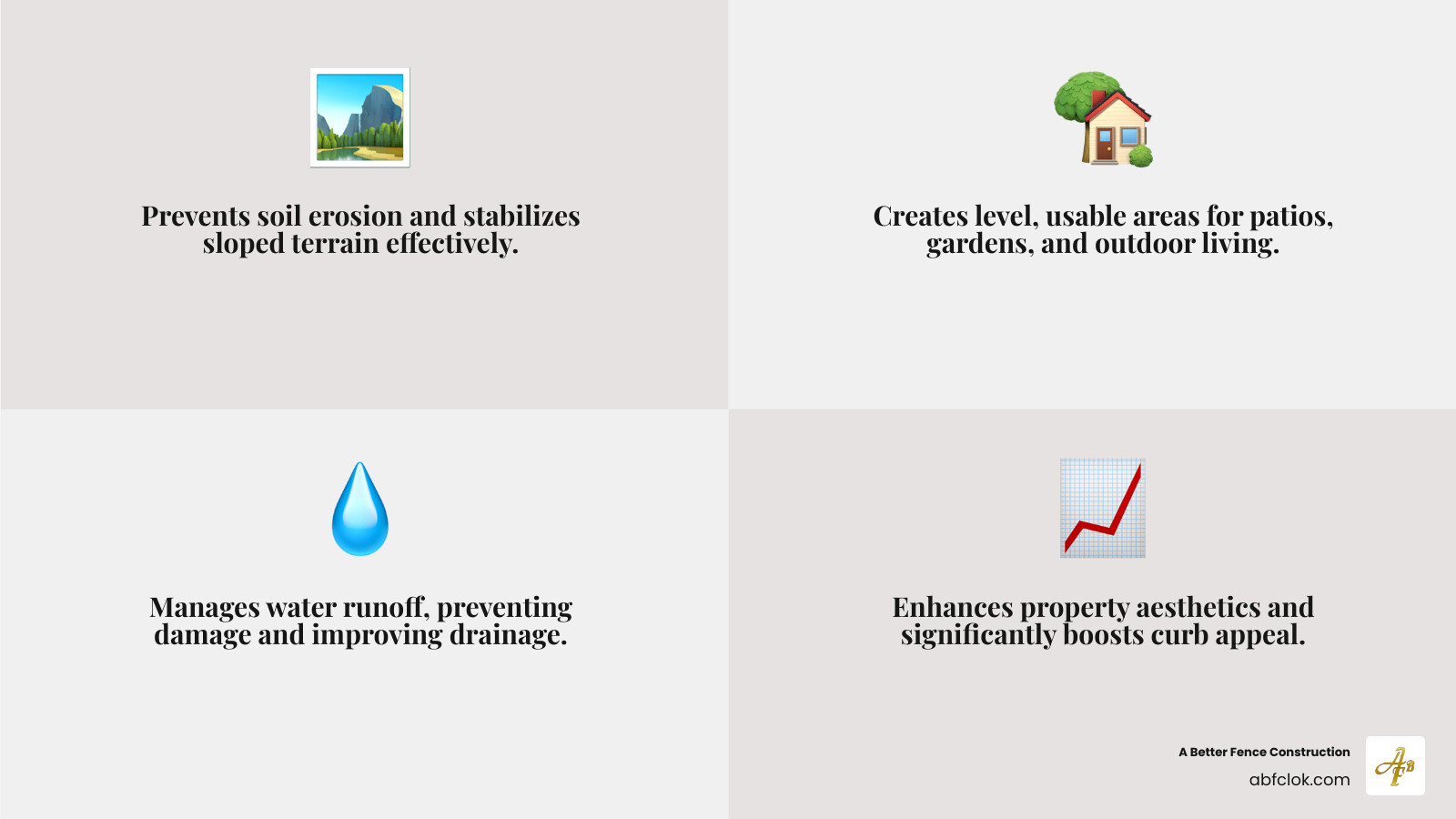
The primary function of retention wall blocks is preventing soil erosion. During heavy Oklahoma storms, sloped ground is vulnerable to water runoff carrying away topsoil, which can damage your foundation and landscape. A properly built retaining wall acts as a strong barrier, holding soil in place.
These walls also excel at managing water runoff. By directing rainwater away from your home and toward proper drainage areas, a retaining wall protects both your house and landscaping from water damage.
Most importantly, retention wall blocks create flat, usable space where none existed. A steep backyard slope can become a series of level terraces perfect for a patio, garden, or play area. Retaining walls also provide essential support for driveways, walkways, and other hardscape features, such as a flagstone patio, by creating a necessary level foundation.
Aesthetic Improvements for Your Outdoor Space
Beyond their functional role, retention wall blocks offer significant aesthetic value. They allow you to define different areas in your landscape, creating outdoor “rooms” with unique purposes and personalities. A retaining wall can create a cozy garden nook or separate a dining area from a play space, adding texture and dimension to a flat landscape.
The design options are nearly endless. You can build raised garden beds that are easier to tend or create tiered planters for multi-level greenery. Some designs even integrate seating directly into the walls, creating natural gathering spots.
A well-designed retaining wall becomes a focal point that unifies your landscape. This improvement not only solves practical problems but also adds real value to your property by boosting curb appeal and making your home more attractive to future buyers.
Understanding the Different Types of Retention Wall Blocks
Choosing the right retention wall blocks involves matching the material, style, and structural design to your project’s needs. With years of experience building walls in Oklahoma City, Norman, and Edmond, we know that the right choice is critical for a wall that not only stands but transforms your outdoor space.

By Material and Style
Concrete is the workhorse of retention wall blocks due to its durability, affordability, and versatility.
- Split-face blocks have a rough, jagged texture that mimics natural stone, created by splitting the concrete to expose the aggregate. They are ideal for a traditional or rustic aesthetic.
- Tumbled blocks are mechanically tumbled to soften their edges, giving them a weathered, aged appearance reminiscent of old European cobblestone.
- Smooth-faced blocks offer clean lines and a minimalist appeal, perfect for contemporary or mid-century modern landscapes.
- Cast stone blocks are molded from real stone formations, capturing intricate textures with the consistency of concrete. They offer the authentic beauty of stone in various styles like ledgestone or cobblestone.
Modern retention wall blocks are also available in a wide range of colors, from earthy tones to vibrant hues, allowing for custom patterns and personalized designs.
By Structural Design: Solid, Hollow-Core, and Large-Format
The internal structure of retention wall blocks is as important as their external appearance.
- Solid blocks are dense, heavy units that rely on their mass for stability. They work well for smaller gravity walls but can be challenging to install due to their weight.
- Hollow-core blocks are a modern engineering solution. The hollow spaces, when filled with gravel, provide excellent drainage to prevent water pressure buildup—a common cause of wall failure. The hollow design also makes them lighter and easier to install, and many feature interlocking mechanisms for mortarless construction.
- Large-format blocks are massive precast concrete units used for significant grade changes or commercial projects. Weighing up to a ton each, they require heavy machinery for installation and provide exceptional stability.
Eco-Friendly and Specialty Retention Wall Blocks
For sustainable building, some retention wall blocks incorporate recycled materials, which can contribute to green building certifications like LEED.
Specialty blocks offer creative possibilities. Plantable wall blocks have pockets for vegetation, softening the hardscape with living plants. Freestanding wall blocks are finished on both sides, making them ideal for garden walls or seating areas. Corner blocks are specialized units that ensure clean, structurally sound transitions when a wall turns.
Gravity vs. Reinforced Walls: What Your Project Needs
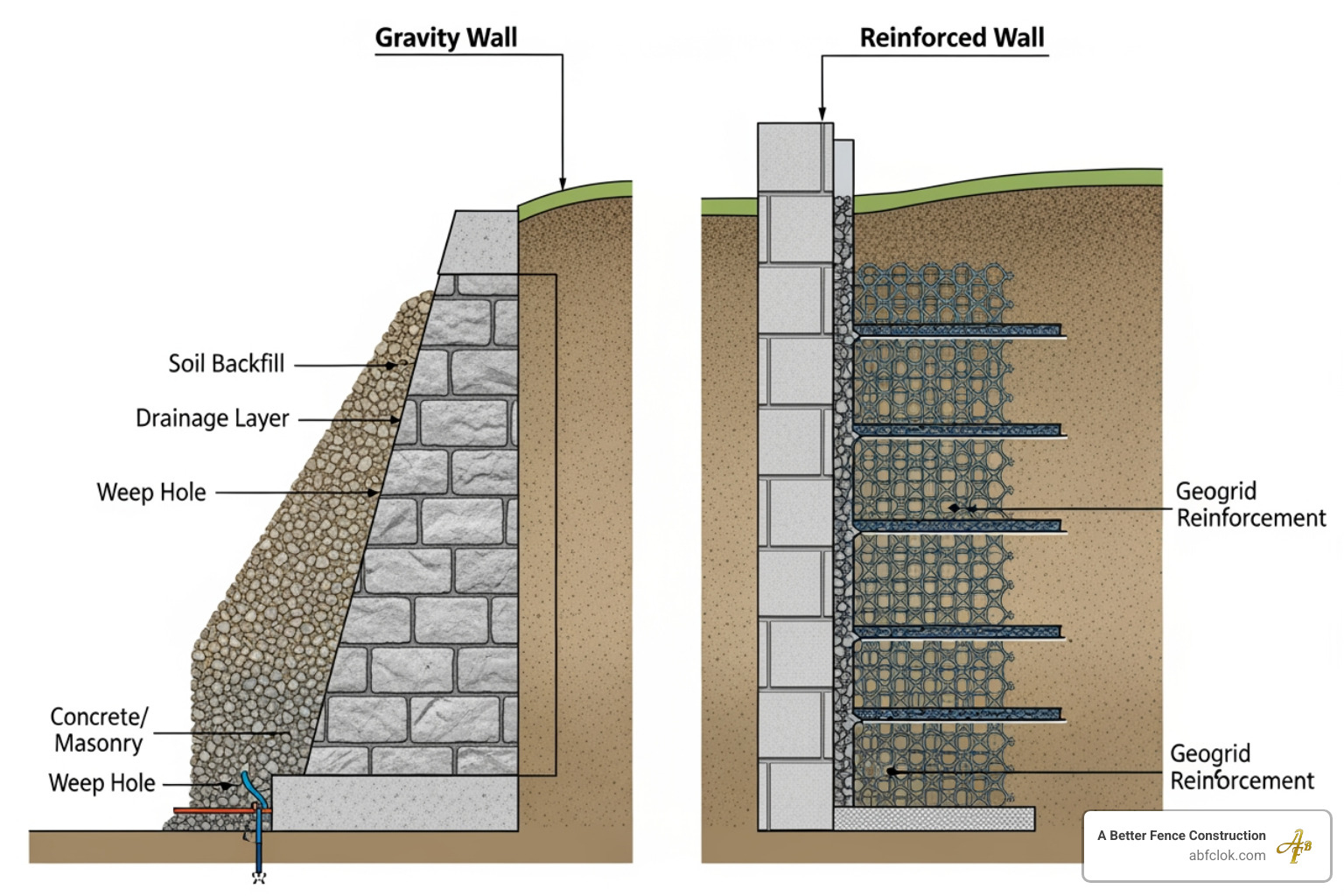
When planning a retaining wall for your Oklahoma City property, a key decision is choosing between a gravity or a reinforced wall. This choice is based on engineering and safety, not preference. It depends on the wall’s height, soil type, and any surcharge (extra weight like a driveway) above the wall. A wall that is not properly engineered for its conditions can fail, so a careful evaluation is critical.
Gravity Retaining Walls
Gravity walls are a straightforward approach, using their own weight and a slight backward angle (setback) to hold back soil. They are perfect for smaller projects, with most systems safely reaching heights of 3 to 5 feet, and some up to 5.5 feet in ideal conditions.
This makes gravity walls ideal for terraced gardens, raised planting beds, or defining landscape areas. They are generally more budget-friendly than reinforced walls. However, professional installation is still recommended to ensure proper compaction and drainage. Once a wall exceeds 4 feet or faces challenging soil, gravity alone is insufficient, and reinforcement is necessary.
Reinforced Retaining Walls
For taller walls, steep slopes, or areas with heavy loads, a reinforced retaining wall is required. These engineered systems use geogrid, a high-strength synthetic mesh, laid horizontally between courses of retention wall blocks and extended back into the soil. The geogrid interlocks with the soil, creating a massive, unified structure where the blocks act as the facing for a much larger reinforced soil mass.
Another technique is using no-fines concrete backfill. This permeable concrete is poured behind the blocks, creating a strong, solid structure that requires less excavation than geogrid systems (30-40% of the wall’s height vs. 60% or more). This is a major advantage in tight spaces and offers excellent drainage.
Reinforced walls require professional design and installation to calculate soil pressures and determine reinforcement needs. We work with engineers on these projects to ensure every specification is met. If you are considering a reinforced retaining wall project, we can guide you through the entire process.
| Feature | Gravity Walls | Reinforced Walls |
|---|---|---|
| Max Height | Up to 3-5.5 ft (depending on block/soil) | Can exceed 50 ft (with proper engineering) |
| Excavation | Less extensive | More extensive (for geogrid or no-fines concrete) |
| Cost | Generally lower for small walls | Generally higher due to materials and engineering |
| Best Use Cases | Small garden walls, terraced landscaping | Tall walls, steep slopes, heavy surcharges, complex site conditions |
| Engineering | Less complex, often pre-engineered for small walls | Requires professional engineering for design and stability calculations |
| Reinforcement | Relies on block mass and setback | Incorporates geogrid or no-fines concrete to create a stable soil mass |
The bottom line is that gravity walls are efficient for modest landscape features, but reinforced construction is the only safe choice for height, challenging terrain, or heavy loads.
Essential Steps for a Stable and Lasting Installation
Building a retaining wall that withstands the Oklahoma climate requires meticulous planning and execution. As local experts, we follow a rigorous process to ensure every retention wall blocks project is stable, durable, and beautiful. Skipping any step can lead to bulging, cracking, or complete wall failure.
Planning, Excavation, and Foundation
The success of a retaining wall begins with thorough planning. Our process starts with a Site Assessment, where we evaluate your yard’s topography, soil type, and water flow, while also checking for buried utilities. For tall walls or complex soil conditions, a geotechnical engineer may be consulted.
Next is Excavation. We dig a trench for the wall’s base, ensuring it is wide and deep enough for the leveling pad and the first course of blocks. The trench must extend below the local frost line to prevent shifting from freeze-thaw cycles.
The Foundation Soil at the bottom of the trench is then compacted to at least 95% of its maximum density to create a solid, unyielding base. Poor soil, like heavy clay, is replaced with stable material.
Finally, a 4-6 inch Gravel Leveling Pad of 3/4″ crushed gravel is installed and compacted in the trench. This creates a perfectly flat, well-draining base for the first course of retention wall blocks.
Stacking, Backfilling, and Drainage
With a solid foundation, we begin building the wall.
The Base Course, or first row of blocks, is the most critical. We carefully place these blocks on the compacted gravel pad, ensuring they are perfectly level. This row establishes the wall’s alignment and setback (its slight lean into the slope).
As we Stack Subsequent Courses, we offset the vertical seams between blocks by at least 3 inches to improve strength and prevent cracking. Each course is checked for level and alignment.
For hollow-core blocks, we Fill Cores with Gravel (3/4″ crushed stone) to add weight, improve interlocking, and create internal drainage channels.
Behind the wall, we Backfill with Drainage Aggregate, placing at least 12 inches of 3/4″ crushed gravel from the base to the top. This layer allows water to pass through freely, preventing hydrostatic pressure buildup.
For taller walls or wet areas, a perforated Drain Pipe is installed at the base of the wall within the drainage gravel to collect and divert water.
Finally, we perform Compaction in Lifts. The remaining space behind the wall is filled with soil in 8-inch layers, or “lifts,” with each layer being thoroughly compacted to prevent future settlement.
Essential Companion Products
Several companion products are crucial for a strong, long-lasting wall.
- Geogrid: This high-strength mesh is essential for reinforced walls. Laid between block courses and extended into the backfill, it locks the soil into a stable mass.
- Drainage Pipe: A perforated pipe at the wall’s base collects and channels water away, preventing pressure buildup.
- 3/4″ Crushed Gravel: Its angular shape interlocks well, making it ideal for the leveling pad, core fill, and drainage backfill.
- Masonry Adhesive: This strong glue secures capstones and top-course blocks, preventing shifting and providing a clean finish.
- Wall Caps: These decorative top blocks protect the wall from the elements and can provide informal seating.
- Filter Fabric: This permeable membrane separates the drainage gravel from the soil, preventing clogs and ensuring long-term drainage performance.
Creative Ways to Use Retaining Wall Blocks
Retention wall blocks are not just for erosion control; they are powerful design tools that can transform your outdoor space. In the OKC Metro, we’ve seen these versatile materials turn ordinary yards into extraordinary outdoor havens. Thinking beyond their structural purpose opens up a world of creative possibilities.
Building Terraced Gardens and Planters
For sloped yards, terraced gardens are a highly rewarding use of retention wall blocks. By working with the slope, you can create a series of level steps, dramatically increasing your usable planting space. Each terrace can become a distinct garden room, adding depth and visual interest to your landscape. This design allows you to accommodate plants with different sun or moisture needs on separate levels.
Plantable wall systems are a game-changer for integrating greenery directly into the wall. These specially designed retention wall blocks have built-in pockets for trailing plants, succulents, or flowers. As they grow, they soften the hardscape, creating a living wall that blends with your garden. Terracing also makes gardening more accessible by eliminating the need to steer steep slopes.
Designing Outdoor Living Areas
Retention wall blocks are fantastic for creating defined outdoor living spaces that feel like natural extensions of your home. Integrated seating walls—sturdy, comfortable benches built into the wall structure—are perfect for gathering around a custom fire pit on cool Oklahoma evenings. A curved wall can create an intimate, enclosed feel for a fire feature, with smooth capstones providing comfortable, permanent seating.
These blocks can also form decorative columns to anchor pergolas, support outdoor lighting, or frame an entrance to your deck or patio. They effectively create visual separation between different zones, such as an entertaining area and a garden. The structural strength of retention wall blocks allows them to support built-in planters, outdoor kitchens, or even small water features, providing the structure and aesthetic appeal to bring any outdoor vision to life.
Frequently Asked Questions about Retaining Wall Construction
We consult with homeowners across Oklahoma City, Norman, and Edmond daily about their retaining wall projects. Here are answers to some of the most common questions we receive.
How high can I build a retaining wall without an engineer?
This is a critical safety question. As a general rule, residential walls under 4 feet can often be built without a professional engineer, assuming you have stable soil and no surcharge (extra weight like a driveway or patio) above the wall. Some modern retention wall blocks systems may allow for heights up to 5.5 feet in ideal conditions.
However, if your soil is poor, the slope is steep, or a surcharge exists, an engineer’s approval is necessary regardless of height. For detailed design specifications, resources from the National Concrete Masonry Association (NCMA) are an industry standard. We always recommend checking with your local building department in Oklahoma City, Norman, or Edmond before starting, as rules can vary.
What are the most common installation mistakes to avoid?
Cutting corners during installation leads to costly failures. Here are the most common mistakes:
- Improper Foundation: A wall built without a properly excavated and compacted foundation will fail. The process requires digging a trench, compacting the sub-base soil, and installing a compacted gravel leveling pad to prevent settling and leaning.
- Inadequate Drainage: Water pressure (hydrostatic pressure) is a primary cause of wall failure. Every wall needs a 12-inch layer of crushed gravel for backfill, and taller walls require a perforated drain pipe at the base to divert water.
- Poor Backfill Compaction: The soil behind the wall must be placed in thin layers (lifts) and compacted properly. Skipping this step leads to settlement and can cause the wall to bulge or move.
- Omitting Geogrid: On taller walls, geogrid reinforcement is not optional. It creates a stable soil mass that works with the wall to resist earth pressure. Failure to use it when required will lead to wall failure.
- Ignoring Setback: Most retention wall blocks are designed with a slight lean-back (setback or batter) to help resist soil pressure. Incorrect installation negates this critical design feature.
Do I need a permit for a retaining wall in Oklahoma City?
Yes, a permit is often required. Oklahoma City and surrounding communities like Moore, Edmond, and Midwest City have regulations for retaining walls, especially those exceeding a certain height (typically 3-4 feet) or located near property lines. The permit process ensures your wall meets safety standards, protects your investment, and prevents issues with neighbors or future property sales. We handle this coordination for our clients to ensure compliance and save you headaches later.
Conclusion: Building a Wall That Lasts
Choosing the right retention wall blocks and ensuring a solid installation are key to building a retaining wall that’s a lasting investment in your OKC Metro property. Whether you prefer the earthy look of split-face blocks or the sleek feel of modern designs, and whether your project needs a simple gravity wall or a reinforced system, the right choice is paramount.
A wall is only as good as its installation. Careful planning, a rock-solid foundation, smart drainage, and the correct use of companion products like geogrid are not optional—they are essential for a wall that will stand strong for decades. These steps ensure your wall avoids common failures and continues to improve your outdoor space for years to come.
Imagine beautiful terraced gardens, a cozy outdoor living area with an integrated custom fire pit, or simply a tamed slope in your yard. Versatile and durable retention wall blocks make these dreams possible.
For a professional, top-notch retaining wall in the OKC area, trust the experts at A Better Fence Construction. As a family-owned business, we are set apart by our dedication to outstanding customer service, meticulous work, and close attention to detail. This commitment ensures lasting quality and your complete satisfaction.
We are here to guide you through every choice and bring your outdoor vision to life. Let us build you a retaining wall that’s not just beautiful, but truly built to last. Ready to get started? Contact us for your retaining wall project today, and let’s transform your outdoor space together!
