
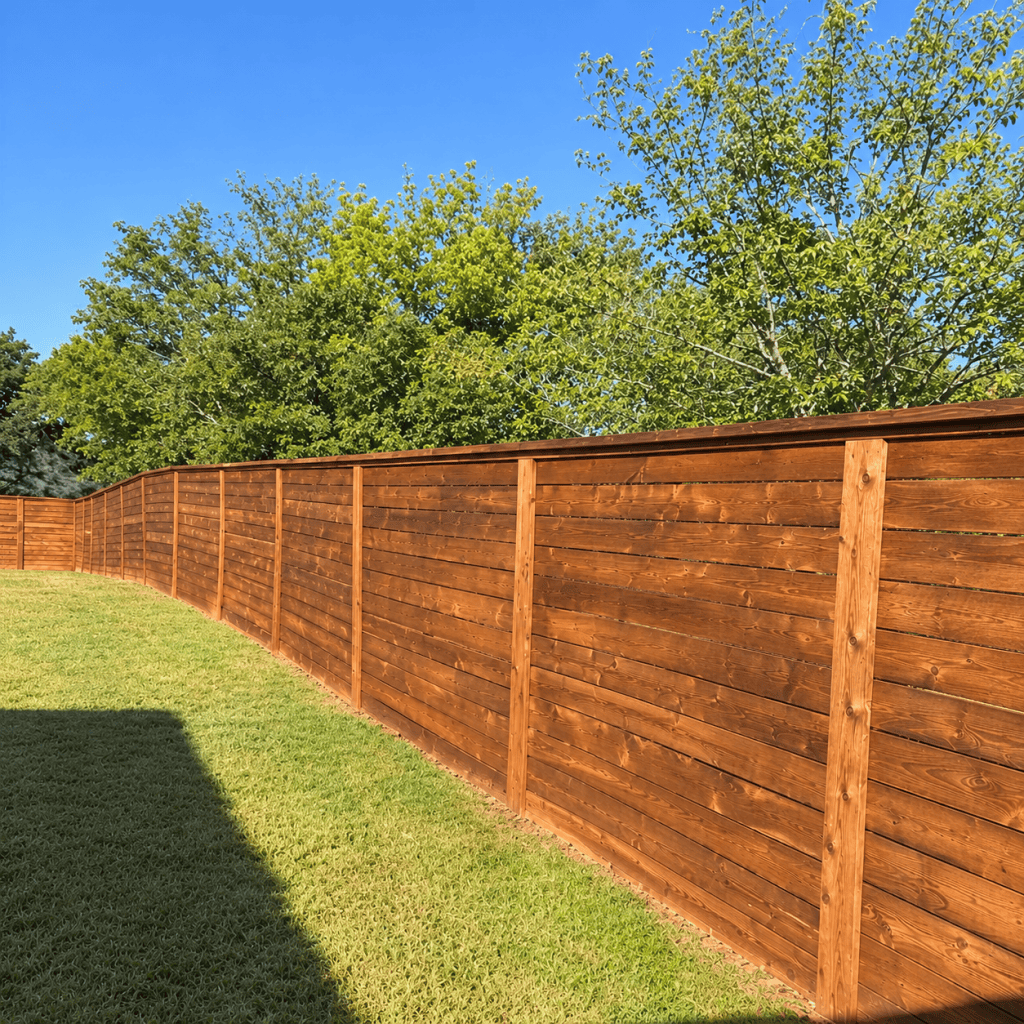
In Oklahoma, pressure-treated wood fences typically last 15 to 25 years, while cedar fences last 15 to 20 years when properly maintained. The right choice depends on your budget, your neighborhood, and how much upkeep you want to do. This article covers cost, durability, maintenance, and how each material holds up in areas like Edmond, Norman, Yukon, Mustang, and Moore.
Understand How Oklahoma’s Climate Affects Wood Fence Lifespan
Oklahoma’s climate is tough on wood fences. Summers push temperatures past 100 degrees Fahrenheit, and winters can drop below freezing. Add in high humidity in spring, severe thunderstorms, and frequent wind, and your fence takes a beating year-round.
The freeze-thaw cycles in areas like Guthrie, El Reno, and Choctaw cause wood to expand and contract repeatedly. This stresses fence boards and posts, leading to cracking and warping faster than in milder climates. Choosing the right wood species matters a lot here.
Oklahoma’s red clay soil also plays a role. Clay retains moisture and stays wet for extended periods after rain. Posts set in clay soil are more vulnerable to rot at the base than posts in sandy or loamy soil. This affects both cedar and pressure-treated wood, but in different ways.
- High UV exposure bleaches and dries out untreated cedar faster in open yards
- Heavy rain followed by dry spells causes repeated swelling and shrinking in fence boards
- Oklahoma tornadoes and high winds test post depth and concrete footing quality
- Clay soil in Edmond, Norman, and Yukon holds moisture around fence posts longer than sandy soil
- Termites are active throughout central Oklahoma and attack both wood types if left unprotected
Compare Cedar and Pressure-Treated Wood Side by Side
Cedar and pressure-treated pine are the two most popular wood fence choices in Oklahoma. They look different, cost differently, and behave differently over time. Here is a direct comparison to help you decide.
| Feature | Cedar | Pressure-Treated Pine |
|---|---|---|
| Average Lifespan in Oklahoma | 15 to 20 years | 15 to 25 years |
| Material Cost per Linear Foot | $18 to $28 | $12 to $20 |
| Natural Rot Resistance | High (natural oils) | High (chemical treatment) |
| Insect Resistance | Moderate to High | High (treatment deters insects) |
| Warping and Shrinking | Low to Moderate | Moderate to High when wet |
| Staining and Painting | Takes stain beautifully | Must dry 6 to 12 months before staining |
| Appearance | Warm, natural reddish tone | Greenish tint fades to gray |
| Environmental Impact | More sustainable | Contains chemical preservatives |
Pressure-treated wood edges out cedar slightly on lifespan because the chemical preservatives resist rot and insects deeply through the wood fibers. Cedar relies on natural oils that deplete over time, especially in Oklahoma’s intense sun.
Break Down the Real Costs of Each Fence Type in Oklahoma
Budget is usually the first question homeowners ask. The honest answer is that pressure-treated fences cost less upfront, but cedar may cost less over time if you factor in maintenance carefully. Here is a realistic cost breakdown for a typical 150 linear foot privacy fence in the Oklahoma City metro.
| Cost Item | Cedar Fence | Pressure-Treated Fence |
|---|---|---|
| Materials (150 linear ft) | $2,700 to $4,200 | $1,800 to $3,000 |
| Labor (installation) | $1,500 to $2,500 | $1,500 to $2,500 |
| Total Installed Cost | $4,200 to $6,700 | $3,300 to $5,500 |
| Staining Every 2 to 3 Years | $300 to $600 per treatment | $300 to $600 per treatment |
| Board Replacement (over 10 yrs) | Low to Moderate | Moderate (boards warp more) |
Labor costs are roughly the same for both materials because the installation process and fence installation timeline are similar. The price gap comes from the wood itself. Cedar is more expensive because it is a premium, naturally durable species. Pressure-treated pine is widely available and costs less per board.
At A Better Fence Construction, we provide itemized quotes so you know exactly where your money goes. A good fence contractor should break down materials and labor this clearly, with no guessing and no vague estimates.
Explore How Each Wood Performs in Specific Oklahoma Communities
Local soil, lot size, and neighborhood style all influence which wood works better for you. Here is how the cedar vs pressure treated wood fence Oklahoma decision plays out in some of the communities we serve.
In Nichols Hills and The Village, cedar fences are very popular because of the upscale look and curb appeal. Homeowners in these areas tend to invest in staining and sealing regularly, which makes cedar perform excellently.
In Deer Creek and Piedmont, properties are larger with more fence to cover. Pressure-treated wood is a common choice here because the lower material cost adds up significantly over longer fence runs. A 300 linear foot fence in Deer Creek costs notably less with pressure-treated wood, and some owners of larger lots also look at how chain link compares to wood for back property lines.
In Moore and Del City, where storm damage from tornadoes and high winds is a real concern, post quality and depth matter more than wood species. Both cedar and pressure-treated posts should be set at least 2 feet deep in concrete. Many homeowners in Blanchard, Noble, and Newcastle also ask us about using pressure-treated posts with cedar boards, which is a popular hybrid approach.
- Nichols Hills and The Village: cedar preferred for aesthetics in higher-end neighborhoods
- Deer Creek, Piedmont, Yukon: pressure-treated often chosen for cost savings on large lots
- Moore, Del City, Choctaw: post depth and concrete footings are critical due to wind risk
- Guthrie, Luther, Arcadia: rural properties often choose pressure-treated for durability with less maintenance
- Purcell, Noble, Blanchard: sandy loam soils drain better, reducing post rot risk for both wood types
- Warr Acres, Bethany, Mustang: residential neighborhoods where cedar gives strong HOA-approved curb appeal
Understand Maintenance Requirements for Each Wood Type
Maintenance is where most homeowners underestimate the ongoing cost and effort. Both cedar and pressure-treated wood need attention in Oklahoma’s climate, but in different ways and on different schedules.
Cedar needs to be sealed or stained every 2 to 3 years to maintain its natural oils and color. Without treatment, cedar turns gray within a year in Oklahoma’s UV-heavy sun. The gray look is natural and not necessarily a sign of rot, but sealing extends the life significantly.
Pressure-treated wood needs to dry out before you can stain or seal it. Fresh pressure-treated lumber is saturated with preservative chemicals and moisture. If you try to stain it right away, the stain will not absorb properly. Wait 6 to 12 months after installation before applying any finish.
- Cedar: apply a UV-blocking stain or sealer every 2 to 3 years
- Cedar: inspect for cracks and splits annually after Oklahoma winters
- Pressure-treated: wait at least 6 months before staining new boards
- Pressure-treated: check for board warping in the first year as the wood dries out
- Both: clean with a mild detergent and low-pressure rinse each spring
- Both: check posts at ground level for rot every 2 years, especially in clay-heavy soil
- Both: replace any boards with significant cracks before moisture gets into the post connections
A Better Fence Construction recommends scheduling a quick annual inspection, especially after Oklahoma’s spring storm season. Catching small problems early prevents expensive repairs later.
Decide Which Wood Is Right for Your Property
There is no single right answer for every homeowner. The best choice depends on four things: your budget, your lot size, how much maintenance you want to do, and what look you want for your home.
Choose cedar if you want a premium natural appearance, you plan to stain regularly, and your property is in an area like Nichols Hills, Warr Acres, or Bethany where curb appeal matters for resale value. Cedar also performs very well in Purcell and Noble where the soil drains better.
Choose pressure-treated if you have a large property in Deer Creek, Piedmont, or Luther, where material cost savings are significant. It is also the better choice if you want a fence that requires less early maintenance and can be left to dry naturally for the first year.
A hybrid approach works well for many Oklahoma homeowners. Use pressure-treated 4×4 posts set in concrete for maximum ground-contact durability, and use cedar boards for the visible fence panels. This gives you the best of both materials and is a popular option in Yukon, Mustang, and Jones.
FAQs on Cedar vs Pressure-Treated Wood Fence Oklahoma
Which wood fence lasts longer in Oklahoma’s climate?
Pressure-treated wood generally lasts 15 to 25 years in Oklahoma, slightly longer than cedar’s 15 to 20 year lifespan. The chemical preservatives in pressure-treated wood resist rot and insects well in Oklahoma’s clay soil and humid spring conditions. Regular maintenance extends both options significantly.
Is cedar or pressure-treated wood cheaper to install in Oklahoma?
Pressure-treated wood is typically $6 to $8 less per linear foot in materials, making it cheaper upfront. For a 150 linear foot fence, that can mean $900 to $1,200 in savings on materials alone. Labor costs are similar for both wood types.
Can I use cedar posts in Oklahoma soil?
You can use cedar posts, but pressure-treated posts are strongly recommended for ground contact in Oklahoma. Clay soil stays wet for long periods after rain, which accelerates rot at the base of cedar posts. Pressure-treated posts rated for ground contact (look for UC4B or UC4C rating) hold up much better in Oklahoma conditions.
How soon can I stain a new pressure-treated wood fence in Oklahoma?
Wait at least 6 to 12 months before staining new pressure-treated lumber. Fresh boards are saturated with preservative and moisture that prevent stain from absorbing correctly. You can do a simple water droplet test: if water beads on the surface, the wood is not ready for staining yet.
Do I need a permit to build a wood fence in Edmond or Norman?
Most Oklahoma cities including Edmond and Norman require a fence permit for privacy fences over a certain height, typically 6 feet. Requirements vary by city and sometimes by zoning district. Always check with your local planning department or ask your fence contractor to verify permit requirements before starting construction.
What is the best way to protect a wood fence from Oklahoma termites?
Pressure-treated wood rated for ground contact offers strong termite resistance because of the preservative chemicals. Cedar has moderate natural resistance due to its oils, but it is not termite-proof. For either wood type, keeping soil and mulch away from the base of fence boards and posts reduces termite risk significantly.
Wrap up and next steps
For most Oklahoma homeowners, pressure-treated wood offers a slight edge in lifespan and upfront cost savings, while cedar delivers better natural beauty and easier staining. The hybrid approach using pressure-treated posts with cedar boards gives you the best of both options and works well throughout the Oklahoma City metro.
A Better Fence Construction installs both cedar and pressure-treated fences across Edmond, Norman, Yukon, Mustang, Moore, and all surrounding communities. Call us today at (405) 202-8580 to schedule a free on-site estimate and get a recommendation tailored to your specific property and soil conditions.