
The best farm fencing options Oklahoma livestock owners use most are woven wire, high-tensile electric, and barbed wire, with installed costs ranging from $1.50 to $8.00 per linear foot depending on material and terrain. This guide covers each major fence type, compares costs, and explains what works in specific Oklahoma conditions. Producers across Guthrie, El Reno, Tuttle, Newcastle, Blanchard, and Noble will find locally relevant advice throughout.
Understand Why Oklahoma Conditions Shape Your Fence Choice
Oklahoma presents a demanding environment for fencing. Soil types shift dramatically from the red clay around Norman and Moore to the sandier ground near Purcell and Blanchard. Posts that hold firm in clay may heave in sandy soil after a wet spring.
Wind is a constant factor across the Oklahoma plains. Straight-line winds, tornadoes, and ice storms all put mechanical stress on fence lines. A fence that looks solid in calm weather can fail catastrophically in a spring storm.
Livestock pressure matters too. Cattle weighing 1,200 pounds will test any fence line, especially near water sources and feeding areas. Goats and hogs require tighter mesh spacing and more robust bottom rail anchoring than cattle do.
Understanding your specific conditions, your soil, your animals, and your local weather patterns, is the first step to picking a fence that actually lasts. As a local fence contractor working across the Oklahoma City metro and surrounding rural areas, A Better Fence Construction can assess your property before recommending a system.
Compare the Most Common Farm Fencing Options Oklahoma Livestock Producers Use
Each fence type has real strengths and real limitations. The table below gives you a quick side-by-side view of the most common farm fencing options Oklahoma livestock owners choose.
| Fence Type | Best For | Installed Cost (per linear ft) | Typical Lifespan |
|---|---|---|---|
| Woven Wire (Field Fence) | Cattle, sheep, goats | $2.50 – $5.00 | 20-30 years |
| Barbed Wire (4-5 strand) | Cattle on large acreage | $1.50 – $3.00 | 15-25 years |
| High-Tensile Electric | Rotational grazing, all livestock | $1.50 – $3.50 | 25-35 years |
| Board Rail (Wood) | Horses, show animals | $5.00 – $8.00 | 15-20 years |
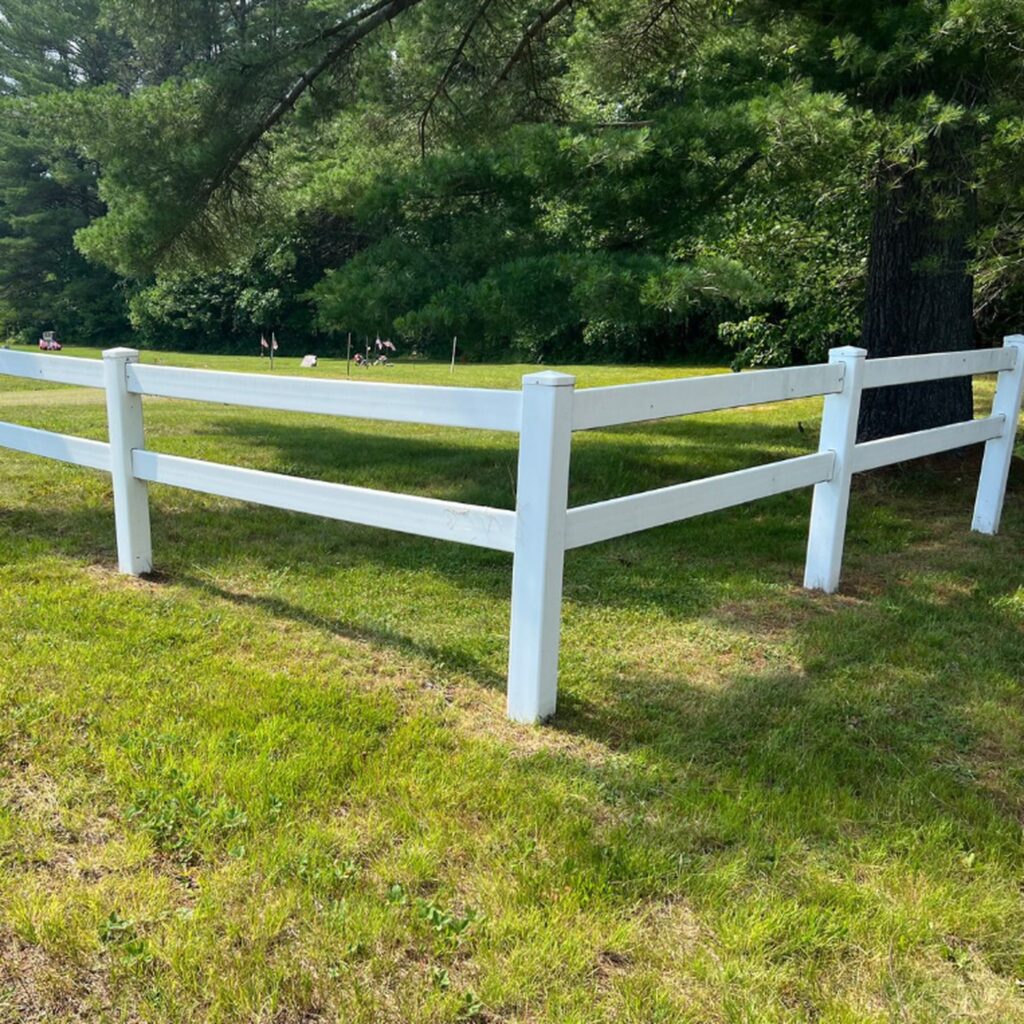
| Vinyl Rail | Horses, decorative farm borders | $6.00 – $10.00 | 25-40 years |
| High-Tensile Non-Electric | Perimeter fencing, cattle | $2.00 – $4.00 | 30-40 years |
These ranges reflect typical conditions in central and south-central Oklahoma. Rocky terrain, steep grades, or wet bottomland can push costs higher. Post spacing, gate placement, and corner bracing all affect final pricing, the same factors that shape fence installation costs.
Choose the Right Fence for Each Type of Livestock
Not every animal requires the same containment strategy. Matching your fence to your specific livestock is one of the most important decisions you will make for your farm operation.
- Cattle: Four or five strands of barbed wire work well for perimeter lines on large ranches. Woven wire with a top barbed wire strand gives better control near roads and neighbors.
- Horses: Avoid barbed wire entirely. Horses panic, run into fences, and suffer serious injuries from barbs. Board rail, vinyl rail, or smooth high-tensile wire are the right choices.
- Goats: Goats are escape artists. Use woven wire with no-climb spacing (2×4 inch mesh) and bury or weight the bottom to prevent them from pushing under.
- Hogs: Hogs root under fences. Electric wire at ground level combined with woven wire above is the most effective combination for hog containment.
- Sheep: Sheep are vulnerable to predators. Woven wire with a hot wire on the outside helps keep coyotes out, which is a real concern in rural areas around Harrah, Jones, Luther, and Arcadia.
- Poultry: Welded wire or hardware cloth with a buried apron prevents digging predators from getting in from below.
If you run multiple livestock types, zoning your pastures by species and using appropriate fencing for each zone is the most practical long-term approach.
Explore High-Tensile Electric Fencing as a Flexible Option
High-tensile electric fencing has become one of the most popular farm fencing options Oklahoma livestock producers use for rotational grazing systems. The wire is smooth, strong, and long-lasting when properly tensioned and energized.
A quality energizer like those made by Gallagher or Parmak can power several miles of fence. Solar-powered energizers work well on remote Oklahoma pastures where running electricity is not practical.
The key advantages of high-tensile electric include lower material cost, faster installation over long distances, and ease of moving temporary subdivision fencing. Rotational grazing systems in Choctaw, Nicoma Park, and Spencer areas benefit from this flexibility.
Maintenance involves checking tension seasonally, clearing vegetation from the wire, and testing the energizer output regularly. Oklahoma summer growth can ground out a fence line quickly if you skip this step.
One important note: high-tensile wire under tension stores energy and can spring back dangerously if cut or broken. Always use proper tools and work carefully when repairing this fence type.
Review Local Considerations for Farms in the Oklahoma City Metro Region
Farms and rural properties within or near the Oklahoma City metro face a unique mix of agricultural and suburban pressures. Areas like Deer Creek, Piedmont, Yukon, and Mustang have seen rapid residential growth around traditional farm ground.
When your pasture borders a residential subdivision, your fence choice matters for neighbor relations and local ordinances. Barbed wire along a shared residential property line can create liability concerns. A woven wire or board rail fence gives a cleaner boundary and reduces conflict.
Warr Acres, Bethany, and The Village are fully urban communities, but rural properties in adjacent Logan and Canadian counties still follow county zoning rules rather than city codes. Always check with your county before installing perimeter fencing that may affect road right-of-way setbacks.
Del City and Midwest City are more densely developed, but producers in nearby rural areas of Cleveland and McClain counties around Noble, Purcell, and Newcastle need to be aware of county road setback requirements, which typically range from 15 to 30 feet from the center of a county road.
A Better Fence Construction works throughout all these areas and understands the local rules. Getting the setbacks and fence permit requirements right before you dig a single post saves expensive rework later.
Plan Your Post Depth and Bracing for Oklahoma Soil and Wind
Post depth and corner bracing are where many DIY farm fence projects fail. Oklahoma soil and wind loads demand more than the minimum.
| Post Type | Recommended Depth | Spacing (Line Posts) | Corner Brace Style |
|---|---|---|---|
| Treated Wood (6-inch) | 3.5 – 4 feet | 12 – 16 feet | Double H-brace |
| Steel T-Post | 18 – 24 inches | 8 – 12 feet | Anchored wood corner |
| Concrete-Set Wood | 3 feet minimum | 12 – 16 feet | Double H-brace |
| High-Tensile Fiberglass | 18 inches | 50 – 80 feet | Heavy wood corner assembly |
Corner and end posts carry the entire tension load of a fence line. Under-built corners are the number one cause of fence failure over time. Use a full double H-brace assembly on every corner and gate post on woven wire and high-tensile installations.
In areas with shrink-swell clay soils common around Norman, Moore, and southern Oklahoma City, concrete footings for corner posts can actually make heaving worse. Tamped gravel backfill around posts allows drainage and reduces frost and moisture heave.
Rocky ground in areas east of Choctaw and around Luther may require mechanical rock drilling for post holes. Factor that into your project budget if your land has significant limestone or sandstone outcroppings near the surface.
FAQs on Farm Fencing Options Oklahoma Livestock
What is the cheapest farm fencing option for cattle in Oklahoma?
Barbed wire is typically the lowest-cost option for cattle, running $1.50 to $3.00 per linear foot installed. It works best on large open acreage away from roads and residential neighbors. For better animal control, add a strand of high-tensile electric wire inside the barbed wire perimeter.
How deep should fence posts be set in Oklahoma clay soil?
Corner and gate posts should be set at least 3.5 to 4 feet deep in Oklahoma clay. Line posts can go 2.5 to 3 feet. Avoid concrete footings in heavy clay because moisture movement can heave posts over time. Tamped gravel backfill is a better choice for drainage and stability.
Is electric fencing legal for livestock in Oklahoma counties?
Electric fencing is legal for livestock containment throughout Oklahoma. You must follow county road setback requirements and ensure your energizer meets UL safety standards. High-quality UL-listed energizers from brands like Gallagher and Zareba are widely available at rural supply stores across the state.
What fencing works best for horses in the Edmond and Guthrie area?
Smooth board rail, vinyl rail, or smooth high-tensile wire are the right choices for horses near Edmond and Guthrie. Never use barbed wire with horses. The grassy pastures common in Logan County are ideal for board or vinyl rail fencing that is safe and visually appealing on larger horse properties.
How often does farm fencing need to be maintained in Oklahoma?
Inspect your fence line at least twice a year, ideally in early spring and after any significant storm. Check wire tension, look for broken posts, and clear vegetation touching the fence. High-tensile electric fencing needs energizer testing monthly during summer when vegetation growth is fastest.
Can I install farm fencing myself or should I hire a contractor?
Straight runs of T-post and barbed wire are manageable for experienced DIY landowners. Corner bracing, high-tensile wire tensioning, and large woven wire jobs benefit from professional installation. Improper tensioning or under-built corners will cost more to fix than hiring right the first time.
Wrap up and next steps
Picking the right farm fencing options for Oklahoma livestock comes down to your animals, your soil, your budget, and how your property sits within the landscape. Woven wire, high-tensile electric, and board rail each fill a specific role, and many farms use more than one type across different pasture zones.
A Better Fence Construction installs farm fencing across the Oklahoma City metro and surrounding rural communities, from El Reno and Yukon to Noble, Purcell, and Guthrie. Our team understands Oklahoma soil, wind, and livestock demands because we work in this region every day.
Call A Better Fence Construction at 4052028580 to schedule a site visit and get a straight quote on your farm fencing project. We will help you choose the right system for your land and get it installed correctly the first time.