
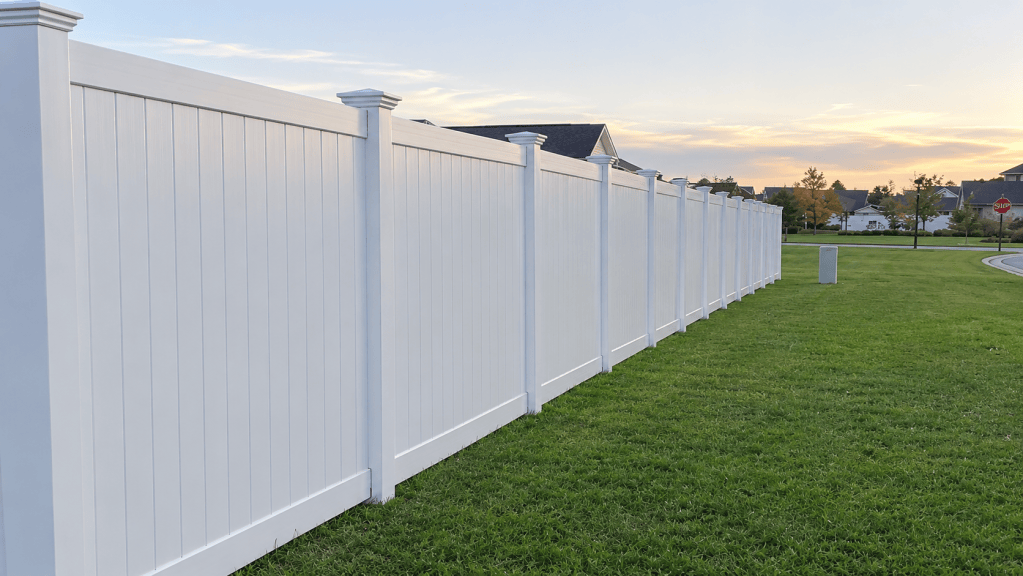
A vinyl fence in Oklahoma typically lasts 20 to 30 years with proper installation and basic maintenance. If you’re wondering how long does a vinyl fence last, the answer depends on its installation quality, maintenance, and exposure to Oklahoma’s extreme weather. Some fences in areas like Edmond, Yukon, and Norman push past 30 years, while others in exposed locations fail sooner. This article covers what affects vinyl fence lifespan, how Oklahoma’s climate plays a role, and what you can do to get the most out of your investment.
Understand Why Oklahoma’s Climate Affects Vinyl Fence Lifespan
Oklahoma sits in one of the most weather-extreme states in the country. Vinyl fences here face conditions that fences in milder states simply never deal with.
Summers in areas like Del City, Moore, and Mustang regularly hit 100°F or above. Vinyl expands in extreme heat and contracts when temperatures drop sharply in winter. That repeated expansion and contraction stresses the material at every joint and post.
Wind is the other major factor. Oklahoma’s open plains allow sustained winds and sudden gusts that push against fence panels with tremendous force. A fence installed without proper post depth or spacing will rock, crack, and eventually fail years before it should.
Hail is also common across the OKC metro and surrounding communities like Choctaw, Harrah, and Guthrie. Large hail can crack or dent vinyl panels, and those cracks let moisture in, which accelerates deterioration from the inside out.
- High UV exposure fades color and makes vinyl brittle over time
- Temperature swings of 40°F or more in a single day stress joints and seams
- Severe thunderstorm winds frequently exceed 60 mph across the OKC metro
- Hail stones larger than 1 inch can crack standard vinyl panels
- Soil movement from freeze-thaw cycles shifts fence posts out of alignment
None of this means vinyl is a bad choice for Oklahoma. It means installation quality and material grade matter enormously here.
Compare Vinyl Fence Grades and Expected Lifespan
Not all vinyl fencing is the same. The thickness of the vinyl, the amount of titanium dioxide in the mix, and whether steel reinforcement is included all affect how long a fence lasts in Oklahoma’s conditions.
| Vinyl Grade | Wall Thickness | Steel Reinforcement | Expected Lifespan (Oklahoma) | Best For |
|---|---|---|---|---|
| Residential Economy | 0.080 inches | No | 10 to 15 years | Low-wind areas, decorative use |
| Standard Residential | 0.100 to 0.120 inches | Optional | 15 to 20 years | Most suburban yards |
| Heavy-Duty Residential | 0.150 inches | Yes | 20 to 30 years | Oklahoma weather, privacy fencing |
| Commercial Grade | 0.175 inches or more | Yes | 30 or more years | High-wind zones, commercial properties |
At A Better Fence Construction, we always recommend heavy-duty residential grade or better for every vinyl fence installation in Edmond, Yukon, Bethany, and other OKC-area communities. Economy-grade vinyl saves money upfront but rarely survives a full Oklahoma hail season without damage.
Steel-reinforced posts are especially important. Posts take the most stress during high-wind events, and unreinforced vinyl posts are the first thing to fail.
Identify the Factors That Shorten Vinyl Fence Life
Several avoidable factors cut years off a vinyl fence’s lifespan. Knowing them helps you make smarter choices during installation and after.
- Shallow post holes: Posts in Oklahoma should be set at least 36 to 42 inches deep to handle freeze-thaw movement and wind load. Shallow posts rock and eventually crack the rails.
- Wrong concrete mix: Posts need to be set in proper concrete, not just packed soil. This matters especially in clay-heavy soils common in Blanchard, Noble, and Purcell.
- Low-grade vinyl: Thin-walled panels become brittle within a few years of UV exposure in Oklahoma sun.
- No UV stabilizers: Quality vinyl includes titanium dioxide to block UV degradation. Budget brands often skip or reduce this additive.
- Improper panel spacing: Vinyl needs small gaps to expand and contract. Panels installed too tight buckle in summer heat.
- Tree root encroachment: Roots from large trees push posts out of alignment over time, especially in older neighborhoods in The Village and Nichols Hills.
- Chemical exposure: Fertilizers, weed killers, and pool chemicals degrade vinyl when sprayed directly on fence surfaces repeatedly.
Most of these issues come down to installation quality. A fence installed correctly by an experienced fence contractor lasts far longer than one that cuts corners, even with the same materials.
Learn How Maintenance Extends Vinyl Fence Lifespan
One of vinyl’s biggest selling points is low maintenance. But low maintenance is not the same as no maintenance. A few simple habits add years to your fence.
Wash your fence once or twice a year with a garden hose and mild soap. Oklahoma’s red clay soil splashes onto fence panels during rain and stains the surface if left too long. A light scrub with a soft brush removes it easily before it sets.
Check your fence after every major storm. Oklahoma produces severe weather across communities like Luther, Arcadia, Jones, and Spencer throughout spring and summer. Walk the fence line after a significant storm to look for cracked panels, leaning posts, or sections that have shifted.
Trim vegetation away from the fence line. Grass, vines, and shrubs hold moisture against the vinyl base and can trap dirt that promotes surface staining and mildew over years of contact.
Inspect the post bases once a year. Look for soil erosion around the base of each post. Exposed post bottoms or shifting concrete footings need attention before they cause the whole section to lean.
Do not paint vinyl fences. Paint traps heat, causes uneven expansion, and peels within a season. If your fence has faded, some manufacturers sell vinyl restorer products that are safe to use. Ask your installer before applying anything.
Compare Vinyl Fence Lifespan to Other Fence Materials in Oklahoma
Understanding how vinyl compares to wood, chain link, and aluminum helps you decide if it is the right material for your property.
| Material | Average Lifespan (Oklahoma) | Maintenance Level | Hail Resistance | Wind Resistance | Approximate Cost per Linear Foot (Installed) |
|---|---|---|---|---|---|
| Vinyl (heavy-duty) | 20 to 30 years | Low | Moderate | Good (with reinforcement) | $25 to $45 |
| Wood (cedar/pine) | 10 to 15 years | High | Low | Moderate | $18 to $35 |
| Chain Link | 20 to 30 years | Very Low | High | Very Good | $10 to $20 |
| Aluminum | 30 to 50 years | Very Low | Moderate | Good | $30 to $55 |
| Steel/Wrought Iron | 20 to 40 years | Moderate | High | Excellent | $30 to $60 |
Vinyl offers a strong middle ground. It lasts significantly longer than wood, requires far less maintenance, and provides full privacy that chain link cannot. For homeowners in Warr Acres, Nicoma Park, El Reno, and Tuttle who want a clean look with minimal upkeep, vinyl is a practical choice.
Aluminum outlasts vinyl in most conditions, but it does not provide the solid panels most Oklahoma homeowners want for a backyard privacy fence.
Know When It Is Time to Replace Your Vinyl Fence
Even a well-installed, well-maintained vinyl fence reaches the end of its useful life eventually. Knowing the signs helps you plan ahead instead of dealing with a sudden failure.
- Widespread yellowing or significant color fade: Some surface fading is normal, but deep yellowing that does not clean off indicates UV degradation of the vinyl itself.
- Cracking or splintering panels: Brittle vinyl cracks under impact or even just pressure. Once panels crack, they cannot be properly repaired and should be replaced.
- Multiple leaning posts: One leaning post can be reset. If several posts have shifted, the foundation is compromised and a full replacement makes more sense than piecemeal repairs.
- Warped or buckled sections: Warping that cannot be corrected is a sign the vinyl has permanently deformed from repeated heat stress.
- Loose rails that will not stay seated: Rails that keep popping out of post slots indicate that the post sleeve has cracked internally.
- Hail damage covering more than 25% of the fence: Spot repairs work for small areas, but widespread hail damage means the fence integrity is compromised throughout.
If your fence is showing several of these signs at once, a replacement is a better investment than continued repairs, and current fence installation costs in Oklahoma City can help you plan the budget. A Better Fence Construction can assess your current fence and give you an honest evaluation of what makes financial sense for your specific situation.
FAQs on Vinyl Fence Lifespan in Oklahoma
Does vinyl fencing hold up to Oklahoma hail?
Heavy-duty vinyl with thicker walls handles small to moderate hail reasonably well. Large hail stones, one inch or larger, can crack standard vinyl panels. After a significant hail event, inspect your fence closely for cracks or impact marks, especially on the upper rails and cap.
Is vinyl fencing worth it in Oklahoma compared to wood?
Yes, in most cases. Vinyl lasts two to three times longer than wood in Oklahoma’s climate and requires far less maintenance. Wood fences need staining or sealing every two to three years, while vinyl needs only occasional cleaning. The higher upfront cost of vinyl is typically offset by lower long-term costs.
How deep should vinyl fence posts be set in Oklahoma?
Posts should be set at least 36 to 42 inches deep in Oklahoma, with some high-wind areas requiring even deeper installation. The soil type also matters. Clay-heavy soils common in central Oklahoma expand when wet and shift posts if the footing is not sized properly.
Can a vinyl fence survive Oklahoma tornadoes or straight-line winds?
No fence material is designed to withstand a direct tornado impact. However, properly installed reinforced vinyl fence handles typical Oklahoma severe weather, including straight-line winds up to 60 to 70 mph, better than lighter or unreinforced versions. Post depth and concrete footing quality are the most important factors.
Does Oklahoma sun cause vinyl fencing to fade?
Yes, UV exposure in Oklahoma is intense enough to cause fading over time. Quality vinyl contains titanium dioxide as a UV stabilizer, which significantly slows this process. Budget-grade vinyl without sufficient UV inhibitors will show noticeable fading within five to seven years in direct sun exposure.
How much does it cost to replace a vinyl fence in Oklahoma?
Vinyl fence replacement in Oklahoma typically costs between $25 and $45 per linear foot installed, depending on the style, height, and grade of vinyl. A standard 150-foot backyard privacy fence replacement runs between $3,750 and $6,750 in most OKC metro communities. Contact A Better Fence Construction at 4052028580 for an accurate quote for your property.
Wrap up and next steps
Vinyl fencing lasts 20 to 30 years in Oklahoma when you choose the right grade of material and have it installed correctly. Oklahoma’s heat, UV exposure, hail, and wind all take a toll, but a properly installed heavy-duty vinyl fence handles those conditions far better than most people expect.
A Better Fence Construction installs vinyl fencing across Edmond, Norman, Yukon, Mustang, and the entire OKC metro area. We use reinforced posts and proper concrete footings on every job because we know what Oklahoma weather demands. Call us at (405) 202-8580 to schedule your free estimate and find out exactly what a long-lasting vinyl fence costs for your property.