
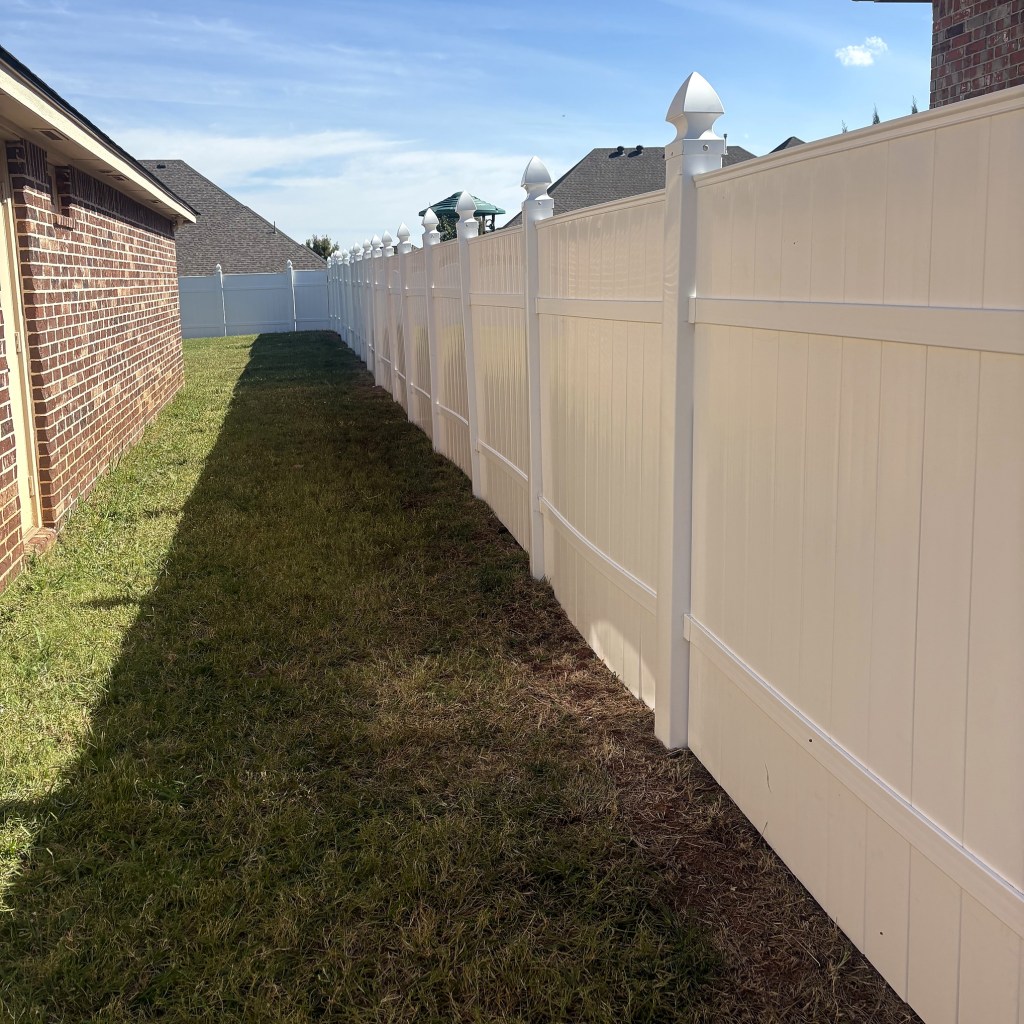
For most Oklahoma homeowners, vinyl fencing wins on long-term value, while wood fencing wins on upfront cost. Wood has the lower upfront installation cost, but vinyl usually costs less over about 20 years because it needs far less upkeep. This guide covers the full wood vs vinyl fence Oklahoma comparison, including maintenance, durability in Oklahoma’s climate, and what neighbors in Edmond, Norman, Yukon, and other communities are actually choosing.
Compare Wood and Vinyl Fence Costs in Oklahoma
Cost is usually the first question homeowners ask. Wood is cheaper upfront, but vinyl tends to cost less over a 20-year period because it requires far less maintenance and repair. Here is a realistic cost breakdown for Oklahoma installations.
| Fence Type | Installed Cost Per Linear Foot | Average 200 LF Project | Estimated 20-Year Maintenance |
|---|---|---|---|
| Wood (Privacy) | $15 to $30 | $3,000 to $6,000 | $2,000 to $5,000 |
| Vinyl (Privacy) | $25 to $45 | $5,000 to $9,000 | $300 to $800 |
| Wood (Picket) | $12 to $22 | $2,400 to $4,400 | $1,500 to $3,500 |
| Vinyl (Picket) | $20 to $38 | $4,000 to $7,600 | $200 to $500 |
These figures reflect Central Oklahoma pricing. Material costs fluctuate, so always get a current quote. A Better Fence Construction provides free, itemized estimates so you can see exactly where your money goes before you commit.
Understand How Oklahoma’s Climate Affects Each Material
Oklahoma’s weather is genuinely tough on fencing. Communities from Guthrie and El Reno in the north to Newcastle, Blanchard, and Noble in the south all experience the same brutal combination of heat, ice storms, and high winds.
Wood absorbs moisture during Oklahoma’s spring rains and then dries out during the 100-plus degree summers. That constant expansion and contraction causes warping, cracking, and cupping over time. Cedar and pressure-treated pine hold up better than untreated wood, but they still require annual attention.
Vinyl is not affected by moisture absorption the same way. It does not rot, splinter, or warp from humidity swings. However, cheaper vinyl can become brittle in extreme cold and may crack if struck during an ice storm. Quality matters a lot with vinyl, which is why material grade is an important conversation to have with your installer.
Wind is a major factor in areas like Piedmont, Deer Creek, and Yukon, where open land means fewer windbreaks. Both wood and vinyl privacy fences can act like sails in a tornado or severe thunderstorm. Post depth and concrete footing quality matter more than the panel material itself when it comes to wind resistance, so choose a fence contractor who sets every post in concrete.
Review Maintenance Requirements Side by Side
Maintenance is where the two materials diverge most sharply. Here is an honest look at what each requires from Oklahoma homeowners over the years.
- Wood fence maintenance: Staining or sealing every 2 to 3 years, replacing warped or rotted boards as needed, treating for termites in areas like Choctaw, Harrah, and Jones where soil moisture is higher, and re-nailing popped fasteners after wind events.
- Vinyl fence maintenance: Occasional washing with a garden hose or mild soap, inspecting post caps after storms, and replacing individual panels if cracked by impact. No painting, staining, or sealing is ever required.
- Time investment for wood: Expect to spend 4 to 8 hours per year on routine upkeep for an average 150 to 200 linear foot fence.
- Time investment for vinyl: Most homeowners spend under 1 hour per year on vinyl fence upkeep outside of storm cleanup.
If you have a busy household in Mustang, Bethany, or Warr Acres and do not want to spend weekends maintaining a fence, vinyl is the practical choice. If you enjoy DIY projects and want a lower entry cost, wood is manageable with the right routine.
Compare Durability and Lifespan for Oklahoma Conditions
Lifespan varies based on installation quality, material grade, and how much attention you give the fence each year. These are realistic expectations for Central Oklahoma conditions.
| Material | Expected Lifespan | Common Failure Points | Warranty (Typical) |
|---|---|---|---|
| Pressure-Treated Pine | 10 to 20 years | Rot at post base, warping panels | No manufacturer warranty |
| Cedar | 15 to 25 years | Graying, splitting, insect damage | No manufacturer warranty |
| Vinyl (Standard Grade) | 20 to 30 years | Brittleness in cold, impact cracks | Limited lifetime (many brands) |
| Vinyl (Premium Grade) | 30 to 40+ years | Fading over decades | Lifetime transferable (some brands) |
Premium vinyl brands like ActiveYards, Bufftech, and Certainteed offer lifetime warranties that transfer to new owners, which can be a selling point if you ever list your home in Edmond, Norman, or Moore. Wood fences carry no manufacturer warranty, so your only protection is the quality of the installation itself.
Explore Curb Appeal and Aesthetic Options for Your Neighborhood
Both materials look great when installed correctly. The right choice often comes down to your neighborhood aesthetic and what your HOA permits. Many communities in Nichols Hills, The Village, and parts of Edmond have specific rules about fence color, height, and style.
- Wood advantages: Natural grain looks warm and traditional. Stain in any color, carve custom tops, and build one-of-a-kind designs. Wood suits craftsman-style homes and rural properties in Arcadia, Luther, and Nicoma Park very well.
- Vinyl advantages: Consistent color that does not fade quickly, clean lines that stay looking new longer, and a wide range of styles including privacy, shadowbox, scalloped, and lattice-top designs.
- Color options: Wood can be any color. Vinyl comes in white, tan, gray, and woodgrain-textured finishes that mimic real wood without the upkeep.
- HOA compliance: If your community in Yukon, Del City, or Purcell requires white privacy fencing, vinyl is the easier long-term answer because it holds its color without repainting.
A Better Fence Construction works with homeowners across Central Oklahoma to review HOA guidelines and local permit requirements before installation starts. Getting this right at the beginning saves you from costly changes later.
Know What Oklahoma Homeowners in Specific Areas Are Choosing
Trends vary by area, and local conditions drive a lot of the decision-making across the region.
In Tuttle, Newcastle, and Blanchard, rural property owners with large lots often choose wood because the natural look fits the landscape and they are fencing large perimeters where lower cost per foot matters more. Livestock-adjacent properties in these areas also tend to favor wood or metal over vinyl.
In Edmond, Moore, and Norman, where subdivisions are tightly packed and HOAs are common, vinyl fence installation is increasingly the default. Homeowners appreciate the low maintenance and the clean appearance that stays consistent over years without repainting.
In Spencer, Harrah, and Jones, a mix of both is common. Homeowners with tighter budgets often start with wood and upgrade to vinyl when they replace sections. A Better Fence Construction can help you plan a phased approach if budget is a concern right now.
El Reno and Guthrie homeowners often contend with high winds on flatter terrain. In these areas, post installation depth is the most important factor regardless of which material you choose. Posts set in concrete at least 3 feet deep perform dramatically better in storm conditions.
FAQs on Wood vs Vinyl Fence Oklahoma
Which fence is cheaper to install in Oklahoma, wood or vinyl?
Wood is cheaper to install upfront, typically running $15 to $30 per linear foot installed compared to $25 to $45 for vinyl. However, when you factor in staining, repairs, and board replacements over 20 years, the total cost of ownership is often similar or lower for vinyl.
Does vinyl fence hold up to Oklahoma tornadoes and high winds?
No fence material is tornado-proof. Both wood and vinyl privacy panels act as wind sails in severe storms. The most important factor is post depth and concrete footing quality. Posts set 3 feet deep in concrete with proper bracing perform better than shallowly set posts of any material.
How often does a wood fence need to be stained or sealed in Oklahoma?
In Oklahoma’s climate, plan to restain or reseal a wood fence every 2 to 3 years. The hot summers and wet springs accelerate UV damage and moisture penetration. Skipping this maintenance shortens the fence’s lifespan noticeably, especially for pine boards.
Can vinyl fence be installed in areas with HOA rules in Edmond or Norman?
Yes, vinyl fencing is often the preferred material in HOA communities because it maintains a uniform, clean appearance without repainting. Always confirm the approved styles and colors with your HOA before ordering materials. A Better Fence Construction can help you identify compliant options.
Which fence material adds more resale value to an Oklahoma home?
Vinyl fencing generally adds more perceived value to buyers because it signals low maintenance. Homes in Edmond, Moore, and Norman with newer vinyl privacy fences tend to photograph better and appeal to buyers who do not want immediate upkeep projects after moving in.
Is wood or vinyl better for homes with dogs in Oklahoma?
Both materials can contain dogs effectively when installed properly. Vinyl panels have no gaps between boards and no exposed nails, which reduces injury risk. Wood privacy fencing works equally well if boards are set tightly and the bottom is installed close to the ground to prevent digging escapes.
Wrap Up and Next Steps
The wood vs vinyl fence Oklahoma decision comes down to this: choose wood if upfront cost is your top priority and you are willing to maintain it, and choose vinyl if you want a lower-maintenance fence that holds its appearance for decades. Both materials can serve Oklahoma homes well when installed correctly with quality posts and proper footings.
A Better Fence Construction installs both wood and vinyl fencing across Central Oklahoma, including Edmond, Norman, Yukon, Mustang, Guthrie, El Reno, and all surrounding communities. Call us at 4052028580 to schedule a free on-site estimate and get a straight answer on which material makes the most sense for your property and budget.