
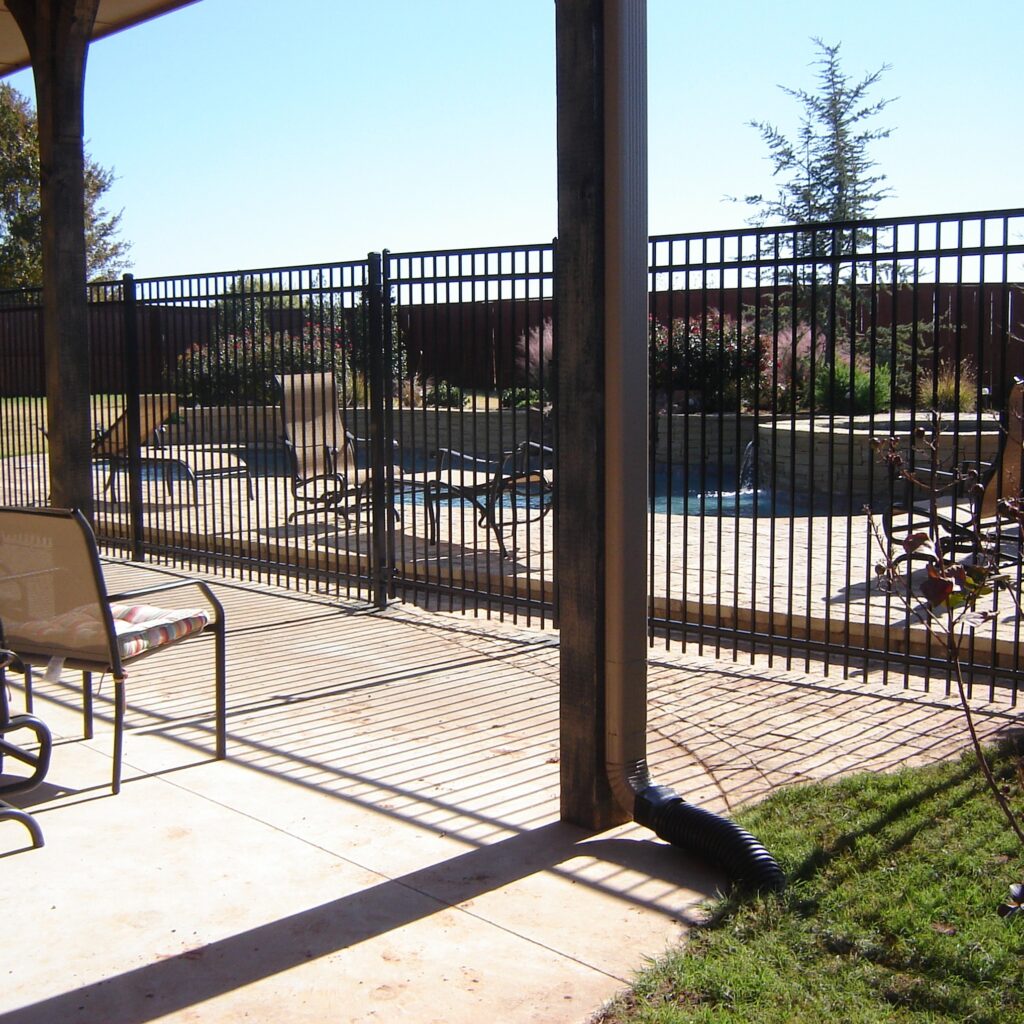
Oklahoma pool fence requirements generally call for a minimum barrier height of 48 inches, self-latching gates, and no climbable footholds on the fence itself. These rules apply to most residential in-ground and above-ground pools across the state. This guide walks you through state-level standards, city-specific variations, approved materials, and what homeowners in Edmond, Norman, Yukon, Moore, and surrounding communities need to know before installing a pool fence.
Understand Oklahoma’s Baseline Pool Fence Requirements
Oklahoma follows guidelines that align closely with the International Residential Code (IRC) and the Model Aquatic Health Code. While the state does not have a single statewide pool fencing statute, most Oklahoma municipalities have adopted these baseline standards into their local building codes.
The core requirements you will encounter in most Oklahoma cities include the following:
- Fence height of at least 48 inches measured from the outside of the barrier
- No openings larger than 4 inches to prevent a child from squeezing through
- No footholds or handholds that make the fence easy to climb
- Self-closing gates that latch automatically without manual intervention
- Self-latching hardware installed on the pool side of the gate, at least 54 inches from the bottom
- Gates that open outward, away from the pool area
- A minimum 20-inch clearance between the bottom of the gate latch and any opening
These are baseline rules. Your specific city may add stricter requirements, so always pull a permit and confirm local code before you break ground on any pool fence project.
Compare Pool Fence Requirements Across Oklahoma Cities
Local municipalities across the Oklahoma City metro area each administer their own building departments. Requirements can vary in specific details even when the core standards are similar. Here is a quick comparison of what homeowners commonly encounter in several local jurisdictions.
| City | Min. Height | Permit Required | Notable Detail |
|---|---|---|---|
| Edmond | 48 inches | Yes | Inspections required at multiple stages |
| Norman | 48 inches | Yes | Pool must be enclosed on all four sides |
| Yukon | 48 inches | Yes | Gate hardware must be pool-side mounted |
| Moore | 48 inches | Yes | Above-ground pools may use deck as barrier |
| Mustang | 48 inches | Yes | Aligns with standard IRC guidelines |
| Guthrie | 48 inches | Yes | Contact city hall for rural parcel rules |
| Blanchard | 48 inches | Yes | Smaller city, verify with building dept. |
Cities like Del City, Choctaw, Harrah, Nicoma Park, and Spencer may have smaller building departments. In those areas, always call before starting any work. A Better Fence Construction regularly works with local building departments across all these communities to streamline the permitting process for homeowners.
Choose the Right Pool Fence Material for Oklahoma Conditions
Oklahoma’s climate brings hot summers, ice storms, and high winds. The right material for your pool fence needs to handle all of it. Here is a breakdown of the most common options and how they perform locally.
| Material | Avg. Cost Per Linear Foot | Durability in Oklahoma Climate | Maintenance Level |
|---|---|---|---|
| Aluminum | $25 – $40 | Excellent | Low |
| Vinyl (PVC) | $20 – $35 | Good | Very Low |
| Wood | $15 – $30 | Moderate | High |
| Steel/Wrought Iron | $30 – $55 | Excellent | Moderate |
| Mesh (removable) | $10 – $20 | Moderate | Low |
Aluminum is one of the most popular choices for pool fencing in Oklahoma. It does not rust, holds up well through freeze-thaw cycles, and meets code requirements easily with standard picket spacing.
PVC, or vinyl pool fencing, is another strong option, especially near pools where moisture and chlorine splash are constant. PVC will not rot, splinter, or corrode. For homeowners in Piedmont, Tuttle, and Newcastle, where HOA guidelines sometimes restrict certain fence styles, PVC and aluminum tend to pass approval quickly.
Wood fencing can meet code, but Oklahoma’s humidity and heat accelerate rot and warping near pools, one of the biggest differences in any wood vs vinyl fence comparison. If you choose wood, use pressure-treated lumber rated for ground contact and plan on regular sealing and inspection.
Know the Gate Rules That Homeowners Most Often Get Wrong
Gate compliance is the most common reason pool fence inspections fail in Oklahoma. The rules exist specifically to protect young children, and inspectors take them seriously. Getting your gate right the first time saves you a reinspection fee and keeps your project on schedule.
Here are the gate rules that trip up homeowners most often:
- Direction of swing: Pool gates must open away from the pool, pushing outward. A gate that swings inward toward the pool does not meet code in most Oklahoma jurisdictions.
- Self-closing mechanism: The gate must close and latch on its own every single time. Test this with the gate held at a 90-degree open position. It must swing shut and latch without you touching it.
- Latch height: The latch must sit at least 54 inches above grade on the pool side, or be double-sided and require simultaneous operation of two latches.
- No protrusions: The gate cannot have horizontal rails or hardware on the outside face that a child could use as a climbing foothold.
- Gap clearance: The gap under the gate cannot exceed 2 inches. Many homeowners set gates too high to avoid dirt contact, then fail inspection for this reason alone.
Gate installation is one area where working with an experienced fence contractor pays off. Getting all five of these details right on the first installation attempt saves time and stress during the inspection process.
Learn How Permits and Inspections Work for Pool Fences in Oklahoma
Most Oklahoma cities require a building permit before you install a pool fence. Like other fence permit requirements in Oklahoma City, this applies whether you are installing a new fence or replacing an existing one that does not meet current code. Skipping the permit creates liability issues and can complicate home sales later.
The general permit process in Oklahoma City metro communities works like this:
- Submit a site plan showing fence location, gate placement, and distances from property lines
- Provide product specifications for the fence material and gate hardware
- Pay a permit fee, which typically ranges from $50 to $200 depending on the city
- Schedule a rough-in inspection once posts are set but before panels are attached
- Schedule a final inspection after all work is complete, including gate hardware
In Edmond and Norman, the inspection process is fairly structured and turnaround times are predictable. In smaller communities like Arcadia, Luther, Harrah, and Jones, the building department may handle inspections on a less formal schedule. Call ahead to confirm timelines in your specific city.
Homeowners in El Reno, Purcell, and Noble should check with both the city and the county, since some rural properties fall under county jurisdiction rather than city code enforcement.
Avoid Common Mistakes Homeowners Make With Pool Fence Installation
Even homeowners who research pool fence requirements Oklahoma rules carefully can run into problems during installation or inspection. These are the mistakes that come up most frequently in the Oklahoma City metro area.
- Using the house as one side of the barrier: This is allowed in some situations, but only if every door and window opening onto the pool area has an alarm or is permanently sealed. Many homeowners assume this is automatic and skip additional hardware.
- Installing decorative lattice on the bottom rail: Lattice creates footholds and openings that exceed the 4-inch rule. It is not allowed on pool fences even when it looks attractive.
- Placing patio furniture near the fence: Code requires that nothing within or adjacent to the pool enclosure allows a child to climb over the barrier. After installation, keep furniture, grills, and toys away from the fence perimeter.
- Not accounting for grade changes: Oklahoma yards often have slopes. If the grade drops on the outside of the fence, the effective height may be reduced below 48 inches. Installers need to measure from the highest exterior ground level at each panel.
- Skipping the pool permit entirely: Some homeowners install the pool without a permit and then cannot get a fence permit later without first resolving the pool permit issue.
Warr Acres, Bethany, Nichols Hills, and The Village are established communities where many pools were installed decades ago under older code standards. If you are adding or replacing a fence on an older pool in these areas, your installation needs to meet current code even if the original pool was permitted under older rules.
FAQs on Pool Fence Requirements Oklahoma
Does Oklahoma have a statewide pool fence law?
Oklahoma does not have a single statewide residential pool fencing statute. Instead, individual cities and municipalities adopt the International Residential Code or similar model codes that include pool barrier requirements. Always check with your specific city’s building department for the exact rules that apply to your property.
Can I install my own pool fence in Oklahoma without a contractor?
In most Oklahoma cities, homeowners can pull a permit and install their own pool fence as a DIY project. However, the fence must still pass inspection, and mistakes in gate hardware or fence height can lead to failed inspections and rework costs. Hiring an experienced installer like A Better Fence Construction ensures the work meets code on the first inspection.
What happens if my pool fence does not meet code?
If your fence fails inspection, the city will issue a correction notice and require you to fix the deficiencies before final approval. In some cases, noncompliant pool barriers can result in fines or orders to drain the pool until the barrier is corrected. Insurance carriers may also deny claims related to pool incidents if the fence was not code-compliant.
Does an above-ground pool in Oklahoma need a fence?
Yes, above-ground pools in Oklahoma typically still require a barrier. The pool wall itself can count as part of the barrier if it is at least 48 inches tall, but the ladder or steps must be removable or secured with a lockable cover when the pool is not in use. Any deck attached to the pool still requires a compliant gate and railing system.
How long does it take to get a pool fence permit in Oklahoma?
Permit approval times vary by city. Larger cities like Edmond and Norman typically process permits within 5 to 10 business days. Smaller communities may take longer or process permits over the counter on the same day. Contact your local building department before scheduling installation to confirm current wait times.
What is the minimum height for a pool fence in Edmond, Oklahoma?
Edmond requires a minimum pool barrier height of 48 inches, consistent with the International Residential Code. The measurement is taken from the outside of the fence at ground level. If the ground slopes, the effective height must still be 48 inches at the highest point of exterior grade near the fence.
Wrap up and next steps
Pool fence requirements Oklahoma homeowners need to follow center on a 48-inch minimum height, self-closing and self-latching gates, and no climbable features on the barrier. Local city codes in Edmond, Norman, Moore, Yukon, and surrounding communities add specific details, so always pull a permit and confirm requirements before installation begins.
A Better Fence Construction provides code-compliant pool fence installation across the Oklahoma City metro area, from Guthrie and El Reno to Noble, Purcell, and Choctaw. Our team handles the details of gate hardware, post depth, and inspection scheduling so your fence passes on the first visit.
Call A Better Fence Construction at (405) 202-8580 to schedule a free on-site estimate and get your pool fence project started the right way.