
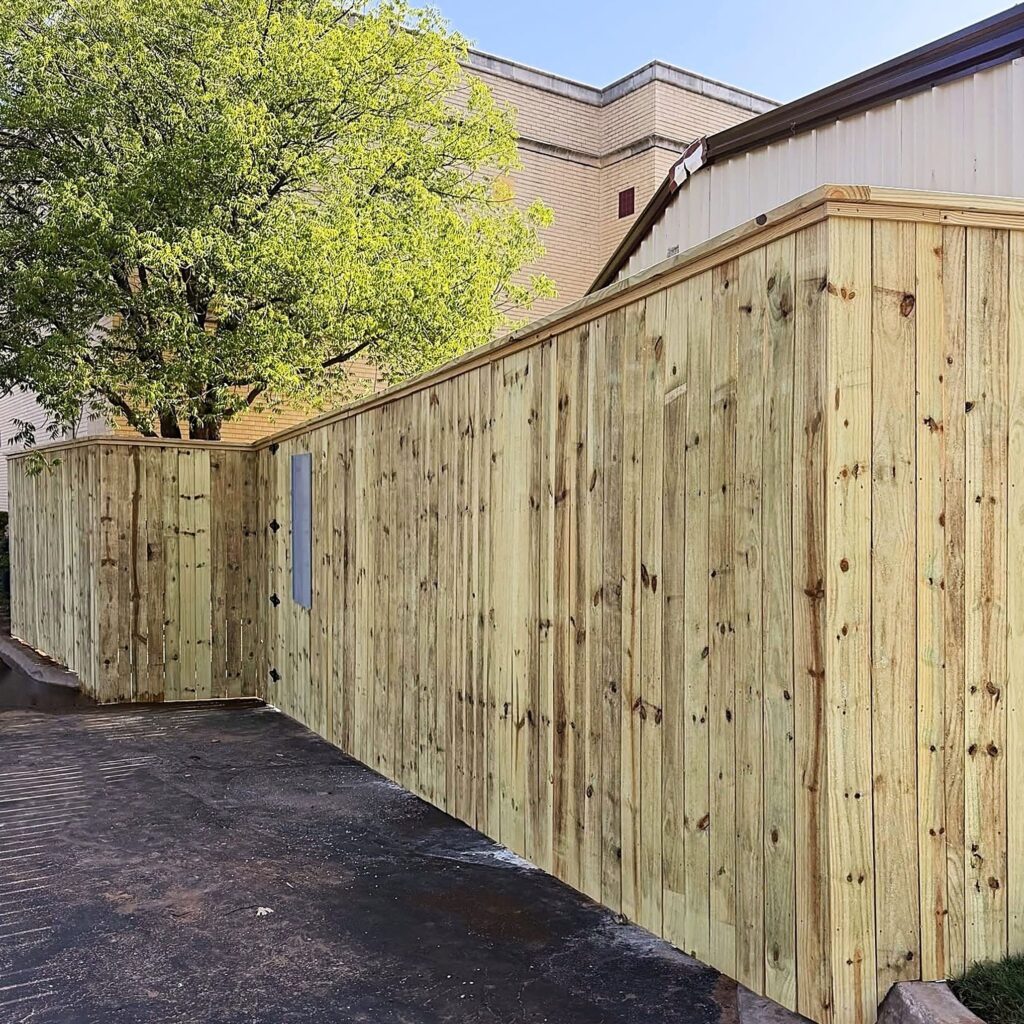
In Oklahoma, vinyl and wrought iron fences consistently last the longest, with lifespans ranging from 30 to 50 years or more under normal conditions. Wood fences typically last 10 to 20 years, while chain link sits in the middle at 20 to 30 years. This article covers how each major fence material performs in Oklahoma’s specific climate, what local soil and weather conditions mean for your fence, and how to pick the right option for your property in communities like Edmond, Norman, Yukon, Mustang, or Guthrie.
Understand How Oklahoma’s Climate Affects Fence Longevity
Oklahoma is not an easy place for a fence to survive. The state experiences extreme temperature swings, high winds, intense UV exposure, heavy rain cycles, and prolonged drought. Each of these forces degrades fencing materials in different ways.
The clay-heavy soils found across much of central Oklahoma, including areas around Moore, Del City, and Newcastle, expand when wet and contract when dry. This constant movement shifts fence posts over time, which can crack concrete footings and loosen post anchors.
Oklahoma also sits in Tornado Alley. High straight-line winds are a regular concern from spring through fall. Fences in Deer Creek, Piedmont, and El Reno face these conditions constantly. A fence that cannot flex slightly under wind load is more likely to buckle or blow over entirely.
UV radiation is another major factor. Oklahoma averages over 230 sunny days per year. Prolonged sun exposure fades color, dries out wood, and degrades certain plastics that are not UV-stabilized. Choosing a UV-resistant material matters more here than in many other states.
Compare Fence Material Lifespans in Oklahoma
Not all fence materials age the same way in Oklahoma’s conditions. Here is a side-by-side comparison of the most common options, including typical lifespan, maintenance needs, and rough cost per linear foot installed.
| Fence Material | Typical Lifespan | Maintenance Level | Installed Cost (per linear ft) |
|---|---|---|---|
| Vinyl | 30 to 50 years | Low | $18 to $40 |
| Wrought Iron / Ornamental Steel | 50 years or more | Medium (rust prevention) | $25 to $60 |
| Aluminum | 30 to 40 years | Low | $20 to $45 |
| Chain Link | 20 to 30 years | Low | $10 to $22 |
| Pressure-Treated Wood | 15 to 20 years | High | $12 to $28 |
| Cedar Wood | 10 to 15 years | High | $15 to $30 |
| Composite / Wood-Plastic | 20 to 30 years | Low to Medium | $20 to $45 |
These ranges assume proper installation with correct post depth and concrete footings. A fence installed with shallow posts in clay soil will fail years earlier than these estimates, regardless of material. Installation quality is just as important as the material you choose.
Identify Which Fence Type Lasts Longest for Oklahoma Homeowners
If maximum lifespan is your top priority, wrought iron and ornamental steel are the winners, including premium systems like Ameristar fencing. A properly installed iron fence can outlast the homeowner, with some installations lasting 75 years or more when maintained.
Vinyl fencing is the best long-lasting option for most residential homeowners who want low maintenance. Modern vinyl is UV-stabilized, impact-resistant, and unaffected by moisture or insects. It will not rot, warp, or splinter the way wood does.
Here are the top reasons vinyl and iron fences outperform other materials in Oklahoma specifically:
- They do not absorb moisture, which prevents the freeze-thaw cracking common after Oklahoma ice storms.
- Vinyl is unaffected by the clay soil expansion and contraction cycle that loosens wooden post bases.
- Iron and steel do not warp or crack in extreme heat, which is a real issue for wood during Oklahoma summers.
- Neither material provides food or habitat for termites, which are active across central Oklahoma.
- Vinyl requires no staining, sealing, or painting. Iron simply needs periodic rust-inhibiting coating to stay strong.
At A Better Fence Construction, we see the difference firsthand between fences installed with the right materials and those that were chosen purely on upfront cost. The savings from a cheap wood fence often disappear within a decade of repairs and replacements.
Explore Wood Fence Performance in Oklahoma’s Specific Conditions
Wood is still the most popular fence choice in many Oklahoma neighborhoods, especially in areas like Choctaw, Harrah, Jones, and Luther where properties tend to be larger and privacy fencing is a priority. It is worth understanding exactly why wood struggles here.
Oklahoma’s summer temperatures regularly exceed 100 degrees Fahrenheit. That heat dries out wood rapidly, causing boards to crack, warp, and pull away from rails. Without annual sealing or staining, most cedar and pine fences start showing significant deterioration within 5 to 7 years.
The wet springs followed by dry summers create a cycle that accelerates wood rot, especially at ground level where posts meet soil. Even pressure-treated lumber is not immune to this. Soil contact and moisture cycling are the main causes of post failure in Oklahoma.
Wood fences also require the most ongoing maintenance of any material:
- Inspect all boards and rails each spring for cracking, warping, or rot.
- Re-seal or re-stain every 2 to 3 years to maintain moisture protection.
- Check posts for movement at the base after any significant rain or drought period.
- Replace individual boards as needed before damage spreads to rails and posts.
- Apply a termite deterrent treatment around post bases, especially in soil-rich areas.
If you love the look of wood but want better durability, composite fencing gives you a similar appearance with 20 to 30 year lifespan expectations and far less upkeep.
Review Local Considerations for Edmond, Norman, and Surrounding Communities
Fence installation requirements vary across the Oklahoma City metro area. Many cities have specific regulations about fence height, materials, setbacks from property lines, and whether permits are required. Getting this wrong can mean costly adjustments later.
| City / Area | Typical Max Height (Residential) | Permit Usually Required? | Notes |
|---|---|---|---|
| Edmond | 6 ft (rear/side), 4 ft (front) | Yes | HOA rules may be stricter |
| Norman | 6 ft | Yes | Setback requirements apply |
| Yukon | 6 ft | Yes for over 30 linear ft | Check subdivision covenants |
| Mustang | 6 ft (rear), 4 ft (front) | Yes | Corner lot sight-line rules apply |
| Guthrie | 6 ft | Varies by project size | Older neighborhoods may have deed restrictions |
| Moore | 6 ft | Yes | Wind-load requirements may apply post-tornado damage history |
| Nichols Hills | Varies by HOA | Yes | Strict aesthetic requirements common |
Communities like Arcadia, Nicoma Park, Spencer, and Blanchard tend to have fewer restrictions than city-center locations, but county rules and deed restrictions still apply. Always verify with your local municipality before installation begins.
A Better Fence Construction pulls permits and handles code compliance for every project we take on. Our crews are familiar with the specific requirements across all the communities we serve, from Purcell and Noble in the south to Luther and Harrah in the east.
Choose the Right Fence Based on Your Goals and Budget
The longest-lasting fence is not always the right fence for every homeowner. Your decision should balance lifespan, upfront cost, maintenance commitment, and what you are trying to achieve with the fence.
Use these guidelines to match your situation to the best material:
- Maximum lifespan with low maintenance: Choose vinyl. Best for privacy fencing in residential yards across Bethany, Warr Acres, and The Village.
- Decorative or perimeter fencing with curb appeal: Ornamental aluminum or iron works well and adds significant property value.
- Large rural or agricultural properties: Chain link fencing or welded wire is cost-effective for acreage in areas like Jones, Luther, and Arcadia.
- Tight budget with acceptable maintenance tradeoff: Pressure-treated wood is still a solid choice if you are committed to regular upkeep.
- Pool fencing or areas with specific code requirements: Aluminum or vinyl are most commonly code-compliant and easiest to maintain around water.
- High-wind exposure areas: Spaced picket designs in vinyl or aluminum allow wind to pass through rather than pushing against a solid surface.
If you are unsure which direction to go, talking through your property layout and goals with an experienced fence contractor makes the decision much clearer. The right fence for a half-acre lot in Tuttle looks very different from the right fence for a quarter-acre backyard in Del City.
FAQs on Fence Longevity in Oklahoma
What is the longest lasting fence for Oklahoma weather?
Wrought iron and ornamental steel fences last the longest in Oklahoma, often 50 years or more with basic rust prevention maintenance. Vinyl is the longest-lasting low-maintenance option, typically performing well for 30 to 50 years without painting or sealing.
How long does a wood fence last in Oklahoma?
A pressure-treated wood fence in Oklahoma typically lasts 15 to 20 years with regular maintenance including staining and sealing every 2 to 3 years. Cedar fences tend to have a shorter lifespan of 10 to 15 years due to Oklahoma’s heat, UV exposure, and moisture cycles. Poor installation or skipping maintenance can cut these timelines significantly.
Does vinyl fencing hold up to Oklahoma storms and wind?
Yes. Modern vinyl fencing is designed to flex slightly under wind load rather than snap, which makes it a good choice in Oklahoma’s storm-prone environment. Look for vinyl panels with internal aluminum reinforcement for added rigidity in high-wind areas like Piedmont, Deer Creek, and El Reno.
How deep should fence posts be in Oklahoma clay soil?
In Oklahoma’s clay-heavy soil, fence posts should be set at least one-third of the total post length deep, with a minimum depth of 24 inches for a 6-foot fence. Concrete footings are strongly recommended to prevent post movement caused by the soil’s expansion and contraction cycle. Skipping concrete in clay soil is one of the most common reasons fences fail prematurely here.
Do I need a permit to install a fence in Norman or Edmond?
Most fence projects in Norman and Edmond require a building permit, especially for fences over 4 feet tall or longer than a certain linear footage. Requirements vary by city and sometimes by subdivision, so checking with your local building department before starting is always the right move. A Better Fence Construction handles permit applications for all projects we install.
Is chain link a good long-term fence option in Oklahoma?
Chain link is a solid mid-range choice, typically lasting 20 to 30 years in Oklahoma conditions. It performs well because it allows wind to pass through rather than creating a solid wind barrier. It is not ideal for privacy, but it is dependable, affordable, and low-maintenance for large properties, especially in rural areas around Tuttle, Blanchard, and Purcell.
Wrap up and next steps
For Oklahoma homeowners, vinyl and wrought iron offer the best long-term value when you factor in lifespan, maintenance costs, and performance in our specific climate. Wood remains popular and affordable upfront, but requires consistent upkeep to reach its full lifespan potential in this region.
A Better Fence Construction installs fences built to last in Oklahoma’s conditions, from privacy vinyl in Edmond to ornamental iron in Norman and chain link on rural properties across the metro. Call us at (405) 202-8580 to schedule a free estimate and get a recommendation matched to your property, your goals, and your budget.