
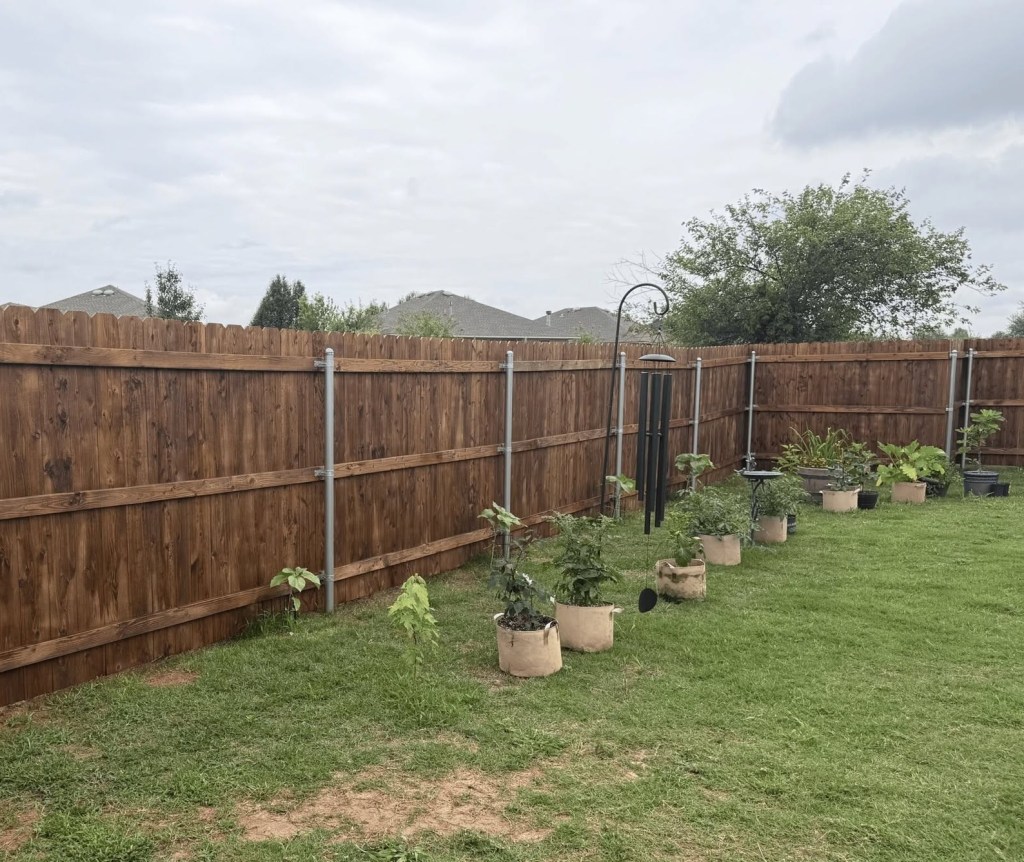
A good neighbor fence is a boundary fence designed so that both sides look equally attractive, with no obvious “front” or “back” face. These fences are especially popular in Oklahoma suburbs like Edmond, Norman, Yukon, Mustang, and Moore, where close lot lines make neighbor relations a real priority. This guide covers design styles, cost sharing, local rules, and how to avoid the most common disputes.
Understand What Makes a Fence a “Good Neighbor” Design
A standard wood privacy fence has a finished face and a framed back. The person whose yard faces the finished side gets the nicer view. A good neighbor fence solves that problem by alternating pickets on opposite sides of the rails, so each neighbor sees an equally finished surface.
This style is sometimes called a shadowbox fence or “board-on-board” fence. The overlapping pickets also create a slight privacy screen effect while allowing airflow through the gaps, which helps during Oklahoma’s hot summers.
Key features of a good neighbor fence design include:
- Pickets alternate on both sides of the top and bottom rails
- Each face looks identical from the outside
- No visible framework or framing boards on either side
- Works in cedar, pine, vinyl, or composite materials
- Usually 6 feet tall for residential privacy
Building one well takes a fence contractor who knows the alternating-picket layout, and A Better Fence Construction builds shadowbox and board-on-board styles regularly throughout the Oklahoma City metro. The design adds a small amount of material cost but eliminates a lot of neighborly tension.
Compare Good Neighbor Fence Styles and Materials
The term “good neighbor fence” describes a concept, not a single product. You can apply the alternating-picket approach to several different materials. Each has its own pros, cons, and price range for Oklahoma homeowners.
| Material | Avg. Cost Per Linear Foot | Lifespan | Maintenance Level |
|---|---|---|---|
| Pressure-Treated Pine | $18 to $28 | 15 to 20 years | Moderate (stain every 2-3 years) |
| Western Red Cedar | $24 to $38 | 20 to 30 years | Low to moderate |
| Vinyl (PVC) | $30 to $50 | 25 to 40 years | Very low |
| Composite | $35 to $55 | 25 to 35 years | Very low |
Pressure-treated pine is the most budget-friendly starting point. Cedar fencing is a natural upgrade that resists rot and insects better, which matters in central Oklahoma where moisture and termite pressure are both real concerns.
Vinyl PVC fencing is gaining popularity in Nichols Hills, Deer Creek, and Piedmont neighborhoods where HOAs often require a clean, uniform look. It never needs painting and holds up well against Oklahoma hail and wind.
Know Oklahoma Property and Fence Regulations
Before you build any shared fence in Oklahoma, you need to understand the rules that apply to your specific city or county. Regulations vary more than most homeowners expect across the metro area.
Here are the key regulatory points that affect good neighbor fences in central Oklahoma:
- Most residential lots in Edmond, Norman, and Yukon allow fences up to 6 feet tall in rear and side yards without a permit
- Front yard fences are typically limited to 4 feet or less, depending on the city
- Guthrie, El Reno, and Purcell may have separate county or municipal ordinances that differ from OKC metro rules
- HOA rules in communities like Deer Creek and Nichols Hills often specify approved materials and colors
- Some municipalities require a fence permit for any structure over a certain height or length
- Setback requirements may require the fence to sit a few inches inside your property line
Always confirm the property line location before starting. Disputes in communities like Choctaw, Harrah, Jones, and Luther often stem from fences built on inaccurate boundary assumptions.
A Better Fence Construction checks local fence permit requirements and pulls permits when needed, so you know what applies in your specific city. That includes communities from Arcadia and Nicoma Park all the way out to Blanchard, Noble, and Newcastle.
Understand How Cost Sharing Works Between Neighbors
One of the most common questions about good neighbor fences is who pays for them. Oklahoma does not have a universal “fence cost sharing” law the way some states do. That means the financial arrangement is typically handled by agreement between neighbors, not by statute.
| Arrangement Type | How It Works | Best For |
|---|---|---|
| One neighbor pays in full | One party covers all costs and owns the fence | When neighbors disagree or one has immediate need |
| 50/50 split | Both parties split labor and materials equally | Mutual agreement, shared benefit situations |
| Materials vs. labor split | One pays materials, one pays installation | When one neighbor has limited cash flow |
| HOA-funded | Association covers cost as part of community standards | Planned communities in Deer Creek, Nichols Hills |
If you reach a cost-sharing agreement with your neighbor, put it in writing. A simple signed document protects both parties and avoids misunderstandings later, especially if one of you sells the property.
The good neighbor design itself can make cost-sharing conversations easier. When both sides look identical, both neighbors are getting equal value, which makes a 50/50 split feel fair to everyone involved.
See How Oklahoma Climate Affects Fence Material Choice
Oklahoma’s climate is tough on outdoor structures. Central Oklahoma sees temperature swings from below 10°F in winter to above 110°F in summer. Add in frequent hail, strong winds, and periodic heavy rain, and your fence material choice becomes a practical decision, not just an aesthetic one.
Wood fences, including cedar and pine, can warp, crack, or cup when exposed to rapid moisture changes. Oklahoma’s spring storms followed by dry summers create exactly that cycle. Proper installation with ground clearance and quality stain or sealant significantly extends their life.
Vinyl PVC holds up well in heat but can become brittle after years of UV exposure, one of the trade-offs to consider when weighing wood against vinyl fencing. Composite fencing handles UV and moisture better than either wood or standard vinyl, though it costs more upfront.
Wind is a major factor in communities like Tuttle, Mustang, Bethany, and Warr Acres, where open terrain gives storms a long run-up. Deeper post holes filled with concrete and shorter spans between posts make a real difference in storm performance. Standard practice is to set posts at least 2 feet deep, or one-third the total post length, whichever is greater.
Avoid Common Good Neighbor Fence Disputes in Oklahoma
Even well-intentioned fence projects can create problems if the process is not handled carefully. These are the disputes A Better Fence Construction sees most often in the communities we serve, and how to avoid them.
- Building over the property line: Always get a survey or use existing survey markers before installation. Even 2 to 3 inches over the line can cause legal issues in Spencer, Del City, or Moore.
- Not notifying your neighbor: Oklahoma has no formal legal requirement to notify neighbors before building, but doing so prevents surprise and resentment. Give at least a few weeks’ notice.
- Choosing a non-HOA-approved material: In Deer Creek and Nichols Hills, using the wrong fence style can result in forced removal at your expense. Check CC&Rs first.
- Skipping the permit: Some cities including Edmond and Norman require permits for fences over 6 feet or for commercial properties. Skipping this can result in fines or a stop-work order.
- Ignoring utility lines: Always call 811 before digging. Oklahoma has underground gas, electric, and telecom lines in nearly every neighborhood.
- Poor gate placement: Gates that swing into an alley or sidewalk violate setback rules in some cities. Confirm clearance requirements before choosing gate location.
Taking 30 minutes to review local rules and talk to your neighbor before breaking ground saves significant time and money later.
FAQs on Good Neighbor Fences in Oklahoma
Is a good neighbor fence required by law in Oklahoma?
No, Oklahoma does not legally require homeowners to build a good neighbor style fence. It is a voluntary design choice that benefits both parties aesthetically. Some HOAs in communities like Nichols Hills and Deer Creek do specify this style in their governing documents, so check your HOA rules before building.
Who owns a good neighbor fence in Oklahoma?
Ownership depends on who paid for and built the fence, and where it sits relative to the property line. If the fence sits entirely on your property, you own it. If it straddles the line by written agreement, ownership is typically shared. Document any shared arrangement in writing to protect both parties.
Can my neighbor force me to pay for a shared fence in Oklahoma?
Generally, no. Oklahoma does not have a statewide fence cost-sharing law that compels neighbors to split fence expenses. However, local ordinances in some municipalities may address this. Any cost-sharing arrangement is typically voluntary and should be agreed upon in writing before construction begins.
How much does a good neighbor fence cost in the Oklahoma City area?
For a 6-foot cedar or pine shadowbox fence, expect to pay roughly $22 to $40 per linear foot installed, depending on material grade and site conditions. A 150-foot perimeter fence typically runs between $3,300 and $6,000. Vinyl and composite options cost more upfront but require less maintenance over time.
How long does it take to install a good neighbor fence?
Most residential good neighbor fence projects in the OKC metro take 1 to 3 days from post setting to final picket installation. Larger lots in areas like Guthrie, El Reno, or Purcell with longer fence runs may take an additional day. Concrete post footings typically need 24 to 48 hours to cure before pickets are attached.
Do I need a permit to build a fence in Edmond or Norman?
It depends on the fence height and location on your property. Many standard 6-foot rear yard fences do not require a permit in Edmond or Norman, but front yard fences and taller structures often do. Always check with your city’s planning or development department before starting, or ask A Better Fence Construction to verify for you.
Wrap up and next steps
A good neighbor fence is one of the smartest investments you can make for both property value and neighborly relations. Choosing the right material, understanding local regulations, and communicating with your neighbor before building makes the whole process much smoother.
A Better Fence Construction serves homeowners across Edmond, Norman, Yukon, Mustang, Moore, Guthrie, and dozens of surrounding communities. We handle everything from permits to post holes so you do not have to guess. Call us today at (405) 202-8580 to schedule a free on-site estimate and get your good neighbor fence project started the right way.