
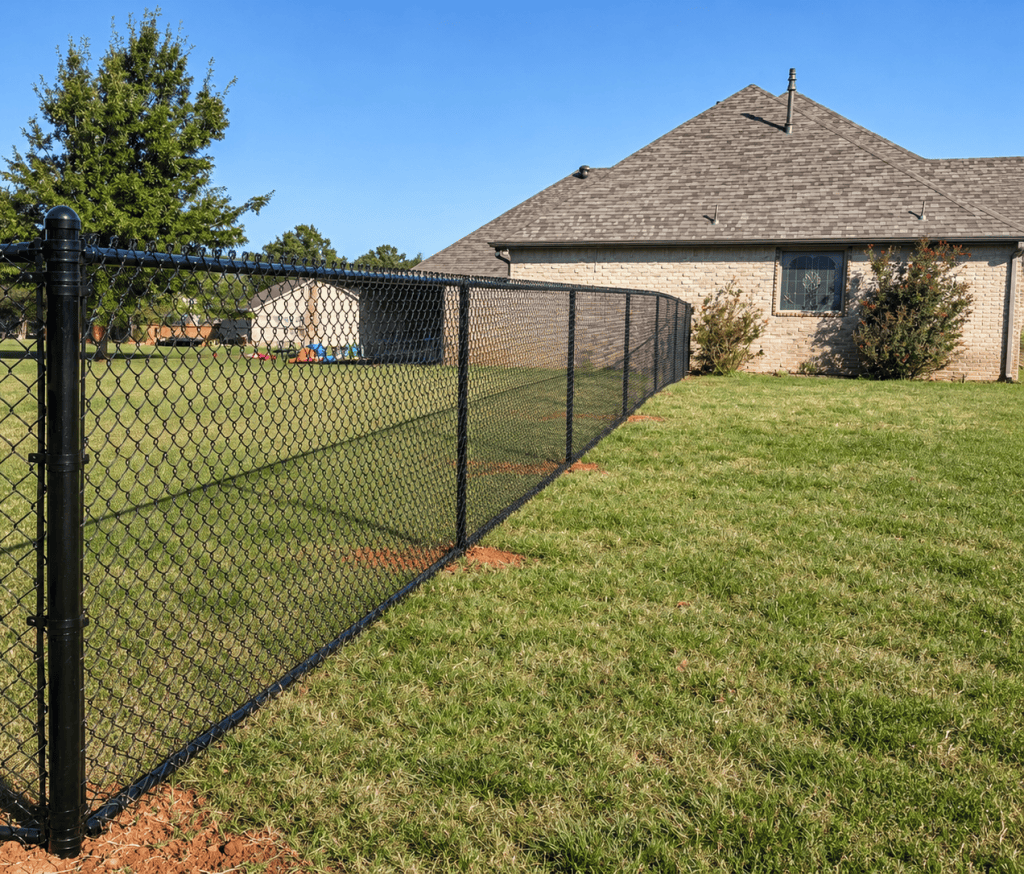
Chain link fence is made of steel wire that is galvanized, vinyl-coated, or both, woven into a diamond mesh pattern and attached to steel framework including posts, top rails, and tension wire. The gauge of the wire typically ranges from 6 to 11, with lower numbers meaning thicker, stronger wire. This guide covers every material component, explains how Oklahoma’s climate affects your choices, and helps you decide what specifications make sense for your property in Edmond, Norman, Yukon, Moore, or anywhere else in the metro area.
Understand the Core Wire and Mesh Materials
The mesh itself is the most visible part of a chain link fence, and it starts as steel wire. That wire is drawn to a specific diameter, then coated to resist rust and corrosion before being machine-woven into the classic diamond pattern.
Wire gauge is the most important spec to understand. A 9-gauge wire (0.148 inches in diameter) is the residential standard. An 11-gauge wire (0.120 inches) is lighter and cheaper but less durable. A 6-gauge wire is used for high-security and commercial fencing applications.
The two main coating types are galvanized steel and vinyl-coated steel. Galvanized wire is dipped in molten zinc, which bonds to the steel and creates a rust-resistant barrier. Vinyl-coated wire adds a PVC layer over galvanized wire, giving you color options like green, black, or brown plus an extra layer of corrosion protection.
At A Better Fence Construction, we typically recommend 9-gauge galvanized or vinyl-coated mesh for residential chain link fence installation across the Oklahoma City metro. It balances cost and durability well for most yard and pet enclosure applications.
Compare Chain Link Wire Gauges and Coating Types
Choosing the right wire spec depends on your budget, the purpose of the fence, and how long you want it to last. The table below lays out the most common options side by side so you can compare quickly.
| Wire Gauge | Diameter (inches) | Best Use | Relative Cost | Lifespan (Oklahoma climate) |
|---|---|---|---|---|
| 6-gauge | 0.192″ | High-security, commercial | Highest | 30+ years |
| 9-gauge | 0.148″ | Residential standard | Moderate | 20-25 years |
| 11-gauge | 0.120″ | Temporary or light-duty | Lowest | 10-15 years |
For coating, galvanized steel is the budget-friendly baseline. Class 1 galvanized coating is standard; Class 3 (also called Aluminized or heavy galvanized) has a thicker zinc layer and lasts longer in humid or exposed conditions.
Vinyl-coated chain link adds years of life in many cases and blends better with landscaping, closing some of the visual gap between chain link and wood fencing. Black vinyl-coated fence is especially popular in Nichols Hills, Deer Creek, and Edmond neighborhoods where aesthetics matter alongside function.
Know the Steel Posts and Framework Components
The mesh is only part of the system. Chain link fence depends on a steel framework to hold its shape, resist wind, and stay plumb over time. Oklahoma’s severe weather, including high winds, hail, and freeze-thaw cycles, makes post quality especially important.
The main framework components include terminal posts, line posts, top rail, tension wire, and fittings. Each plays a specific role in keeping your fence straight and secure.
- Terminal posts (end, corner, and gate posts): These are the largest posts in the system, typically 2 3/8 inches to 4 inches in diameter. They anchor the fabric and take the most stress.
- Line posts: Spaced 10 feet apart on center in most residential installations. Standard diameter is 1 5/8 inches to 2 inches for residential use.
- Top rail: A horizontal pipe running along the top of the fence, connecting line posts and giving the mesh something to hang from. Standard diameter is 1 3/8 inches.
- Tension wire: A heavier gauge wire (usually 7-gauge) run along the bottom of the fence to keep the mesh from pulling away from the ground.
- Fittings and hardware: Post caps, rail ends, brace bands, tension bands, and tie wires hold everything together. These are almost always galvanized steel to match the rest of the system.
Post depth matters a lot in Oklahoma. Frost depth in the OKC metro is around 14 to 18 inches, but most installers set terminal posts 24 to 36 inches deep in concrete to handle wind loads. Yukon, Tuttle, Mustang, and other western communities can see sustained winds over 60 mph during storm season, so proper post depth is not optional.
Explore How Oklahoma’s Climate Affects Material Choice
Oklahoma’s weather is hard on outdoor materials. You get intense summer UV exposure, humidity in spring and fall, occasional ice storms in winter, and wind almost year-round. Each of these stresses a chain link fence differently.
UV exposure fades and degrades vinyl coatings over time if the PVC is not UV-stabilized. Quality vinyl-coated chain link uses UV-inhibited PVC that resists fading and cracking. Cheap imported mesh sometimes skips this additive, so it pays to ask about the product spec before you buy.
Humidity and standing water accelerate rust on bare steel. Homes near ponds, low-lying areas in Moore, Del City, or Choctaw, or properties with irrigation systems running along the fence line should prioritize Class 3 galvanized or vinyl-coated material.
Ice storms are a real concern in Guthrie, Luther, Harrah, and northern parts of the metro. Ice adds significant weight to chain link mesh. A properly tensioned 9-gauge fence on well-set posts handles ice loads much better than a loose or undersized installation.
A good fence contractor should match material specs to each property’s exposure and use case. At A Better Fence Construction, we factor in your lot’s drainage, sun exposure, and typical wind direction when making recommendations.
Review Mesh Height, Opening Size, and Common Specifications
Beyond gauge and coating, chain link mesh comes in different heights and opening sizes. Getting these specs right means your fence actually does the job you need it to do.
| Mesh Height | Common Application | Notes |
|---|---|---|
| 36 inches (3 ft) | Garden borders, decorative | Not secure for dogs or children |
| 48 inches (4 ft) | Front yards, pool surrounds | Meets many residential HOA minimums |
| 60 inches (5 ft) | Backyard pets, general security | Most popular residential height |
| 72 inches (6 ft) | Privacy upgrades, large dogs | Standard for security applications |
| 96 inches (8 ft) | Commercial, athletic courts | Requires larger post diameters |
Mesh opening size is typically 2 1/4 inches (called 2-inch mesh) for residential applications. Smaller openings like 1 3/4 inches or 1 inch are available for pet containment or security uses. Larger openings reduce material cost but offer less containment.
Cities like Edmond, Norman, and Mustang have specific fence height rules tied to zoning (front yard vs. backyard) and pool safety codes. Always check local fence permit rules before choosing your height. A Better Fence Construction pulls permits and verifies code requirements as part of every installation project.
Understand Gates, Hardware, and Accessories
A chain link fence system is not complete without quality gates and hardware. Gates use the same mesh and framework materials as the fence itself, but the frame is built from larger diameter pipe, usually 1 5/8 inches to 2 inches, to carry the extra weight and stress of repeated opening and closing.
- Single walk gates: Typically 3 to 4 feet wide, hinged to a terminal post, with a latch designed for one-handed operation. Common in residential backyards across Bethany, Warr Acres, and The Village.
- Double drive gates: Two panels meeting in the center, used for vehicle access. Width ranges from 10 to 16 feet in most residential applications. Cane bolts or drop rods hold the passive panel in place.
- Hinges: Heavy-duty pressed steel or malleable iron hinges are standard. They allow the gate to swing in either direction and are adjustable after installation.
- Latches: Fork latches, gravity latches, and padlock-compatible hasps are all common. Pool enclosures in Noble, Purcell, and Blanchard must use self-closing, self-latching gates per Oklahoma pool safety requirements.
- Tension bars and bands: These connect the mesh to terminal posts and are critical for keeping the fabric tight over years of use.
Galvanized steel hardware is standard. Stainless steel hardware is available for premium installations and lasts longer in areas with high moisture exposure or near irrigation heads.
FAQs on What Chain Link Fence Is Made Of
Is chain link fence rust-proof?
Galvanized chain link is highly rust-resistant but not fully rust-proof. The zinc coating protects the steel underneath, and vinyl-coated mesh adds another layer of protection. Cuts, nicks, or worn spots in the coating can allow rust to develop over time, especially in wet Oklahoma springs.
What is the difference between galvanized and vinyl-coated chain link?
Galvanized chain link has a zinc coating applied by hot-dipping, which protects the steel from rust. Vinyl-coated chain link adds a PVC layer over galvanized wire, providing extra corrosion resistance and color options like black or green. Vinyl-coated mesh typically costs 20 to 40 percent more but lasts noticeably longer in exposed conditions.
What gauge chain link fence should I use for a dog enclosure?
For most dogs, 9-gauge mesh at 5 to 6 feet tall is the right choice. For large, determined breeds in areas like Arcadia, Jones, or Nicoma Park where properties are larger and dogs may have more room to build speed, some owners upgrade to 6-gauge mesh or add a bottom tension wire to prevent digging under the fence.
How long does chain link fence last in Oklahoma?
A properly installed 9-gauge galvanized chain link fence lasts 20 to 25 years in Oklahoma’s climate. Vinyl-coated mesh can extend that to 30 years or more with minimal maintenance. Post depth, concrete quality, and proper tensioning all affect how long the fence stays in good shape.
Can chain link fence be installed on uneven ground in Oklahoma?
Yes. Chain link mesh can be racked (angled) to follow sloped terrain, which is common in El Reno, Spencer, and properties near creek drainages. Alternatively, stepped installations drop the fence in flat sections. Your installer will assess the grade and recommend the right approach during the estimate.
Does chain link fence require a permit in Oklahoma cities?
Many cities in the OKC metro, including Edmond, Norman, and Moore, require a fence permit for new installations. Requirements vary by city and by fence height. Pool enclosures almost always require a permit regardless of location. Working with a licensed contractor like A Better Fence Construction ensures permits are handled correctly from the start.
Wrap Up and Next Steps
Chain link fence is made of galvanized or vinyl-coated steel wire mesh, steel posts in multiple diameters, top rail, tension wire, and galvanized hardware, all working together as a system. Getting the right gauge, coating, and post specs for your Oklahoma property protects your investment and keeps the fence performing well for decades.
A Better Fence Construction installs chain link fencing across the entire OKC metro, from Guthrie and Luther in the north to Purcell and Newcastle in the south. We know the local codes, soil conditions, and weather patterns that affect how your fence should be built.
Call us at (405) 202-8580 to schedule a free on-site estimate. We will walk your property, explain your material options, and give you a clear quote with no surprises.